

SNV hosts annual partners workshop 2026

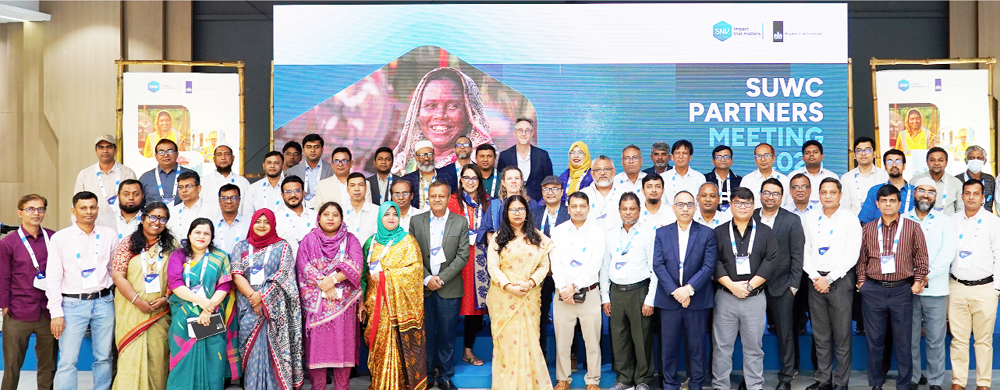
SNV hosted its Annual Partners Workshop 2026 under the Sustainable Urban Water Cycles (SUWC) Project on 1-2 November, bringing together municipal representatives, government officials, development partners and private sector strengthen collaboration and promote sustainable urban sanitation and water management in Bangladesh.
The two-day workshop aimed to showcase municipal achievements, exchange practical solutions, validate the findings of the project’s Mid-Term Review (MTR), and identify opportunities for stronger partnerships, sustainable service delivery and climate-resilient urban development beyond 2027.
Since 2022, SNV has been implementing the SUWC Project with the support of Embassy of the Kingdom of the Netherlands across 12 municipalities and City Corporations in Bangladesh to strengthen urban water ecosystems and improve sanitation and waste management services in line with national priorities. The project focuses on integrated urban water management, including sanitation, solid waste management, water security and climate resilience.
The workshop was attended by SNV Country Director ISMÈNE R.A.C. STALPERS and Chief Executive Officer Simon O’Connell, alongside representatives from key government agencies, including the Department of Environment (DoE), Local Government Engineering Department (LGED), Bangladesh Bank, Public Private Partnership Authority (PPPA) and Bangladesh Municipal Development Fund (BMDF), as well as development partners, private sector and funding agencies.
During the opening session, speakers highlighted the importance of strengthening institutional collaboration, mobilising investments and promoting locally led solutions to address the growing challenges of urban sanitation and water management.
National stakeholders also shared perspectives on policy priorities, sanitation, solid waste management and public-private partnerships (PPP). Speaking on the importance of a collaborative approach in the current development landscape, Simon O’Connell emphasised that building strong partnerships and deepening human connections have become more important than ever, particularly at a time when development funding is becoming increasingly constrained.
A key highlight of the workshop was the SUWC Municipal Solutions Marketplace, where participating municipalities showcased their ongoing initiatives, innovations and practical achievements.
The marketplace provided an interactive platform for municipalities to exchange experiences, learn from one another and explore approaches that could be replicated across cities.
The second day also featured a World Café and group discussions, where municipal representatives engaged with relevant government agencies, development partners and other stakeholders to identify key challenges, discuss potential solutions and explore areas requiring further technical and institutional support.
These discussions focused on priority areas such as protecting water security in industrial cities, improving safe and efficient solid waste services, ensuring the financial sustainability of sanitation and waste management services, advancing circular economy solutions and strengthening urban resilience to flooding and water stress.
The workshop concluded with a plenary discussion to consolidate key recommendations and identify priority actions for the coming year. The discussions are expected to inform the project’s priorities for 2027 and contribute to a shared vision for sustaining and scaling up successful interventions.
Through the SUWC Project, SNV continues to work with municipalities, national institutions and development partners to strengthen local governance, improve service delivery and accelerate systemic change towards inclusive, climate-resilient and sustainable urban water management in Bangladesh.