

Dengue strains hospitals amid kit shortage

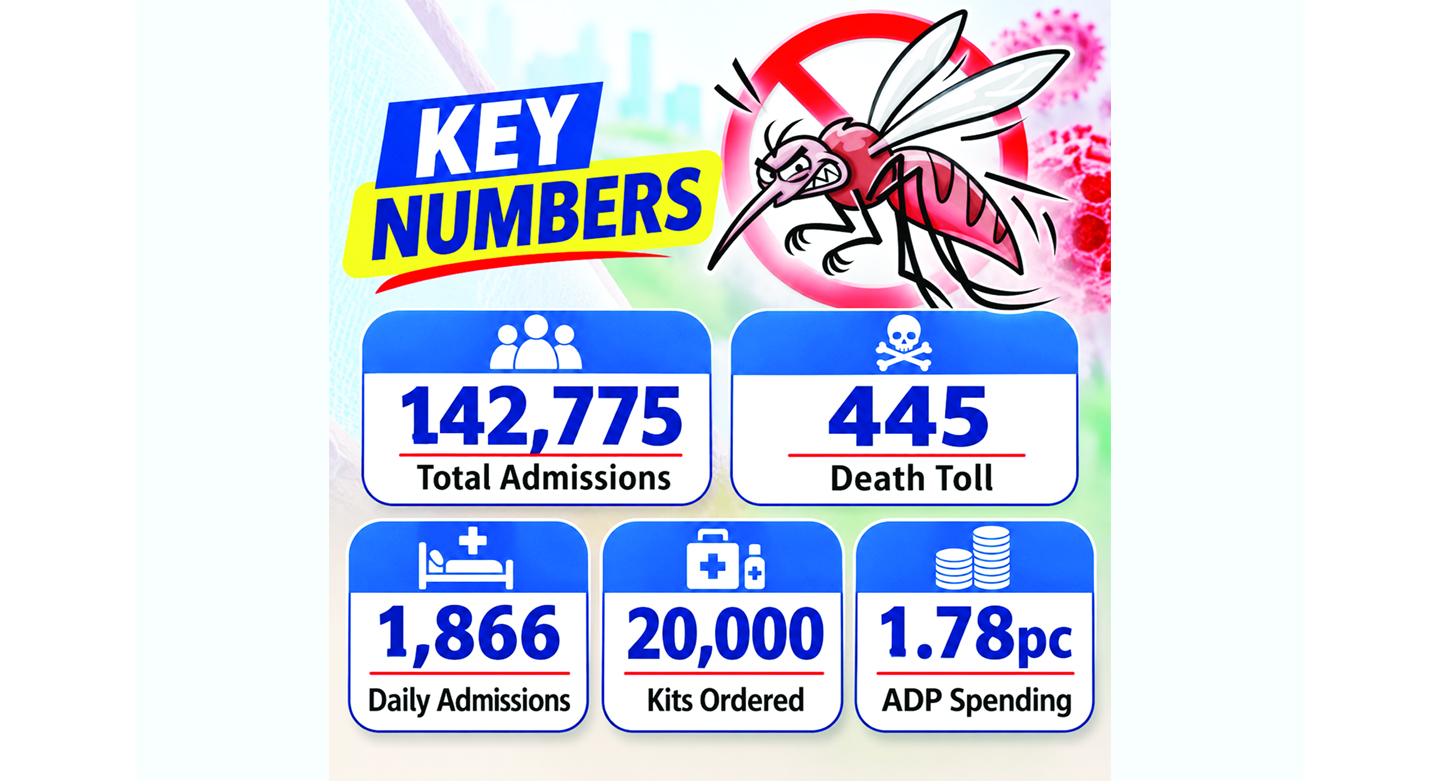
Hospitals across the country are struggling to cope with the rising number of dengue patients amid shortages of essential medicines, diagnostic supplies and platelet apheresis kits, leaving patients and their families to bear additional treatment costs.
The shortage of platelet apheresis kits in government hospitals has forced patients requiring the procedure to buy the supplies from outside or seek expensive services at private hospitals and blood banks, even as demand for platelets has surged during the ongoing outbreak.
Official correspondence between the Directorate General of Health Services (DGHS) and the Health Services Division shows that several government hospitals submitted their requirements for the kits in September, but procurement remained incomplete in the first week of November.
A platelet apheresis kit is a single-use medical supply used with a specialised machine to collect platelets from a healthy donor.
The machine separates the platelets and returns the remaining blood components to the donor.
Some dengue patients may require platelet transfusions in complicated cases, depending on their clinical condition.
Blood banks across Dhaka have reported a three- to fourfold increase in demand for platelets compared with normal periods in recent months.
Shortage pushes up costs
In a letter to the Health Services Division on 28 September, the DGHS warned that rising dengue infections had increased the need for platelet apheresis, but government hospitals had no stock of the required kits.
Of the 22 government medical colleges and specialised hospitals equipped with 28 operational apheresis machines, 17 hospitals submitted requirements for 17,874 kits for the current dengue season.
The DGHS said the shortage was forcing patients to purchase the kits privately, adding to the financial pressure on low- and middle-income families.
At private hospitals and blood banks, the cost of collecting one unit of platelets through apheresis ranges from Tk22,000 to Tk25,000. The Red Crescent Blood Bank charges Tk25,400, against Tk2,700 at government hospitals.
Procurement faces delays
On 1 November, the Health Services Division directed the Central Medical Stores Depot (CMSD) to take immediate steps to procure 20,000 kits for dengue patients and people suffering from other serious illnesses.
The CMSD has Tk300 crore allocated for medical and surgical supplies in the 2026-27 fiscal year.
The Health Services Division said the allocation remained unspent and the kits would be purchased from it.
CMSD Director Mohammad Shafiur Rahman said procurement had begun following instructions from the Health Services Division under the Ministry of Health and Family Welfare.
He said the kits could be purchased and distributed within three to four months under government procurement rules.
However, as dengue infections generally decline from December, the supplies may arrive too late to help patients during the current outbreak.
Asked about the delay, Rahman said the kits were not required for routine dengue cases but were necessary for severe cases.
He added that the Hospitals and Clinics Branch of the DGHS had procured such kits previously.
Transfusions not always necessary
Doctors stress that a low platelet count alone does not warrant a transfusion. The decision depends on the patient’s overall condition, bleeding symptoms and other clinical factors.
Very few patients in the hospital’s three medicine units had received transfusions this year, she said, adding that platelets were used in selected complicated cases, including some patients requiring dialysis.
Meanwhile, six more people died of dengue and 1,866 were admitted to hospitals nationwide in the 24 hours until 8am on 4 November, according to the DGHS.
The death toll this year reached 445, while total hospital admissions stood at 142,775.
October recorded the highest monthly death toll this year. Despite the end of the monsoon, experts warn that infection risks persist through November.
Wider healthcare needs
The Health Services Division also identified the need for apheresis kits to treat patients with severe accident-related bleeding, blood-clotting disorders, cancer, aplastic anaemia, blood cancers and chemotherapy-induced low platelet counts.
The shortage has also raised questions about delays in health-sector spending.
According to the Implementation Monitoring and Evaluation Division (IMED), the Health Services Division utilised just 1.78 per cent of its Annual Development Programme allocation in the first three months of FY2026-27.
Of the Tk6,014 crore allocated, only Tk107 crore was spent between July and September. Substantial block allocations have also remained unused.
Health experts say hospitals must assess their requirements and complete procurement well ahead of seasonal outbreaks, warning that delays can increase treatment costs and restrict patients’ access to essential care.