

What Frankfurt Tells Us About Reading

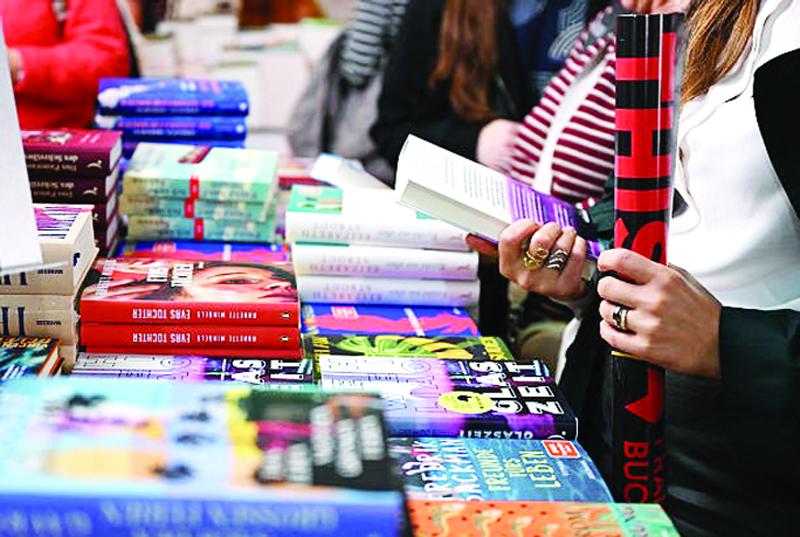
Whenever I travel abroad, I make it a point to observe a few things, including the reading habits of people.
I love to visit the book fairs . Book fairs offer a good opportunity to understand publishing trends.
As usual, I visited the Frankfurt International Book Fair in October this year 2026. Comparing the statistics of the past five years, I found that the numbers of visitors, trade professionals and publishers have not declined much.
Last year 2025 exhibitors was 4,300 and 2026 exhibitors number was 4.000, Trade visitors was 118,000 but this year it was 119,000, last year there were 3,500 and this year 206 it was 3,800.. There was a small increase of 1000 professional visitors.
This is encouraging because trade visitors include publishers, literary agents, rights manager, distributors and book sellers.
Of-course, a long term perspective, the decline becomes more striking when compared with 2019, before the pandemic exhibitors 7,450 versus 4,000 in 2026, Visitors 302,000 in 2019 versus 236,000 in 2026.
This suggests that, despite the declining readership of printed books and newspapers in some markets, the publishing industry and public interest in books have not necessarily diminished.
Rather, the industry appears to be adapting to changing reading habits, new formats and evolving market demands Much of today’s reading has shifted from printed pages to digital platforms, including e-books, online newspapers, websites and social media. People continue to read, but increasingly through screens rather than on paper.
The decline in print readership should not be confused with a decline in reading itself. It reflects a transformation in reading habits, formats and platforms.
The Frankfurt Book Fair represents the changing landscape of contemporary media, publishing and reading culture. It reflects the transition from traditional printed books to e-books and other digital formats, alongside the changing patterns of reading habits, interests and subject preferences.
However, one of my notable observations at this year’s fair was the renewed emphasis on the physical appearance and presentation of printed books.
I found increasingly colourful printing, attractive illustrations, creative cover designs and sophisticated binding. Even the inside pages and the opening sections of books were designed with greater visual appeal.
Books, particularly those aimed at children and young readers, are becoming more colourful, visually engaging and attractive. The growing popularity of illustrated books, graphic storytelling, horror fiction and other visually oriented publications also suggests that publishers are responding to a new generation of readers.
This raises an interesting question: rather than disappearing in the digital age, are printed books reinventing themselves through better design, visual appeal and innovative presentation?
“The Frankfurt Book Fair 2026 reflected a significant shift in publishing. Books, particularly those targeting younger readers, are increasingly becoming visually attractive merchandise rather than conventional printed products.
Colourful designs, illustrations, collectible editions and associated merchandise are gaining commercial importance. At the same time, horror, mystery and fantasy are receiving renewed attention among young readers.”