


Rich nations called on to pay

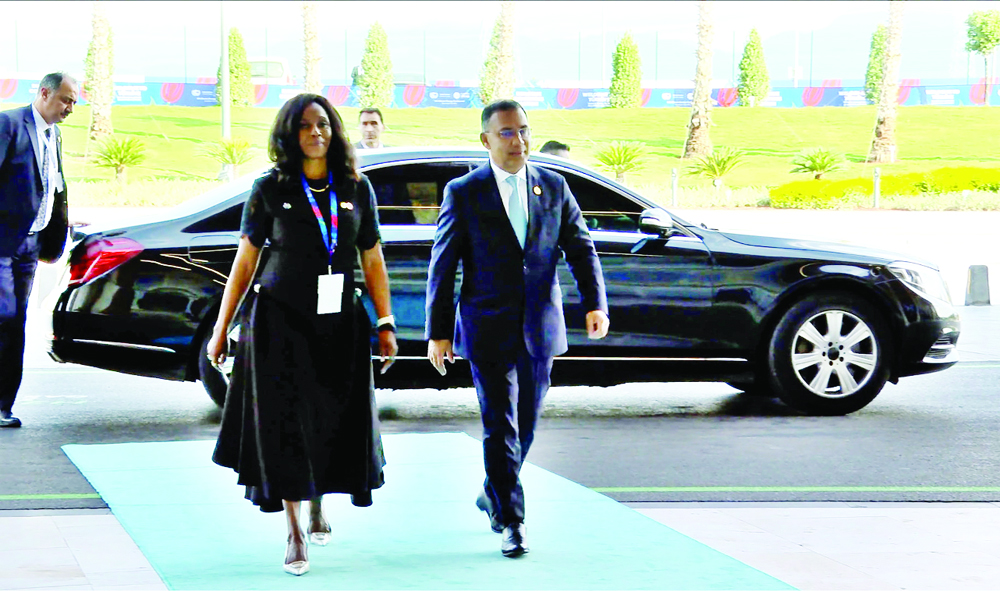
Bangladesh is pressing developed nations to turn their climate commitments into tangible financial support, compensation and technology transfer, seeking a fairer deal for countries bearing the brunt of global warming despite contributing little to greenhouse gas emissions.
At the 31st United Nations Climate Change Conference (COP31) in Antalya, Türkiye, Bangladesh has placed climate justice, grant-based financing, adaptation and compensation for climate-induced loss and damage at the centre of its negotiating agenda.
Although Bangladesh accounts for only 0.05 per cent of global greenhouse gas emissions, it remains highly vulnerable to cyclones, floods, river erosion, salinity intrusion, droughts and heatwaves.
Environment, Forest and Climate Change Minister Abdul Awal Mintoo has estimated that climate change causes annual economic losses of around $15.2 billion in the country.
Led by Prime Minister Tarique Rahman, a high-level delegation is engaging world leaders, international organisations and climate negotiators, demanding greater financial responsibility from developed countries and easier access to climate funds.
The Prime Minister attended the World Leaders’ Summit at the Antalya Exhibition Centre on Wednesday. He also held courtesy meetings with the secretary-general of the Organisation of Islamic Cooperation (OIC), Indonesian delegation head Hashim Djojohadikusumo and Zero Waste Foundation President Samed Agirbas.
Earlier, Tarique held a 30-minute bilateral meeting with Turkish President Recep Tayyip Erdogan, discussing bilateral relations and cooperation, including climate change. He is also scheduled to attend a Zero Waste Roundtable and a dinner hosted by Erdogan.
His scheduled bilateral meetings with Uzbek President Shavkat Mirziyoyev and Chinese Vice-President Han Zheng are expected to provide opportunities to discuss issues of mutual interest.
The Prime Minister is due to address a plenary session on November 12, outlining Bangladesh’s position on climate justice, historical responsibility, climate finance, adaptation, loss and damage, and climate-resilient development.
Foreign Minister Dr Khalilur Rahman, Environment Minister Abdul Awal Mintoo, State Minister for Foreign Affairs Humaiun Kobir and the Prime Minister’s wife, Dr Zubaida Rahman, are accompanying him.
Grants Over Loans
Bangladesh is coordinating its negotiating position with the Least Developed Countries (LDCs) group, the G77 and other climate-vulnerable countries.
Special Assistant to the Prime Minister on Environment, Forest and Climate Change Saimum Parvez said the delegation would seek grant-based financing and simpler procedures for accessing international climate funds.
“Our demand is to increase grants for adaptation and addressing climate-induced losses and damage without adding to the debt burden, and to simplify the application and approval processes for climate funds,” he said.
Bangladesh is also seeking a threefold increase in adaptation finance, technology transfer and support for implementing its National Adaptation Plan.
At a Bangladesh-organised side event at the Jute Pavilion on Tuesday, speakers discussed the New Collective Quantified Goal agreed at COP29, which sets a minimum of $300 billion annually by 2035 from developed countries within a wider financing ambition of $1.3 trillion.
However, developing countries are estimated to need around $305 billion annually for adaptation by 2035, while public financing currently covers roughly one-tenth of that requirement.
Bangladesh’s National Adaptation Plan for 2023-2050 requires an estimated $230 billion, with substantial international support yet to be secured.
Rising Debt Concerns
A Change Initiative study found that loans accounted for 90.4 per cent of investment in Bangladesh’s renewable energy sector since 2000.
The country received $2.54 billion in climate finance for its energy sector, including $880 million for coal- and gas-based power plants at Matarbari and Bheramara.
The study warned that, if the trend continues, per capita debt in the renewable energy sector could reach $105 by 2040, compared with the current per capita climate debt of around $80 across all sectors.
To reduce reliance on borrowing, Change Initiative has proposed a Renewable Energy Sovereignty Facility to mobilise $7.69 billion in renewable energy investment between 2026 and 2030.
The proposed mechanism could reduce new government borrowing from $4.6 billion to $800 million and lower projected per capita renewable energy debt in 2040 from $105 to $24.
Bangladesh is also seeking easier access to the Green Climate Fund, support for early warning systems and climate-resilient infrastructure, and assistance for vulnerable communities in coastal areas, haors, chars and drought-prone regions. It wants loss-and-damage funding to cover not only infrastructure destruction and economic costs but also displacement, lost livelihoods and damage to cultural heritage.
Jute as Climate Solution
Alongside its financing demands, Bangladesh is showcasing jute as a contribution to global climate action. A pavilion in the conference’s Green Zone highlights the fibre’s potential as a biodegradable alternative to plastic and a source of value-added products.
At a side event on November 10, organisers from the Foreign and Textiles ministries and industry partners highlighted jute’s environmental and commercial potential. Presenters said one hectare of jute could absorb up to 15 tonnes of carbon dioxide during a growing season.
Its applications include shopping bags, geotextiles, automotive composites and nanocellulose, while jute sticks can be processed into charcoal and activated carbon.
Under its 2026-2031 strategy, Bangladesh aims to double jute export earnings to $1.64 billion and increase the share of value-added products from around 45 per cent to 70 per cent. A joint declaration with Türkiye to promote jute and jute products is also envisaged. Two further Bangladeshi side events will focus on gender-based climate vulnerability and biodegradable, zero-waste jute products.
Implementation Matters
Experts say the success of COP31 will depend on whether international commitments translate into practical assistance.
Climate expert Professor Ainun Nishat said establishing funds and mechanisms would not be enough without proper monitoring and evaluation to ensure that money reached intended beneficiaries.
Civil society leaders from the Global South have also urged developed countries to fulfil their climate finance obligations under Article 9.11 of the Paris Agreement and provide predictable, accessible and grant-based public financing.
With negotiations continuing until November 20, Bangladesh’s priority is to secure concrete financing, technology transfer and meaningful protection for millions of people exposed to climate risks.
The real test will be whether international pledges translate into support without further increasing the debt burden of vulnerable countries.