


Islamic Banking in Bangladesh – Beyond the Numbers

Islamic banking in Bangladesh has reached a point where we need to ask some deeper questions. We know that Islamic banking has grown, gained traction with customers and plays an important role in Bangladesh’s financial system.
But has it lived up to what it promised? Are we ready to deliver?
We have seen good traction in terms of the market, development of institutions and resilience. But there have also been missed opportunities to achieve greater ambition due to lack of regulation/governance, inconsistent product innovation and little collective promotion. Let’s look at what was expected, what is happening now and what can be done to achieve something greater.
A Beginning Driven by Conviction
Islamic banking started in Bangladesh in the early 1980s with real passion from a group of dedicated bankers and entrepreneurs.
This passion led to the creation of Islami Bank Bangladesh Limited and subsequently the development of other institutions to meet the demand from people looking for banking that matched their religious and ethical convictions.
The initial vision was to show people that banking could be done differently. We could mobilise deposits, provide funding, support trade and offer banking services, but avoid Riba.
As the majority of the population is Muslim, there was great potential. We could expect Islamic banking to gain traction and become part of the mainstream financial system with new institutions, conversions, Islamic windows and a variety of services.
To achieve this we needed a clear enabling environment. We needed clear legislation, credible Shariah governance, talented professionals, research, product development, promotion and regulation.
Opportunities for Bangladesh
Bangladesh Bank has clearly defined requirements for Islamic banking. For example, the Statutory Liquidity Ratio (SLR) requirement is 5.5% for Islamic banks compared with 13% for conventional banks.
This lower requirement gives Islamic banks a different liquidity position and may create additional room for investment; however, it does not by itself establish an overall competitive advantage. We still need a complete Islamic banking legal, regulatory and institutional framework.
A national industry needs clear rules, clear institutions and a clear long-term development strategy. Bangladesh had the foundations of the demographics, early institutions and market to develop Islamic banking.
With strategic planning, we could have developed a strong ecosystem over the last decade. This would have included training banks and Shariah scholars, development of specialist academic courses, research, product development pipeline and regulation that fits.
However, much of the growth has been driven by institutions and the market. There has not been enough strategic planning in place to create a truly ambitious national vision.
Market Traction
The market has proven time and time again that Islamic banking is not a niche product. It plays a significant role in Bangladesh’s banking industry, accounting for roughly one-quarter of some commonly cited banking-sector measures, although the precise share varies by indicator and reporting period.
This shows that there is good traction from customers and we have good institutions in place to compete in a challenging market
However, having a good market share doesn’t mean we have delivered on our promise. We can have banks that have increased deposits, funding and profitability, but are not really differentiated.
The key question is: have we really delivered on our promise? Are we offering transactions, risk allocation, transparency and good governance?
If we start to measure Islamic banking against conventional metrics, we run the risk of losing sight of what the true purpose of Islamic banking is. Of course, commercial viability is essential—but it is only one part of the question.
How do we balance financial sustainability with the principles and outcomes that distinguish Islamic banking?
Limitations of the Institutions
Much of the growth in Bangladesh has come from an environment with limited policy. Licensing, conversions and expansion of Islamic banking options did not seem to happen quickly enough.
This could be due to regulation being cautious, politics or just inertia. Overall there wasn’t enough planning to give confidence to the sector
There are stories within the industry of political and diplomatic sensitivities. However, unless there is evidence to back this up, we should ask ourselves if we should be restricting our citizens from having a legitimate choice. Our modern financial system should provide a diverse choice with clear, neutral and well-governed regulation
This should not be seen as a political issue. We should ensure that licensing, conversions and supervision happen with clear criteria, sound prudential standards and consistency
Lack of Strong Foundations
A common theme has been the lack of strong foundations for the industry. Islamic banking requires specialist knowledge around contracts, ownership of assets, risk allocation, Shariah, accounting, liquidity and product development
What might a stronger foundation look like?
· A clear Islamic banking legal and regulatory framework, including contracts, governance, liquidity, resolution and consumer protection.
· Consistent Shariah governance, including talented boards/committees, independent reviews, clear decision-making and assurance.
· A strong national talent pipeline involving universities, training, banks, regulators and Shariah scholars.
·Research and product development—not simply copies of conventional products, but approaches focused on funding households, SMEs, agriculture, industry, trade and social enterprises.
·Collaboration within the industry around standards, education, data and engagement with policymakers.
Transparent Profit Calculation
One of the core promises of Islamic banking is that profits will be calculated and distributed fairly, transparently and clearly. Depositors are not just customers, they are owners of the funds invested in profit sharing. We should be able to clearly explain how we have structured the pool, weighting, income and expenses, allocation, reserves/adjustments and timing of the profit distribution.
We should do this in simple language. The methodology should be clear, applied consistently, independently reviewed and easily accessible to all account holders
Going forward in Bangladesh we could be even more transparent. With regard to confidentiality, security and audit controls we could live stream or broadcast an anonymous example of how we calculate and distribute profits. We could also provide a video walkthrough and auditable calculation periodically.
This would help satisfy any curiosity from our depositors, provide proof that we understand and are being fair and increase confidence that we are distributing fairly
Improved Legal & Regulatory Framework
One possible pathway is a modern, comprehensive, predictable and proportionate Islamic banking framework. This could provide clarity on how we handle unique Islamic contracts while also maintaining prudential standards and consumer protection.
We could consider licensing, conversions, Islamic windows, Shariah governance, liquidity, investment accounts, resolution and transparency. Would this increased clarity help reduce uncertainty and encourage responsible innovation?
Strong Shariah Governance
Should we have stronger Shariah governance? Can we move away from a governance approval structure and ensure it is embedded throughout product development, operations, risk, technology, internal audit and customer-facing activities?
Having consistency, transparency, talented reviews and meaningful corrective actions may provide us with strong foundations to gain public trust
Conclusion
Islamic banking in Bangladesh has come a long way. We have a strong presence within the financial system and our customers have voted with their wallets. We should now take this further and be more responsible. We have achieved traction in the market, but we have a responsibility to ensure we have strong institutions, integrity, innovation, and are contributing meaningfully to the economy.
We should learn from our successes, address our failures and think about what institutions can help us mature. We should consider the views of our regulators, banks, universities, industry leaders and the public.
The promise we made over four decades ago remains relevant today. Whether we deliver on this promise will depend on how we choose to reflect, debate, and make informed choices.
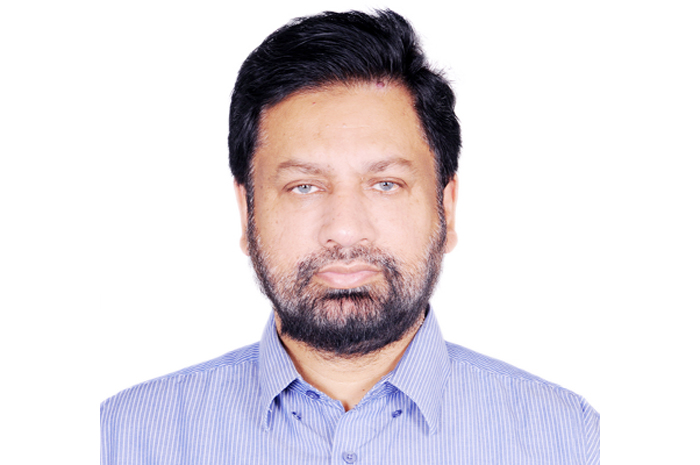
(Writer: CEO & Co-Founder, Millennium Information Solution Ltd. (MISL) Bangladesh and Islamic Banking Technology Practitioner)