

Trump explains GOP midterm defeat

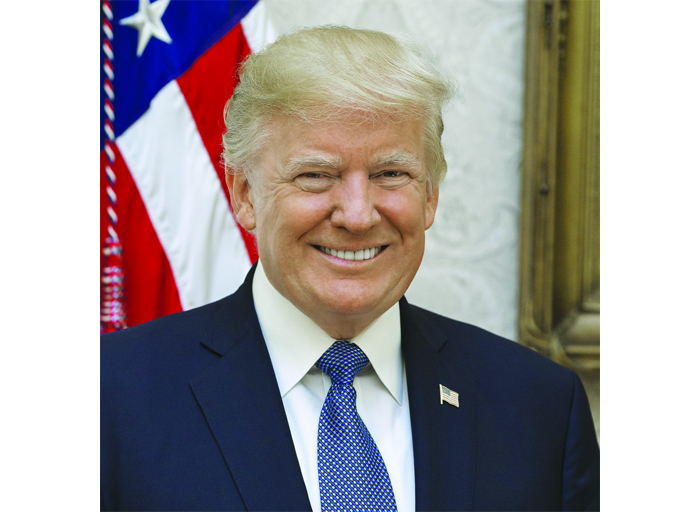
In an interview with CBS’s 60 Minutes, aired yesterday (8 November), Trump discussed the reasons behind the Republican losses, his administration’s policies, possible Cabinet changes, his family’s business interests and his plans for presidential pardons.
Trump admitted that his administration’s immigration enforcement had become unpopular, particularly its deportation of undocumented immigrants who had lived in the United States for years without committing serious crimes.”It was too tough.
I think it might be too tough,” he said, referring to immigrants who had been in the country for 10 years or more.He said his administration deserved credit for deporting serious criminals but acknowledged that removing other undocumented immigrants, including those with jobs and established lives, had drawn criticism.
“For getting people out, I get very high marks for getting the bad ones out,” Trump said. “But I get hurt because we also took people that had good jobs, that created one violation, or breaking of the law, and that was that they came into the country illegally.
“He said public opinion remained divided over whether such immigrants, including those working in landscaping companies and hotels and paying taxes, should be allowed to stay.
“I think it was too tough,” he said, while claiming an “A+” for securing the US border. He also expressed interest in working with congressional Democrats on immigration policy.
However, it remains unclear whether his administration plans to ease its enforcement measures. Trump recently appointed Stephen Miller, widely regarded as a key architect of the immigration crackdown, as White House chief of staff.
Trump attributed the Republicans’ poor midterm performance to the unpopularity of the Iran war, rising fuel prices, and his administration’s failure to communicate its achievements effectively.
Republicans lost more than 40 seats in the House of Representatives and at least seven Senate seats, with some races still uncalled.Asked about the setbacks, Trump pointed to his absence from the ballot as a major factor.”I was not on the ballot,” he said, repeating an explanation he had offered since the elections.
He maintained that his endorsements and campaign appearances had helped several Republican candidates, while acknowledging that some voters might not have supported his choices.
“I think they didn’t vote, really. I think they didn’t vote. I think in some cases, they didn’t like the candidates.
And that’s, you know, their prerogative,” he said.Trump also defended his decision to support Texas Attorney General Ken Paxton over incumbent Senator John Cornyn in the Republican Senate primary, arguing that Cornyn would have lost regardless.
Despite widespread voter dissatisfaction over the cost of living, Trump described the US economy as “phenomenal” and pointed to record-high retirement account values as evidence of his administration’s performance.
“We’re doing numbers that have never been done before. 401(k)s are at their all-time high by a lot. Under other presidents, they were a disaster. 401(k)s have made people rich,” he said.Asked about Americans without substantial retirement savings, Trump replied, “But a lot of people do.
“Election polling, however, showed that many voters were unhappy with the economy, particularly rising costs of fuel, food, utilities and healthcare.Trump acknowledged that his administration had struggled to communicate its economic record.
“I think it was bad messaging, maybe by me, but I would talk about it all the time. So I don’t know, how much can I talk about it?” he said.He predicted that Americans would begin noticing improvements within two to four months, claiming his policies would help revive manufacturing jobs.
Trump defended his decision to launch attacks on Iran, despite Vice President JD Vance attributing the Republicans’ midterm losses partly to the war.Trump said Vance had discussed his social media post with him beforehand and that he had encouraged him to express his views.
“He asked me, ‘What do I think?’ I said, ‘Write what you feel,'” Trump said.However, Trump indicated that he wished Vance had expressed more explicit support for the military operation.
“The only thing I wish he would have said there – if he felt it, and you’d have to ask him about that – but if you had it to do again, would you do it? You know, he’s part of a decision-making process. And my answer is an emphatic yes,” Trump said.
He claimed the attacks had weakened Iran’s military capabilities and set back its nuclear programme.”I think historically, this will be a very good decision.
Is it a good decision for today and tomorrow Maybe not. But I have to go with what’s right for our country,” he said, adding, “If they had a nuclear weapon during my term, I would be excoriated far worse than what’s happened.”Asked whether he intended to escalate the conflict, Trump said, “Well, I’m not looking to. I don’t think there’s any reason to.”
He also claimed Iran was close to reaching a deal, although he suggested the Republican election setbacks might give Tehran some hope.
Trump suggested he might not automatically endorse Vance if the vice president decides to seek the Republican presidential nomination in 2028.Asked whether he would support Vance, Trump replied, “Probably.
Not necessarily.”He also praised Secretary of State Marco Rubio as a potential presidential contender.”I think Marco’s great. I mean, he certainly loves it, and he’s doing great.
He’s doing a fantastic job,” Trump said.He mentioned several senators as possible candidates but declined to identify them.Trump added that he might stay out of the succession contest, saying, “I may or may not get involved. I don’t know. Maybe I’m better off not getting involved.”
However, he maintained that his endorsement would carry considerable influence within the Republican Party.”I think it would play a big role if I did, because my endorsement capacity has been very strong,” he said.Trump dismissed allegations that he was using his presidency to advance his family’s business interests, particularly its cryptocurrency ventures.Asked about reports that his net worth had increased by nearly $3 billion since his return to the White House, he replied, “So did everyone.
“When the interviewer pointed out that their own wealth had not increased similarly, Trump responded, “Well, you should’ve had stock.””I devote almost no time to my net worth. I don’t care,” he said, adding that he had accumulated more money than he had ever expected.
Trump maintained that his sons independently managed the family business and its investments.”I have a company. My sons run the company. It’s hard to say to them, ‘Don’t do anything anymore for four years because I’m president,'” he said.Defending the family’s stock trading activities, Trump said he had no knowledge of individual transactions.
“How do you divest from cash? So, I took a lot of heat because I think they traded, like, 50,000 stocks, because that’s what they do. It’s all computer-generated.
I have no idea what the hell they’re buying,” he said.He also dismissed concerns about foreign entities attempting to gain influence through business connections, saying “every president has a problem” with outside interests seeking favour.Trump hinted that changes could be made to his administration following the Republican setbacks.
Asked whether he planned to dismiss anyone, he replied, “I do, yeah. Little bit.”Although he said he loved his Cabinet, he added, “I’ll be doing maybe a few changes.
“The interview was recorded shortly before the announcement that White House Chief of Staff Susie Wiles would leave her position and be replaced by Stephen Miller.Trump also defended Secretary of War Pete Hegseth against Democratic calls for his impeachment.”They want to impeach him. Very unfair,” Trump said.
“We had two wars, we won both. We won Venezuela, we won Iran.”Trump said he planned to issue a large number of presidential pardons before leaving office, including for people he believes were unfairly targeted.He promised “tremendous numbers of pardons” and joked that “anybody that got within a thousand miles of the Oval Office” could receive one.Asked whether he would pardon himself, Trump said he did not expect to do so but added that it was “certainly not unreasonable”.
He also defended his decision to pardon people convicted over the 6 January 2021 attack on the US Capitol.”I pardoned the J6ers. I don’t think any group’s been treated more unfairly than them, and to this day, when they see me they cry,” he said.
Asked about those who assaulted police officers during the Capitol attack, Trump acknowledged that some had been violent but argued that officers had also used force against them.Trump said military pilots had shared unusual accounts of unidentified flying objects (UFOs), although he remained sceptical about their existence.
“I’m not too much of a believer, but I sat in the Oval Office, first term and a little bit second term, meeting with Air Force pilots that are really good, solid people,” he said.Describing the pilots as highly professional, he added, “They’re the real deal. And they’ve told me things that are very strange.”
Earlier this year, Trump signed an executive order directing the release of sensitive government files concerning unexplained anomalous phenomena.Trump said he was unwilling to forgive some of his political opponents, even if doing so might improve his chances of reaching heaven.
Asked what he thought would happen after his death, he said, “Well, I hope I’m missed.”Describing himself as religious, he added, “I hope so. I don’t want to go to hell,” when asked whether he expected to go to heaven.
However, when asked whether he could forgive his political enemies, Trump replied, “The answer is no. I want to be honest, no.”He described some of his opponents as “very bad people” and admitted, “I do hate some of my enemies.”Reiterating his position, he said, “I probably cannot do that now because I do hate some of my enemies, and I always will.