

Army, not JSD, rescued Zia: Sakhawat

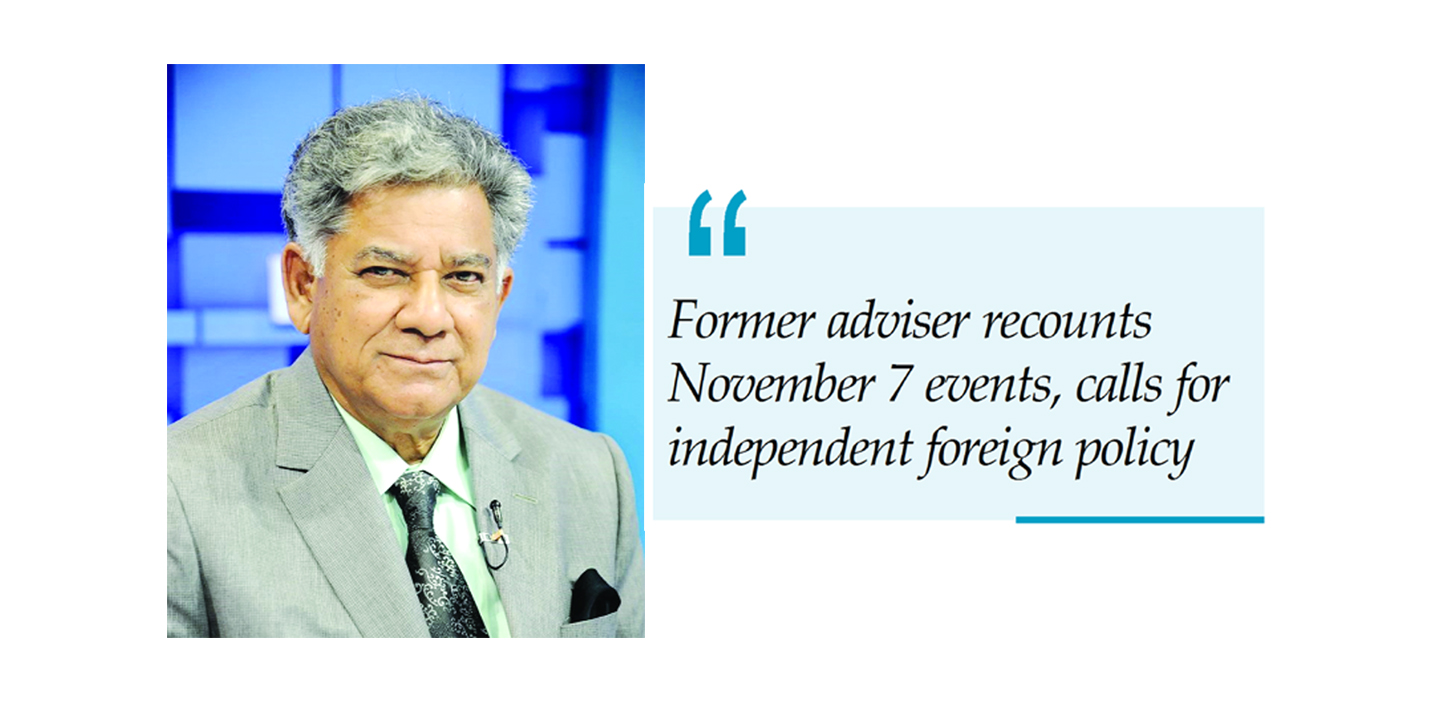
The November 7, 1975 uprising remains a contested chapter in Bangladesh’s political and military history, with differing accounts of the events continuing to fuel debate over the role of the armed forces and political groups.
Former military officer and interim government adviser M Sakhawat Hossain has now challenged the Jatiya Samajtantrik Dal’s (JSD) version of the events, asserting that army personnel, rather than JSD members, rescued then Army Chief Major General Ziaur Rahman from confinement.
Speaking at a discussion organised by the Retired Armed Forces
Officers Welfare Association (RAOWA) on Saturday to mark National Revolution and Solidarity Day, Sakhawat said members of the 2nd Field Regiment Artillery, led by then Colonel Mahbubuddin, had carried out the rescue operation. Personnel of 4 Bengal had also attempted to secure Zia’s release, he added.
“The JSD narrative is that they rescued Ziaur Rahman. But that account is not correct. Ziaur Rahman was rescued by the 2nd Field Regiment Artillery,” said Sakhawat, a retired brigadier general.
Recounting the events of the morning of November 7, he said he went to the 2nd Field Regiment at around 6:00am and found Zia sitting in the office of the unit’s commanding officer.
Lieutenant Colonel Nuruddin Khan, who was then acting Director of Military Operations, was also present.
About half an hour later, Colonel Abu Taher arrived at the unit with members of the Gono Bahini, the armed wing associated with the JSD. Taher spoke to Zia and asked him to accompany them and announce his acceptance of their 21-point or 17-point demands before the soldiers, Sakhawat recalled.
Zia, however, declined the proposal, saying he had already conveyed his message through radio and television and would not go anywhere.
Sakhawat claimed that had Zia agreed to leave with Taher, he might never have returned, potentially enabling Taher and a section of the JSD to take control of state power in accordance with their own plans.
He said personnel of the 2nd Field Regiment and 4 Bengal prevented Zia from being taken elsewhere, although the former unit had already secured his release.
Unanswered questions over military movements
Sakhawat also raised questions about several unresolved aspects of the period of coups and counter-coups, particularly the circumstances under which Colonel Huda entered Dhaka with an entire battalion, 10 Bengal.
Describing Huda’s deployment as a major historical mystery, he said the motives behind the military movements and the activities of the JSD’s Gono Bahini warranted further investigation.
Reflecting on Zia’s conduct during the crisis, Sakhawat praised his courage and leadership. He recalled an incident in which Zia reportedly stood unarmed before unruly troops carrying loaded rifles at the hockey field and managed to calm them down.
He said Zia had no desire for revenge and had directly instructed Nawajesh Uddin to save Khaled Mosharraf, Colonel Huda and Haider, military figures associated with the Khondaker Moshtaq period.
Sakhawat also credited Zia with reducing divisions between officers who had participated in the 1971 Liberation War and those who had not. He said Zia had helped promote reconciliation within the armed forces and expand the institution.
Calls for independent foreign policy
Turning to Bangladesh’s foreign policy, Sakhawat said Zia had moved the country away from an India-centred diplomatic approach and pursued a more independent international outlook.
He referred to Zia’s visit to China as part of efforts to strengthen relations with Beijing and his initiatives to expand engagement with Middle Eastern countries, including his role in the Al-Quds Committee.
“We have still not been able to determine our foreign policy properly. For many years, we remained India-centric,” he said.
He argued that Bangladesh should not simply blame India for pursuing its national interests, noting that any country would act in a similar manner to protect its own interests.
Sakhawat called for greater autonomy in foreign policy and economic decision-making, urging Bangladesh to learn from countries such as Iran in exercising strategic independence.
He also advocated avoiding foreign loans carrying restrictive conditions, strengthening the domestic economy and ensuring that national decisions were taken independently.
Commenting on the armed forces, he alleged that their professionalism and ethical standards had suffered over the past 15 years. A strong and independent country, he said, required its army to return to the highest standards of professionalism. Modasser criticises interim government’s reform process.
At the same discussion, retired Lieutenant Colonel Modasser Hossain Khan Bir Protik criticised the reform process and election arrangements under the interim government led by Dr Muhammad Yunus.
Addressing Yunus directly, he said the former chief adviser had made a serious mistake by holding the election in haste, arguing that the decision had undermined the country’s long-term interests.
“The people and the students brought you to power. You promised to carry out reforms, bring the authoritarian elements to justice and ensure justice for the killings. But you did not complete these tasks. Suddenly, under pressure from political parties, you held an election,” he said.
Khan alleged that Yunus had compromised the country’s interests by responding to the demands of a particular political party instead of completing the reform agenda he had promised.
Daily Jugantor Editor and poet Abdul Hai Sikder, Dhaka Union of Journalists president Md Shahidul Islam, retired Lieutenant General Md Aminul Karim, RAOWA chairman Brigadier General Abdul Haque, former Jahangirnagar University professor Abdul Latif Masum, defence and military analyst retired Lieutenant Abu Rushd, and retired Major Md Delwar Hossain Khan were among those present.