

Bangladeshi scholars present six AI research papers at AECT 2026

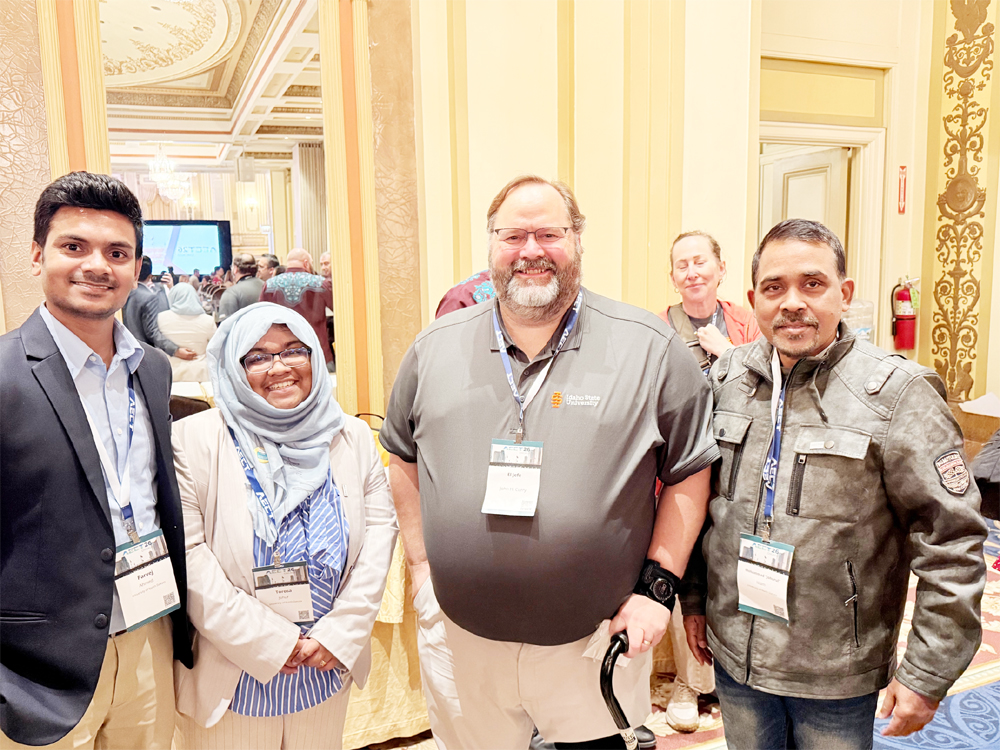
The Johur Family from Bangladesh is once again participating in the academic community through the Association for Educational Communications and Technology (AECT) 2026 International Convention, held at Palmer House in Chicago, Illinois, from November 3–7, 2026.
This year, the family and its research collaborators are contributing six research papers, including four concurrent presentations and two roundtable discussions, addressing the growing role of artificial intelligence (AI) in education.
The six research papers examine AI integration in legal education, instructional design, K–12 personalized learning, systems thinking, and adult informal learning.
Together, they address how emerging technologies can support teaching and learning while raising questions about instructional effectiveness, professional readiness, and equitable access to education.
Of the six presentations, Parvej Ahmed is leading three, research team member Pearl Fafa Bansah is leading two, and Dr. Johurul Islam is leading one.
Their collaborative research reflects a shared interest in applying educational technology to practical challenges across different learning environments.
A distinctive aspect of the team’s participation is the contribution of Torosa Johur, a digital accessibility expert, who is responsible for addressing accessibility concerns across the team’s concurrent presentations and roundtable discussions.
Through her collaborative work, she brings attention to the Web Content Accessibility Guidelines (WCAG) 2.2 and a rights-based approach to AI-enhanced education.
Her contribution emphasizes that AI-supported instructional systems, learning resources, and research applications should consider the needs and rights of learners with disabilities.
During the convention’s dinner program on November 5, AECT President Dr. John Curry warmly greeted the Johur Family and expressed hope for extending academic cooperation in educational technology development in Bangladesh.
The interaction offered an encouraging opportunity for future international collaboration in educational research and technology-supported learning.
The Johur Family’s participation, including Torosa’s work on digital accessibility, reflects its continued engagement in international academic research.
Their contributions bring attention to responsible AI integration, inclusive instructional design, and the importance of ensuring that emerging educational technologies remain accessible to everyone.