

Decoding Liu Haixing’s Dhaka Diplomacy

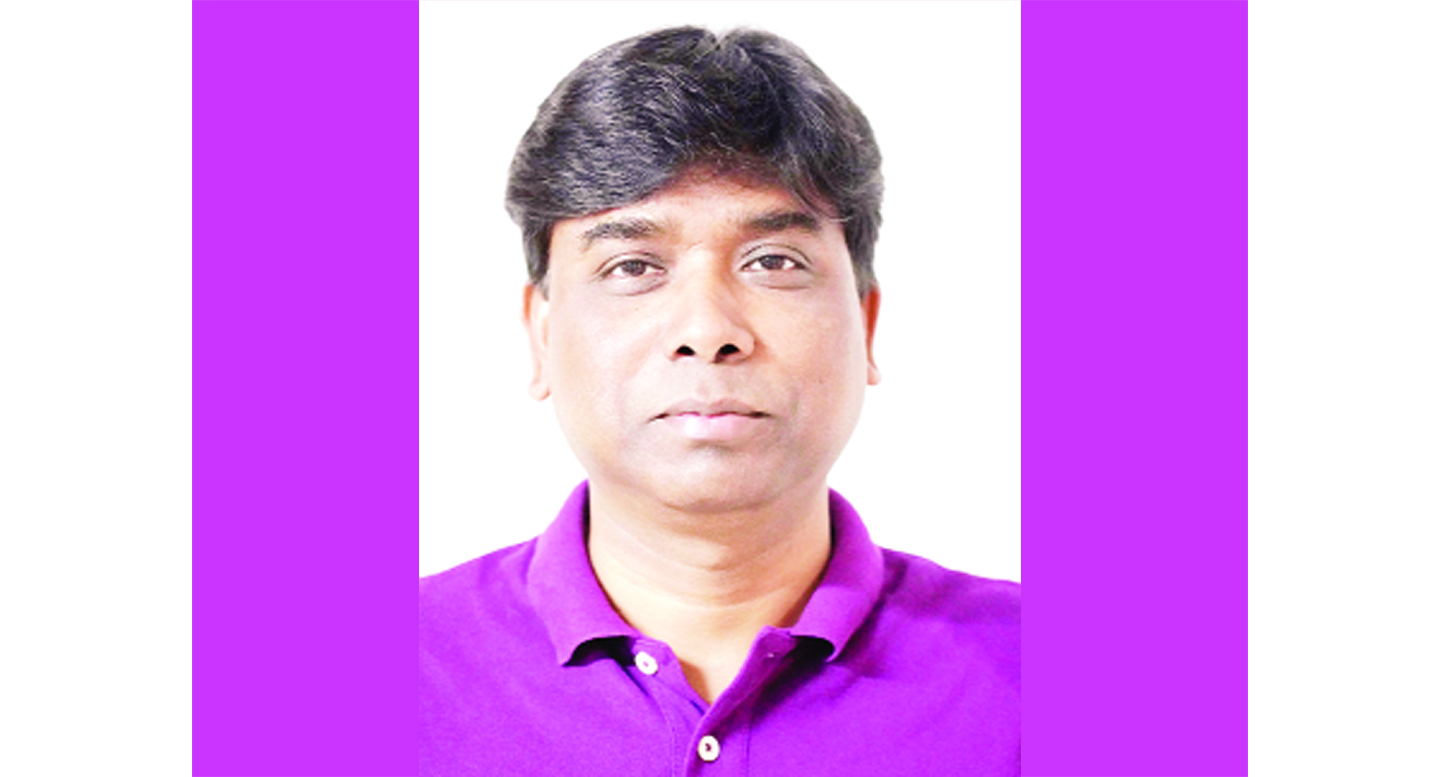
The three-day visit of Liu Haixing, Minister of the International Department of the Communist Party of China (CPC) Central Committee, to Bangladesh from 3 to 5 November was more than a sequence of diplomatic calls.
It was an exercise in political reassurance, relationship-building and strategic positioning.
Through meetings with President Mirza Fakhrul Islam Alamgir, Prime Minister Tarique Rahman, governing-party leaders, representatives of other political parties, academics and students, Beijing signalled that it wants its renewed partnership with Dhaka to take root across the state, political institutions and society.
Liu travelled to Bangladesh after leading a CPC delegation to Pakistan, where he met Prime Minister Shehbaz Sharif and senior political and military figures.
His Dhaka visit followed Tarique Rahman’s official trip to Japan from 26 to 29 October. The sequence does not, by itself, prove that Liu was dispatched to counter Japan’s outreach.
The more persuasive reading is that Beijing wants to consolidate the commitments made during Tarique’s June visit to China while demonstrating that Bangladesh remains central to its regional diplomacy.
Liu’s visit had an unusually personal dimension. His father, Liu Shuqing, served as China’s ambassador to Bangladesh. At Bangabhaban, archival footage showed his father presenting credentials to President Ziaur Rahman in 1980.
Liu also visited the former and current Chinese embassy sites.
His wreath-laying at the graves of Ziaur Rahman and former Prime Minister Khaleda Zia was therefore more than protocol.
It recognised political figures associated with the early development of Bangladesh-China relations and connected Liu’s family history with Bangladesh’s political memory. Prime Minister Tarique, in turn, recalled that the foundations of the relationship were laid during his father’s presidency.
These gestures gave the visit a language of continuity as Bangladesh entered a new political phase.
The meetings with the President and Prime Minister placed the relationship at the highest state level. Liu conveyed President Xi Jinping’s greetings to Tarique, who reciprocated greetings to Xi and Premier Li Qiang.
Both sides referred to the June 2026 visit, during which the leaders announced a China-Bangladesh community with a shared future in the new era.
The meetings also gave Dhaka an opportunity to place its priorities directly before a senior Chinese party official, rather than rely solely on routine diplomatic channels. It matters when commitments require political follow-through in Dhaka.
But the visit’s distinguishing feature was its party diplomacy. Liu met BNP Acting Secretary General and Prime Minister’s political adviser Ruhul Kabir Rizvi and joined a roundtable with representatives of several political parties.
He said China did not draw ideological lines or distinguish between governing and opposition parties.
That formulation reflects the remit of the CPC’s International Department: to maintain relationships with political organisations beyond conventional government-to-government diplomacy.
The inauguration of the Bangladesh-China Centre for Party and State Governance Studies at the Bangladesh Institute of International and Strategic Studies (BIISS) gives this approach a permanent institutional platform.
The centre is intended to facilitate research and exchanges on party organisation, governance, public policy and institutional development. Its value will depend on whether it supports serious, independent research and reciprocal learning, rather than one-way promotion of a political model.
Bangladesh can study China’s experience in long-term planning, infrastructure delivery and poverty reduction without assuming that its political system or institutions can be transplanted.
The third channel was public engagement. Liu attended a livelihood-support programme at Shamsul Haque Khan School and College, where smart-classroom equipment, books and other educational materials were provided.
The emphasis on “small but beautiful” projects seeks to make cooperation visible to students and communities, not just ministers and business leaders. It gives practical expression to agreements reached in June.
The clearest political reassurance concerned the One China principle. Bangladesh had reaffirmed it in the June joint communiqué, recognising the People’s Republic of China as the sole legal government representing China and Taiwan as part of its territory.
President Mirza Fakhrul reiterated the position during Liu’s visit. For Beijing, this is a core interest; for Dhaka, restating an established policy signals continuity, not a new strategic alignment.
China’s reciprocal message was that it would respect Bangladesh’s sovereignty and its right to choose a development path suited to its circumstances, while continuing cooperation in infrastructure, trade, agriculture, science and technology, and green energy.
Liu also backed Bangladesh’s interest in RCEP and discussed the Bangladesh-China-Myanmar Economic Corridor.
These are signals of support, not guarantees of accession or completed projects. RCEP membership would require a separate assessment and agreement among its parties.
Dhaka’s most urgent request concerned the Rohingya. Tarique highlighted the pressure that around 1.3 million refugees place on Bangladesh and asked China to help secure a solution. Liu said he would convey the concern to Xi.
China’s access to Myanmar gives it diplomatic leverage, but the assurance is not a breakthrough. Its credibility will be judged by whether Beijing can help create conditions for safe, voluntary and dignified repatriation.
Meanwhile, Tarique’s Japan visit produced an upgraded “BIG-B for Shared Prosperity” framework, covering connectivity, resilience to disasters and geopolitical risks, public-private investment, and regional peace and stability.
Japan projected private investment of up to one trillion yen over five years and announced a patrol vessel to strengthen Bangladesh’s maritime-security capacity. These commitments give Tokyo a significant economic and security role in the Bay of Bengal.
However, there is no evidence that Liu’s visit was organised as a direct response to Japan. A more convincing interpretation is that Bangladesh’s strategic and economic importance is attracting several partners at once.
China offers infrastructure, industrial cooperation, trade and connectivity; Japan brings investment, technology and maritime cooperation.
Dhaka should seek to make these relationships complementary rather than allow them to become competing political choices.
India will also watch China’s expanding role in Bangladesh, particularly projects involving the Teesta, Mongla Port and regional connectivity. New Delhi has previously said it is monitoring such developments.
These sensitivities are real, but another country’s security concerns should not dictate Bangladesh’s development choices. Projects must be assessed for viability, environmental impact, transparency and national benefit.
The proposed Bangladesh-China-Myanmar Economic Corridor faces a further obstacle: continuing conflict and instability in Myanmar make any route uncertain.
Moreover, Liu’s Pakistan-Bangladesh itinerary showed Beijing’s determination to maintain close political channels with important South Asian partners.
In Dhaka, the combination of state meetings, cross-party engagement, a governance centre, historical symbolism and school-level assistance presented a broad strategy: sustain political trust, shape long-term institutional links and build public familiarity with China.
Bangladesh should welcome Chinese engagement without surrendering the freedom to make independent choices. It should also preserve constructive relations with India and Japan.
Its strongest position in the Bay of Bengal will come not from choosing between Beijing, Tokyo and New Delhi, but from working constructively with all three on transparent, mutually beneficial terms. That is the strategic test Liu Haixing’s visit has placed before Dhaka.
(The Writer is the Diplomatic Correspondent of the New Nation)