Leprosy is just any other infectious disease, not a ‘curse’ or ‘sin’

Shobha Shukla, Bobby Ramakant- CNS :
Once feared as an incurable neglected tropical disease, leprosy has been treatable and curable with modern medicines since early 1980s. If diagnosed early and treated promptly, it is not disabling too. It is transmitted through close and frequent contact with people who have not been treated. It is NOT spread by casual contact like shaking hands, hugging, sharing meals, or sitting next to someone affected by the disease. Also, the patient stops transmitting the disease within three days after starting treatment with multi-drug therapy.
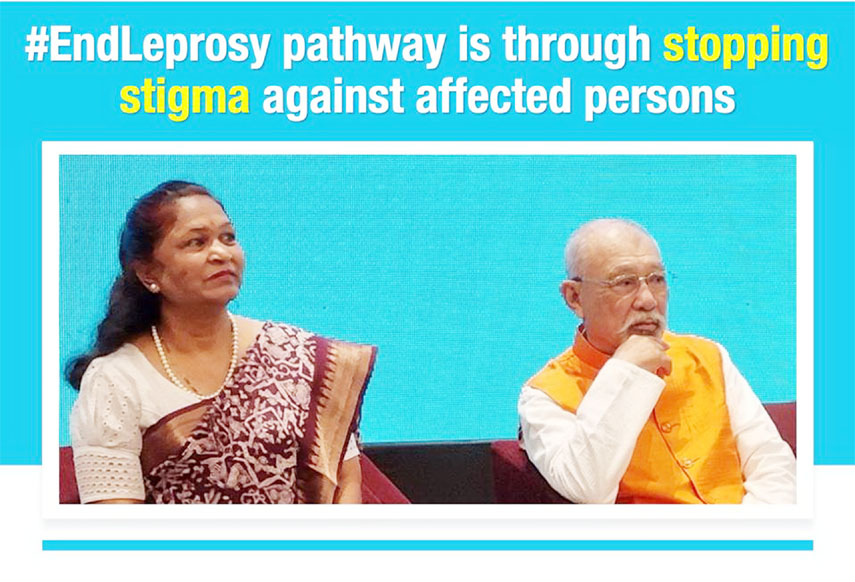
“Leprosy is just like any other infectious disease and its bacteria can infect anyone susceptible to it. It is not caused by some ‘sin of past life’ or by any ‘divine curse’. Then why are we stigmatising and discriminating people affected by leprosy even today?” wonders Maya Ranavare, the first female national President of the Association of Persons Affected by Leprosy (APAL). APAL works in 18 states of India connecting people affected by leprosy living in around 800 leprosy colonies.
Maya was born and raised in a ‘leprosy colony’ in Maharashtra state of India.
Years back, her mother was affected by leprosy. Maya’s husband too had leprosy and got cured. “As I was living in a leprosy colony, healthcare workers did their routine screening regularly. When I was about six years old, I was diagnosed quickly after healthcare workers saw white spots. I could access the medicines and get cured, thanks to them,” she said.
Today, she battles leprosy-related stigma and discrimination that continues to cause havoc in the lives of people affected with leprosy even today.
That is why, she and other end Leprosy leaders together launched a Global Appeal 2025 to end stigma and discrimination against persons affected by leprosy. It was launched from Odisha (one of the high leprosy burden states in India) with endorsement from ministries of health of 56 countries worldwide. The World Health Organization (WHO) Goodwill Ambassador for Leprosy Elimination Yohei Sasakawa said that 2025 marks 20th anniversary since the Global Appeal was first launched in 2006 in India, home to largest number of people affected by leprosy worldwide. “If we join hands and combine our efforts the vision of a leprosy free world is not an impossible dream- together we can make it possible,” said Sasakawa.
Being on the frontlines of fighting stigma
Maya is a remarkable person indeed! Having firsthand witnessed the trials and tribulations (as well as a lot of resilience and some triumphs) of people affected by leprosy since her childhood, she has lived experience of facing and confronting stigma, discrimination and ostracism. She is a survivor and continues to make a difference for the people affected by leprosy globally.
As a woman leader of APAL, Maya has helped highlight and respond to leprosy-related issues with a gender lens. Many girls and women share their concerns which underline the critical need for a gender-sensitive response to address leprosy and other health and development challenges, including stigma, they face- within their homes / families, or at workplaces, or in society in general. Sharing is caring and together unitedly they are trying to find gendered and locally relevant solutions to counter negative and harmful stereotypes related to leprosy and gender.
She shared with CNS (Citizen News Service) that in the past years people who got leprosy disease, when abandoned by their families, were forced to seek shelter in the so called ‘leprosy colonies’. APAL survey shows that there are around 800 leprosy colonies in the country. Odisha state, which is one of the high leprosy burden states in India, has 86 leprosy colonies. Some of the people in leprosy colonies have been living there for the last 60-70 years. Thankfully, in the recent past no new leprosy colony has come up in India.
Maya has studied till 7th standard but has done us all proud by voicing the needs of people affected by leprosy nationwide and advocating for change. She has travelled to over 14 countries to unite people affected with leprosy and call for a just change. She told us that she has worked with the government at all levels (district, state and national) and is trying to improve the health and development responses for people affected by leprosy. She has also coordinated State Human Rights Commission and has been a key member of the District Leprosy Coordination Committee.
Maya has received various awards recognising her contribution towards betterment of people affected with leprosy, including Sasakawa India Leprosy Foundation’s “Rising to Dignity Award” and RK Mehta Charitable Trust’s “Social Service Award.” In 2014, she was cast in a documentary called ‘The unsung Hero.”
Right to education and right to employment and decent wages
India’s Right To (Compulsory and Free) Education Act, 2009 recognises that eligible children who should get compulsory and free education include those who are ‘disability cured’. But reality on the ground is far from being ideal.
Maya points towards several laws and conflicting policies when it comes to ending leprosy. Unless we harmonise policies and laws to support persons affected by leprosy, it is not possible to end leprosy – and ensure a life of human dignity and rights for the people affected by leprosy. Even though the disharmony in laws and policies has reduced over the years but it is still far from being an ideal policy framework.
One example is The Rights of Persons with Disabilities Act, 2016. It was only after a lot of community-led advocacy by Maya and others, that it included people affected by leprosy. But awareness level among communities affected by leprosy is way below from being optimal. The gap in translating the law in practice becomes wider when it comes to women, says Maya.
She also underlines the dire need for providing optimal mental health support to people affected by leprosy, uniform education for all children affected by leprosy as well as due and just employment and decent wages for the adults.
The Indian government has promised to end leprosy by 2027 – three years before the global target for leprosy elimination. But ending all forms of stigma and discrimination against persons affected by leprosy is an urgent priority in the region.
(Shobha Shukla and Bobby Ramakant lead the editorial at CNS (Citizen News Service) and are on the board of award-winning Global Antimicrobial Resistance Media Alliance (GAMA). CNS is an official media partner of AIDS 2024. Follow them on twitter @Shobha1Shukla, @BobbyRamakant)