


Bangladeshi firms most confident, active against global peers : HSBC

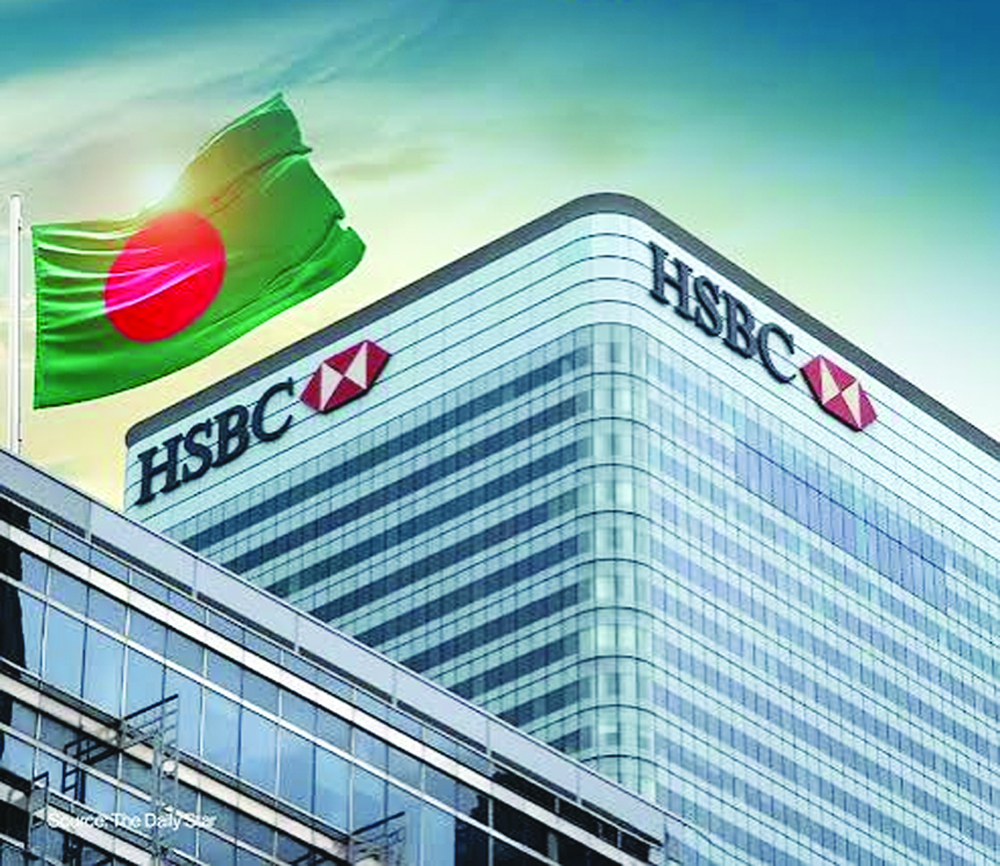
Bangladesh ranks first among 26 markets surveyed for supply chain realignment, with 91per cent of local business leaders confident about expanding international trade over the next two years, according to HSBC’s Global Trade Pulse Survey 2026.
The survey found that Bangladesh leads globally in reshoring, with 55per cent of businesses having already taken steps to bring operations closer to home, compared with the global average of 36per cent.
It also leads in the Chinese mainland +1 diversification strategy, with 57per cent of firms taking such steps against the global average of 36per cent.
The survey captures the views of 10,000 senior business leaders on trade, tariffs, supply chains and technology.
Globally, energy has emerged as the leading cost pressure, with 44per cent of global businesses identifying it as the most significant factor affecting their cost base over the past six months, followed by tariffs (43per cent ) and freight (41per cent ).
While 68per cent of businesses have already experienced higher overall costs, 72per cent expect expenses to rise further over the next two years.
Supply chain uncertainty is also weighing on business performance, with 59per cent reporting increased working capital requirements since 2025.
In response, businesses are prioritizing operational efficiency, renegotiating supplier arrangements, securing energy supplies and broadening their international networks.
Technology is also playing an increasingly important role in reshaping global trade, with AI adoption gaining momentum across business operations.
Bangladesh ranks first of the 26 surveyed markets for supply chain actions already taken, leading globally in reshoring (55per cent vs 36per cent globally) and Chinese mainland +1 diversification (57per cent vs 36per cent globally).
An overwhelming 91per cent of Bangladeshi business leaders remain confident about expanding international trade over the next two years, with 56per cent describing themselves as very confident.
Mitigation efforts are proving effective for 90per cent of local firms, with 81per cent reporting improved cash flow and working capital.
Technology adoption is also gathering pace: 86per cent of Bangladeshi enterprises have deployed AI in trade functions, with 80per cent expecting global tech infrastructure investments to drive demand for their products.
However, rising operational expenses and liquidity pressures pose serious hurdles for local commerce.
Energy is the most acute cost pressure in Bangladesh, affecting 50per cent of firms followed by raw materials at 49per cent .
In total, 70per cent of Bangladeshi firms report higher costs to date, and 76per cent forecast expenses to rise further over the next two years.
These strains have lifted working capital needs for 64per cent of companies since 2025, leading 96per cent of respondents to view commercial banks as vital partners in sustaining cross-border operations.
The survey found that 31per cent of Bangladeshi businesses reported that tariffs and trade uncertainty had negatively affected their operations to date, while 32per cent experienced a reduction in revenue as a result.
Looking ahead, 37per cent expect further revenue reductions over the next two years, compared with the global average of 28per cent .
While 96per cent of Bangladeshi businesses reported using at least one Free Trade Agreement (FTA), 97per cent of those using such agreements identified barriers to their greater utilization, compared with 92per cent globally, highlighting the challenges businesses continue to face in fully benefiting from preferential trade arrangements.
Alongside the growing adoption of AI, the survey also highlights the importance of responsible implementation.
While 86per cent of Bangladeshi businesses have deployed AI in at least one trade-related function, the average share of ten identified AI governance measures implemented by local firms stands at 40per cent , compared with 35per cent globally.
This highlights the need for businesses to strengthen governance, accountability and oversight as AI becomes increasingly integrated into trade operations.
The survey took place between September 18 and October 6, 2026, across 26 markets including Bangladesh.
250 responses were collected in each of Australia, Bangladesh, Brazil, Egypt, France, Germany, Indonesia, Italy, Japan, Malaysia, the Philippines, Saudi Arabia, Singapore, South Korea, Spain, Taiwan, Thailand, Türkiye, UAE and Vietnam; 500 in each of Hong Kong and Mexico; and 1,000 in each of India, Chinese mainland, the UK and the US, totalling 10,000.
Close to 14per cent had a global turnover of over $2 billion in the past 12 months; the rest turned over between $50 million and $2 billion.