


Shaheed President Ziaur Rahman’s 19-Point Programme: From National Vision to Global Goals

Shaheed President Ziaur Rahman’s historic 19-Point Development Agenda, announced in 1977, was a forward-looking vision for national development.
The 9-Point Programme aimed to build a self-reliant, sovereign and prosperous Bangladesh through people’s participation and national unity. It prioritised agricultural development, food security, poverty reduction and economic growth.
It also emphasised education, healthcare, women’s advancement and social justice. Decentralised governance and the protection of citizens’ rights were integral to its vision Throughout modern history, visionary leaders and political movements have introduced landmark programs and declarations to address the challenges of their nations and the wider world.
For example, US President Woodrow Wilson’s Fourteen Points (1918), focusing on international peace and cooperation; Indian Prime Minister Indira Gandhi’s Twenty-Point Programme (1975), aiming at poverty reduction and socio-economic development; and the Black Panther Party’s Ten-Point Programme (1966), demanding equality, justice and basic rights. South Africa’s Freedom Charter (1955) set out principles of democracy and equal rights.
German Chancellor Helmut Kohl’s Ten-Point Program (1989), proposing a framework for German reunification.
Later, Nelson Mandela and the ANC-led movement advanced the Reconstruction and Development Programme (1994) for addressing poverty, inequality and the challenges of rebuilding South Africa.
Shaheed President Ziaur Rahman was a visionary leader who devoted himself to rebuilding war-torn Bangladesh through his 19-Point Programme.
These priorities remain relevant till today and closely correspond to concerns addressed by the United Nations Sustainable Development Goals (SDGs)adopted by UN Member States in 2015 that contain 17 goals providing a global framework for development.
Many of the priorities now covered by the SDGs – including poverty reduction, food security, healthcare, education, gender equality, employment, justice and international cooperation – were also reflected in the 19-Point Programme announced by Shaheed President Ziaur Rahman on 30 April 1977.
Ziaur Rahman’s agenda was reflected in his actions during his administration, as more than 1,500 canals were excavated or re-excavated in about one and a half years to improve irrigation and agricultural production. Food-grain production in the fiscal years 1976-77 and 1977-78 were increased, and an average annual GDP growth rate of 6.4 percent during 1976-78 was achieved.
The 19-Point Programme and the Sustainable Development Goals (SDGs)
As claimed, Ziaur Rahman’s 19-Point Programme is its connection with the UN Sustainable Development Goals (SDGs). Its emphasis on self-reliance, agriculture, employment and citizens’ basic needs closely relates to SDG1 (No Poverty).
Its commitment to agricultural development and food self-sufficiency reflects SDG2 (Zero Hunger). Similarly, its call for basic healthcare for all and the elimination of illiteracy corresponds to SDG 3 (Good Health and Well-being) and SDG4 (Quality Education).
Its commitment to improving women’s status relates to SDG 5 (Gender Equality). The 19-Point Programme’s emphasis on canal excavation, irrigation and agricultural development provides a limited connection with SDG 6 (Clean Water and Sanitation).
Its focus on water management can be extended today to ensure safe water, improved sanitation and sustainable use of water resources. The 19-Point Programme’s emphasis on agricultural productivity, rural development and industrial growth can be linked to SDG 7 (Affordable and Clean Energy).
Its support for private enterprise, workers’ welfare and productivity connects with SDG 8 (Decent Work and Economic Growth), while its broader economic development vision can be extended to SDG 9 (Industry, Innovation and Infrastructure) through modern technology and infrastructure. Its commitment to equal rights for all citizens supports SDG10 (Reduced Inequalities).
Its emphasis on housing and decentralization also resonates with SDG11 (Sustainable Cities and Communities). The programme did not explicitly address modern sustainable consumption, but its focus on self-reliance and production can be extended to SDG12 (Responsible Consumption and Production).
The 1977 programme did not explicitly identify climate action, marine conservation or biodiversity as separate goals. However, its development vision can be expanded today to address SDGs 13, 14 and 15 through climate action and the protection of rivers, wetlands, forests and biodiversity.
Its emphasis on justice, public participation, anti-corruption and local government relates to SDG 16 (Peace, Justice and Strong Institutions). Finally, its principle of friendly relations with all countries on the basis of equality is consistent with SDG 17 (Partnerships for the Goals).
This comparison does not suggest that the SDGs originated from Ziaur Rahman’s program or that the two frameworks are identical. The SDGs emerged from a global UN process. Rather, the comparison highlights how several priorities of President Zia’s 1977 development vision remain relevant to today’s global development agenda.
The 19-Point Programme has special importance in the present political context. Shaheed President Ziaur Rahman founded the Bangladesh Nationalist Party (BNP). His wife, Begum Khaleda Zia, served as Prime Minister three times.
Their son, Tarique Rahman, is now the Prime Minister of Bangladesh. This political legacy gives the present government an opportunity to translate the program’s principles into policies that respond to the needs of today’s Bangladesh.
The government can begin by reviewing the 19 points against the 17 SDGs to identify areas of strong alignment, areas that need updating and areas that require new policy commitments.
For example, agricultural self-sufficiency should be linked with climate-resilient farming, fair prices and modern storage.
The commitment to education should include technical skills and digital learning. Healthcare should become more accessible and affordable. Decentralisation should give local government institutions real authority and resources.
The call for justice should be reflected in transparent institutions and equal treatment under the law.
Environmental protection deserves particular attention. The 19- Point Program did not contain the detailed climate and biodiversity agenda that the world recognises today.
Bangladesh now needs to connect its development priorities with climate action, sustainable water management, forest conservation and the protection of rivers and wetlands.
The effective implementation of the 19-Point Programme could serve as a strong foundation for Bangladesh’s sustainable development. Bangladesh can accelerate its progress towards the 17 United Nations Sustainable Development Goals (SDGs) by 2030.
Such progress would also strengthen the country’s capacity to achieve a successful and sustainable graduation from Least Developed Country (LDC) status, currently scheduled for 24 November 2029.
Thus, Ziaur Rahman’s development vision can continue to inspire Bangladesh’s journey towards a prosperous, inclusive and resilient future, Insha’Allah.
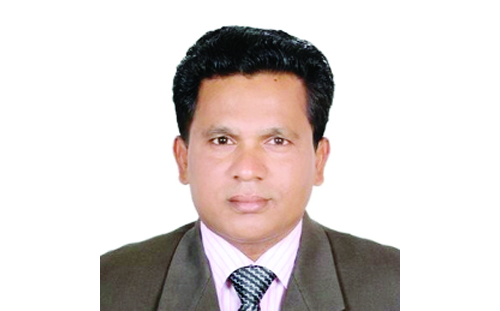
(The writer is researcher, educator and columnist.
Email: enamul.m@gmail.com)