


Bangladesh steps up efforts to boost fish exports

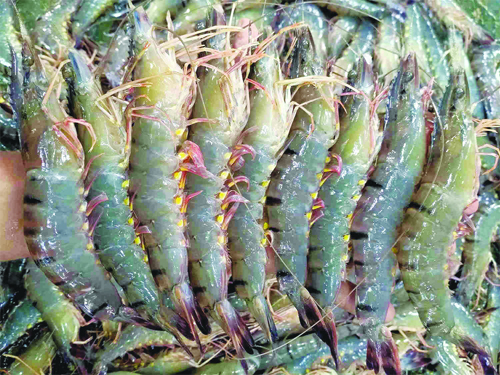
Bangladesh is stepping up efforts to expand fish and fishery product exports by strengthening food safety, promoting value-added products, and exploring new international markets, targeting annual export earnings of US$1 billion from the sector by 2030.
Officials state that these initiatives aim to strengthen the country’s position in the global seafood market by ensuring products meet international quality and safety standards while reducing dependence on traditional export destinations.
Under the Fish and Fish Products (Inspection and Quality Control) Act, 2020 and related rules, the Department of Fisheries ensures processing plant inspection, export consignment inspection, health certification, hygiene and sanitation control, and food safety compliance through its Fish Inspection and Quality Control (FIQC) activities.
Three ISO/IEC 17025-accredited laboratories in Dhaka, Chattogram, and Khulna carry out microbiological, chemical, and residue testing. Under the National Residue Control Plan (NRCP), authorities test antibiotic residues, pesticide residues, heavy metals, and other contaminants regularly.
Of the 107 fish processing plants in the country, 77 hold EU approval, and authorities continue efforts to ensure these establishments follow HACCP, Good Hygiene Practices, sanitation, and international food safety standards.
The government has also moved to strengthen farm-to-export traceability, spanning from production or catch through to processing and export, while expanding digital traceability and electronic documentation.
Stakeholders place emphasis on maintaining an uninterrupted cold chain through modern ice plants, insulated boxes, refrigerated transport, cold storage, blast freezing/IQF, and temperature monitoring.
Instead of raw or minimally processed products, producers now focus on manufacturing and exporting value-added items, including peeled and deveined (P&D) shrimp, IQF seafood, fish fillets, ready-to-cook and ready-to-eat seafood, processed crab, and consumer-packed products. Initiatives tap the export potential of shrimp, crab, eel, and high-value marine fish.
At the production level, producers reduce food safety risks through Good Aquaculture Practices, quality fish seed and feed, biosecurity, disease control, water quality monitoring, and the responsible use of aquaculture medicines.
To meet WTO Sanitary and Phytosanitary (SPS) requirements, as well as importers’ food safety, residue, traceability, and certification standards, authorities step up FIQC activities.
Alongside retaining traditional markets such as the EU, the USA, and Japan, the government works to expand exports to China, South Korea, the Middle East, ASEAN countries, and other potential markets.
The administration also pursues initiatives to make optimum use of marine fisheries resources and boost marine fish exports through modern fishing technology, onboard handling, icing, cold chain development, and sustainable fisheries management.
Officials state that the government aims not merely to raise fish production but to produce and export safe, quality, traceable, and value-added fish and fishery products.
Fisheries and Livestock Minister Mohammad Amin Ur Rashid told Parliament on Tuesday that the Department of Fisheries had prepared a five-year action plan to implement the government’s election manifesto, setting the export earnings target as part of efforts to expand the country’s fisheries sector.
The minister reported that Bangladesh earned $504.58 million, equivalent to around Tk6,193 crore, by exporting 93,530 tonnes of fish and fish products in the 2025-26 fiscal year, up from $501 million from 90,620 tonnes in FY25, indicating growth in both volume and value. He noted that improved infrastructure, policy support, quality production, processing facilities, and value addition could help the fisheries sector emerge as a stronger non-RMG export driver for Bangladesh.
Data from the Export Promotion Bureau (EPB) and Bangladesh Bank show that the fisheries sector maintained positive export growth despite the global economic slowdown and unfavorable conditions in international markets. While the country’s overall merchandise export earnings fell slightly from $48.28 billion in FY25 to $48 billion in FY26, the contribution of fisheries to total exports increased from 1.04 percent to 1.05 percent. Bangladesh exports fish and fish products to more than 52 countries, with the European Union remaining the largest destination. Other major markets include China, India, the United States, Japan, Russia, South Korea, the United Arab Emirates, Thailand, Australia, Saudi Arabia, Vietnam, Nepal, Malaysia, Mexico, Singapore, and Qatar. Frozen shrimp, particularly Bagda and Golda varieties, account for the largest share of Bangladesh’s fish exports, alongside crabs, eels, snails, mussels, marine fish, cuttlefish, squid, octopus, lobsters, scallops, freshwater fish, catfish, dried fish, fish maw, fish scales, and shrimp shells.
The fisheries sector makes a significant contribution to the domestic economy, accounting for 2.53 percent of the country’s GDP and 22.26 percent of agricultural GDP. Despite geopolitical tensions, wars, volatile energy prices, high inflation, declining consumer purchasing power in Europe and the United States, and disruptions to global supply chains, the sector maintained positive export growth in FY26, outperforming the country’s overall export earnings decline of 0.58 percent during the fiscal year.