


Owners eye factory shutdowns sine die

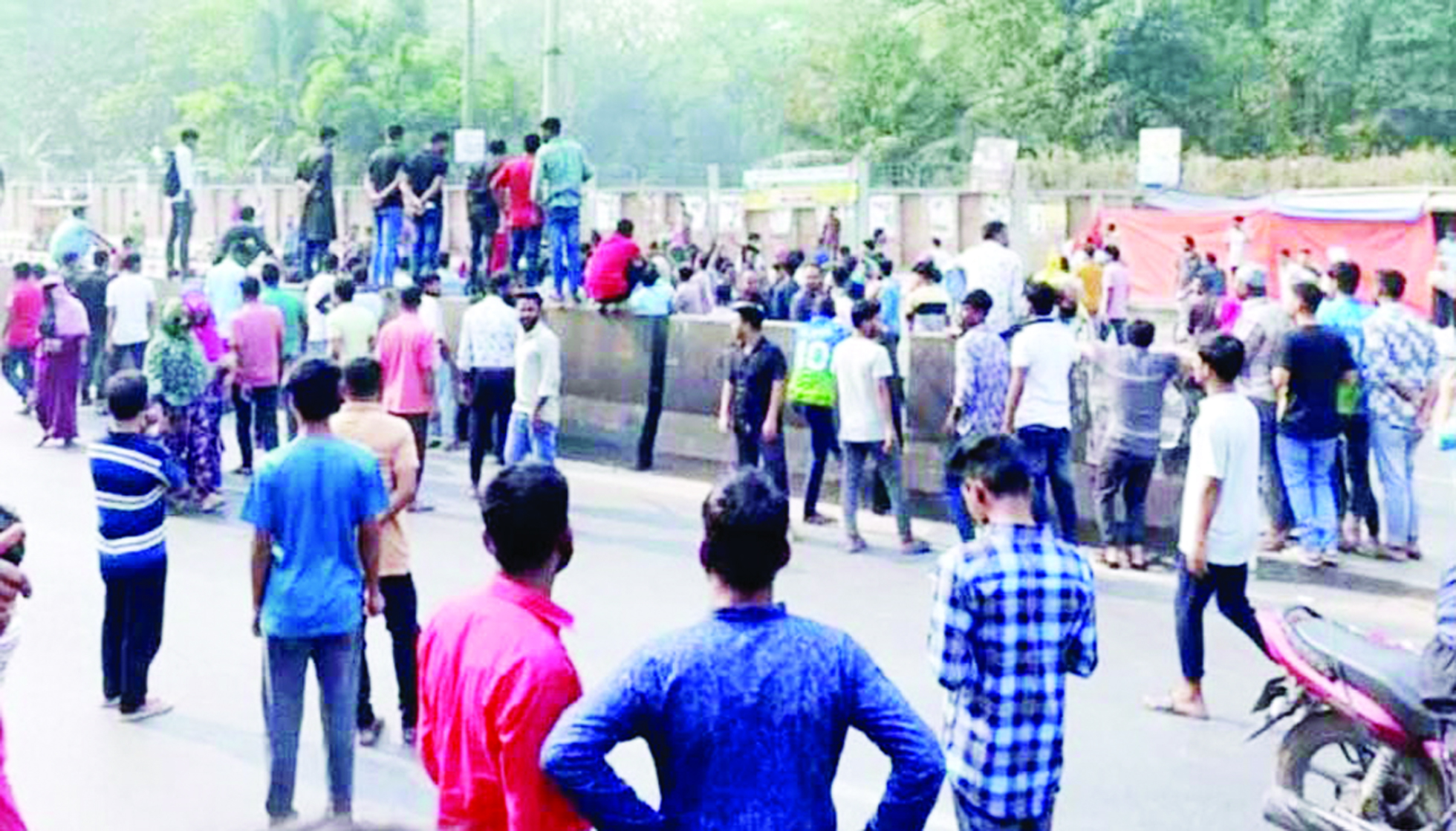
Growing concerns over violence, vandalism and repeated production disruptions have prompted garment factory owners to consider shutting down hundreds of units indefinitely, as the continuing labour unrest makes it increasingly difficult to keep factories operational.
The owners fear that further deterioration in the situation could force more factories to suspend operations, disrupt export commitments and increase production costs.
Some units have already remained closed or struggled to operate for nearly two weeks, raising concerns over their ability to pay workers’ wages and meet shipment deadlines.
Against this backdrop, the Bangladesh Garment Manufacturers and Exporters Association (BGMEA) held an emergency meeting on Wednesday to discuss the worsening labour situation, where factory owners and former association presidents expressed concern over the difficulties of opening and running their units.
BGMEA Vice-President Md Rezwan Selim, who oversees labour issues, said most of the owners and former BGMEA presidents attending the meeting agreed that factories might have to be closed under the Bangladesh Labour Act (BLA) if the unrest continued.
He said the owners were facing serious difficulties in operating their factories amid workers’ refusal to work and other disruptions.
Closing factories under Section 13(1) of the Labour Act would mean applying the ‘no work, no pay’ provision, under which workers would not receive wages for the period of closure.
Garment factory owners are considering the indefinite closure of 210 factories in Ashulia and other unrest-prone areas.
Meanwhile, 143 factories in Ashulia, Jamgora and Hemayetpur were forced to suspend operations yesterday (11 November) amid continuing labour disruptions.
Industry leaders reached an initial understanding on the proposed closures at the emergency meeting. A final decision will be taken at a meeting of all BGMEA members scheduled for Saturday, sources present at the meeting told the media.
Owners said some workers were entering factories but refusing to work, while others were leaving after marking their attendance.
Several factories have remained unable to operate normally for almost two weeks, with some owners already issuing closure notices under Section 13(1) of the Labour Act.
Shovon Islam, managing director of Sparrow Group, who attended the meeting, said industry leaders had agreed to consider the indefinite closure of 210 factories in Ashulia and other areas affected by unrest.
The proposal would be formally placed before the members on Saturday for a final decision, he added.
The affected industrial belt includes major manufacturers such as Ha-Meem, New Age, Ananta Garment, Starling, Envoy, Islam and Dekko. According to BGMEA sources, these factories collectively employ around 300,000 workers.
Mohammad Rashed, vice-president of the Bangladesh Knitwear Manufacturers and Exporters Association (BKMEA), said workers were refusing to work and vandalising factories while negotiations over wages were also under way.
“Some factories have been unable to operate for 11 days. How will they pay workers’ wages?” he said, adding that an earlier government request to keep factories open had failed to resolve the situation.
Although labour unrest has eased in Gazipur, Mirpur and Narayanganj following the announcement that the revised wages would come into effect in December, tensions continue in parts of Ashulia and Savar.
Under Section 13(1) of the Labour Act, employers can declare a factory closed indefinitely if workers remain unwilling to work or labour unrest makes it impossible to continue operations. Workers are not entitled to wages during the closure period.
Apart from the immediate financial implications, factory owners are increasingly worried about fulfilling existing export orders if the shutdowns continue. Shovon Islam said shifting production to other factories through subcontracting might not be a practical option because of existing order commitments and compliance requirements.
As a result, affected manufacturers could face additional costs for air shipments to meet delivery deadlines or risk losing orders altogether, he said.
A BGMEA leader, speaking on condition of anonymity, said more than 140 factories in Ashulia and other parts of Savar had suspended production yesterday as workers refused to work.
The number of affected factories was around 50 until 11:30am but increased as the day progressed.
No significant labour unrest or factory closures were reported in Gazipur, Mirpur or Narayanganj yesterday.
Meanwhile, BGMEA Vice-President Rezwan Selim said the owners’ representative on the minimum wage board for garment workers was preparing a proposal to submit at the board’s meeting scheduled for 16 November.
The workers’ representative on the board has already proposed a monthly minimum wage of Tk 32,000 for garment workers.