


Parents in jail, children in limbo

When a parent is sent to prison, the punishment does not stop with the person behind bars. Their children may suddenly lose their primary caregiver, their family’s main source of income or the stable home environment they depend on. Some are taken in by relatives, while others face uncertainty over who will look after them, pay their school fees and meet their everyday needs.
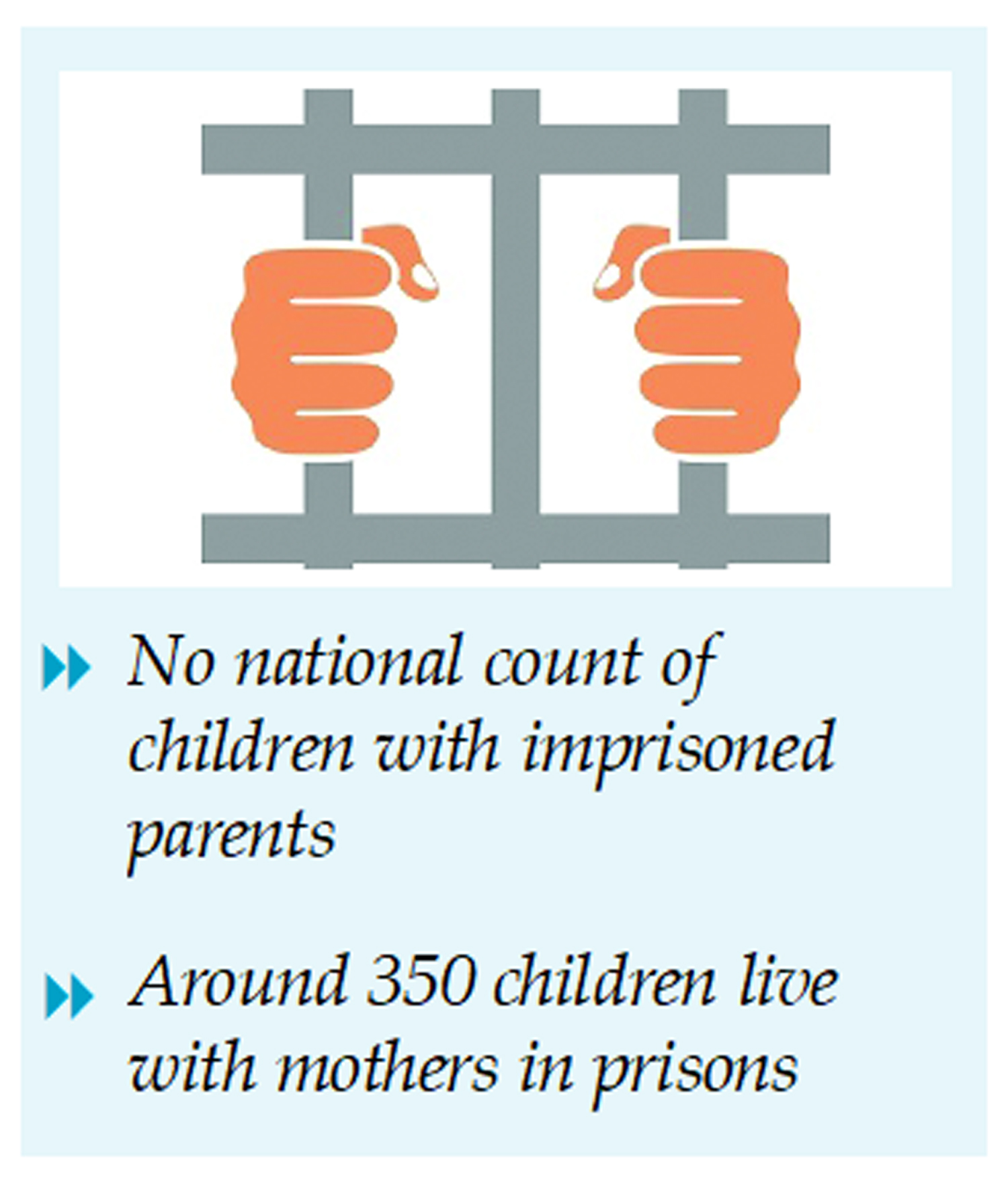
Yet, despite the potentially far-reaching consequences, Bangladesh has no regularly published national count of children whose mothers or fathers are in prison.
The Department of Prisons maintains records of inmates, but the number of children affected by parental imprisonment remains largely unknown. This makes it difficult to assess the scale of the problem, identify vulnerable children and determine what support they need.
So, what happens to these children when a parent is imprisoned, and what protection does the state provide?
Available government figures offer only a partial picture.
According to Department of Prisons data, around 350 children were living with their mothers in prisons across the country. Of them, 178 were boys and 172 were girls.
Bangladesh has approximately 3,800 female inmates and 75 prisons, but only eight prisons have daycare facilities.
These figures, however, cover only children living inside prisons with their mothers. They do not include children staying with grandparents, relatives or other caregivers because their parents are incarcerated. Nor do they account for children whose fathers are behind bars.
The distinction is important: the number of children living in prison is not the same as the total number of children affected by parental imprisonment.
Some children enter prison with their mothers, while others are born there.
They can spend their early childhood in an environment primarily designed for incarceration rather than child development.
According to media reports in July 2026 found 52 children living with 48 female inmates at Kashimpur Women’s Central Jail.
Under arrangements described by prison authorities, children can stay with their mothers until they reach the age of six. If relatives are unable to take responsibility for them afterwards, they may be transferred to a government children’s home with their mothers’ consent.
The government has also acknowledged concerns about their development.
In a report submitted to the High Court, the Department of Social Services said the prison environment was not conducive to children’s physical and mental development in the long term. It recommended family-based care or placement in government children’s homes where appropriate.
The shortage of daycare facilities across the prison system further complicates efforts to ensure a suitable environment for these children.
What happens to children when a parent is imprisoned?
For children living outside prison, the consequences can be equally severe, although they are often less visible.
When a father who provides for the household is imprisoned, the family may suddenly lose its main source of income. When a mother is taken away, children may lose their primary caregiver and be left dependent on other family members.
Grandparents, relatives or other family members often step in to provide care. However, they may lack the financial resources or capacity to take on additional responsibilities.
The resulting financial pressure can affect children’s schooling, healthcare, nutrition and everyday living conditions. Some may have to change schools or discontinue their education because their families can no longer afford the costs.
The emotional consequences can also be significant. Separation from a parent, uncertainty about their return and changes in family relationships can affect a child’s sense of security and well-being.
Parental imprisonment can also expose children to discrimination and social prejudice.
Classmates, neighbours and even extended family members may judge them because of their parents’ alleged or proven involvement in crime.
Children may experience embarrassment, isolation or bullying, even though they bear no criminal responsibility for their parents’ actions.
This creates another layer of vulnerability: alongside the loss of parental care and financial security, they may have to cope with the social consequences of being associated with someone accused or convicted of a crime.
Criminal responsibility belongs to the individual. It should not be transferred to their children through discrimination or neglect.
Children affected by parental imprisonment need protection under the broader child-welfare system, but identifying them is the first challenge.
The Department of Social Services has recognised the need for family-based care and alternative arrangements for children who cannot remain with their mothers in prison.
However, the absence of a regularly published nationwide count makes it difficult to determine how many children outside prison need assistance or whether existing support arrangements are reaching them.
A more coordinated approach involving the Department of Prisons and the Department of Social Services could help identify children whose parents are incarcerated and assess their living conditions.
Such an assessment should consider their ages, education, financial circumstances, caregivers and access to essential services.
What needs to change?
Child-protection measures should begin with identifying the children affected by parental imprisonment.
The Department of Prisons could collect information on inmates with dependent children, including their ages and living arrangements.
The Department of Social Services could maintain records of children referred to government institutions because of parental imprisonment.
The Bangladesh Bureau of Statistics could also consider including parental incarceration in relevant household and child-welfare surveys.
Support should prioritise keeping children in safe family environments wherever possible, with financial assistance for caregivers, uninterrupted education and access to psychosocial services.
Inside prisons, the shortage of daycare facilities also needs attention. Only eight of the country’s 75 prisons have such facilities. Expanding access could help improve conditions for children who remain with their mothers.
However, improving facilities inside prisons alone will not address the needs of the much larger group of children living outside with relatives or other caregivers.
Why does this matter?
Imprisonment is intended to hold individuals accountable for criminal offences. But when a parent goes to prison, children can face consequences that extend well beyond the loss of their parent’s presence.
Without reliable data, appropriate care arrangements and targeted assistance, these children risk being overlooked by the very institutions responsible for protecting their rights.
A parent’s imprisonment should not determine a child’s access to education, healthcare, financial security or a safe childhood.
The first step for Bangladesh is to establish how many children are affected, understand their circumstances and ensure that the support they need reaches them.