


Unequal gains of growth

Bangladesh’s economic progress over the past 55 years has failed to bring corresponding social transformation, political accountability and institutional reform, leaving millions of disadvantaged people outside the mainstream of development and putting progress towards the Sustainable Development Goals (SDGs) at risk, economist Debapriya Bhattacharya has said.
He stressed the need for stronger representation of marginalised communities in policymaking, particularly through elected representatives in parliament, to bridge the widening gap between economic achievements and socio-political realities.
“Somewhere, a gap remains between the economy and politics, social conditions and people’s mindsets,” said Debapriya, distinguished fellow at the Centre for Policy Dialogue (CPD) and convener of the Citizen’s Platform for SDGs, Bangladesh.
He was speaking at the public launch of the All-Party Parliamentary Caucus for Disadvantaged Communities at the Bangladesh-China Friendship Conference Centre in Dhaka on Thursday.
Debapriya said Bangladesh had made considerable economic progress since independence, but its benefits had not reached disadvantaged groups equitably.
Around 3.5 crore people still lived below the poverty line, including nearly one crore in extreme poverty, he said.
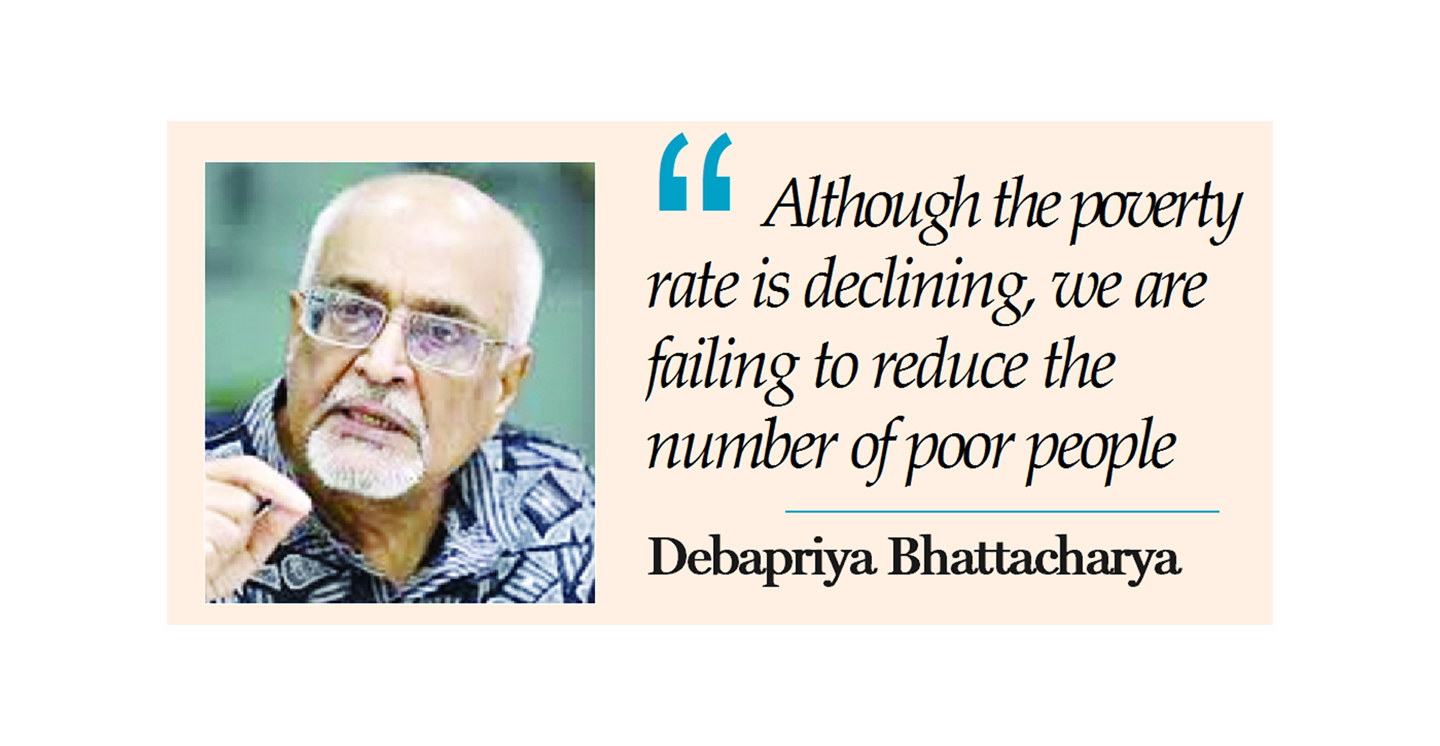
“Although the poverty rate is declining, we are failing to reduce the number of poor people,” he said, questioning how the country would address the needs of such a large population.
Referring to the interim government’s white paper on the state of the economy, he said at least two crore people who had moved above the poverty line remained extremely vulnerable.
“They could fall back into poverty if they failed to earn for just two days,” he said.
Highlighting employment challenges, he said one in every four young people and one in every three educated youths remained unemployed.
Despite an average life expectancy of around 74 years, disadvantaged communities continued to face disproportionately high child mortality, school dropout rates and child labour, he added.
He identified sanitation workers, persons with disabilities, people in drought-prone northern districts and coastal communities as groups deprived of adequate education, healthcare and social protection.
They were also disproportionately affected by corruption, misgovernance and nepotism and faced discrimination from administrative institutions, political structures and even civil society, he said.
“Unless the enlightened and relatively advanced sections of society speak for these people, their own achievements will eventually be at risk.
Democracy, development and social stability will all be at risk,” Debapriya said.
He said civil society and private-sector entrepreneurs had important roles in addressing inequality, but elected representatives must take direct responsibility for protecting the rights and welfare of their constituents.
Political commitment vital to curb corruption
Speaker Hafiz Uddin Ahmad said the newly formed caucus could improve the lives of disadvantaged communities by bringing their concerns to parliament.
He said genuine democracy and credible public representation were essential for equitable development, describing the 13th parliamentary election as the country’s fairest and most acceptable.
Accusing the previous Awami League government of undermining democracy through three consecutive farcical elections, he said the July 2024 mass uprising had ended authoritarian rule.
“The current parliament is working as a reflection of the democratic aspirations of the people, achieved through the sacrifices and struggles of the general public,” he said.
The Speaker said eliminating corruption required firm political commitment, noting that government officials worked under elected representatives.
He also called for an independent Election Commission and highlighted the growing contributions of women lawmakers.
Caucus seeks cross-party action
Chief Whip Nurul Islam Moni said the caucus would bring lawmakers from different political parties, including smaller ones, together to improve the rights, opportunities and living standards of disadvantaged communities.
Caucus president and event chair Barrister AM Mahbub Uddin Khokon, MP, said the initiative aimed to establish a dedicated parliamentary platform for communities excluded from mainstream development.
Participants called for better education and healthcare for ethnic communities in the hills and plains, national identity cards for homeless urban residents and protection for Urdu-speaking communities.
They also demanded permanent housing for Dalits, recognition of sanitation workers, social protection for migrant women workers, stronger garment workers’ rights and special legislation to protect Bede communities, coastal fishers, destitute people, orphans and older citizens.
MP Md Saiful Islam attended the programme, alongside caucus members, whips, civil society representatives, NGO workers and journalists.