

DSCC seeks clear roles for agencies during disasters

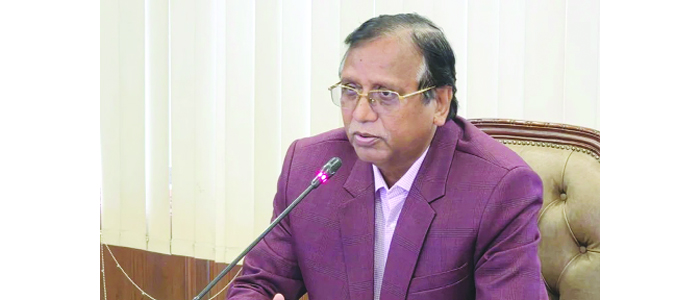
Dhaka South City Corporation (DSCC) Administrator Abdus Salam has called for clear division of responsibilities and stronger coordination among agencies to protect city residents during emergencies and disasters.
He made the call while chairing the fifth meeting of the DSCC Disaster Management Committee at the Nagar Bhaban auditorium on Monday afternoon.
Salam said Fire Service, police, Red Crescent and other relevant organisations must work together, with clearly defined responsibilities during emergencies.
“Assigning responsibilities on paper alone will not be enough to tackle disasters and fires. Effective preparedness must be ensured by considering each organisation’s rescue equipment and actual capacity,” he said.
Pointing out that most areas under Dhaka South had developed without proper planning, he said all relevant agencies needed to work together to reduce the risks of major disasters, including building collapses, fires, chemical and electrical equipment explosions and earthquakes.
He stressed the need for regular drills and public awareness seminars. He also called for greater awareness among young people about fire safety at educational institutions, with support from the Fire Service.
Referring to the recent fire in Moulvibazar in Old Dhaka, the DSCC administrator said narrow roads, water shortages, shops and hawkers had delayed the arrival of firefighting vehicles at the scene.
He said multi-storey buildings and business establishments must have basic firefighting equipment and fire hydrants.
Salam also called for taking hanging cables and electrical wires underground to reduce urban hazards.
He stressed the need to preserve ponds and other water bodies across the city, including those in Dholai Khal, to ensure adequate water supplies for firefighting.
The meeting, conducted by DSCC Chief Executive Officer Md Khaybar Rahman, was attended by 57 representatives of government and private institutions, social organisations and NGOs.
Participants discussed the responsibilities of different organisations in managing activities before, during and after disasters.