


‘BD seeks strategic ties with KSA, not dependency’

Bangladesh wants to transform its longstanding relationship with Saudi Arabia into a comprehensive strategic partnership based on investment, business cooperation and shared interests, rather than dependence on any single country.
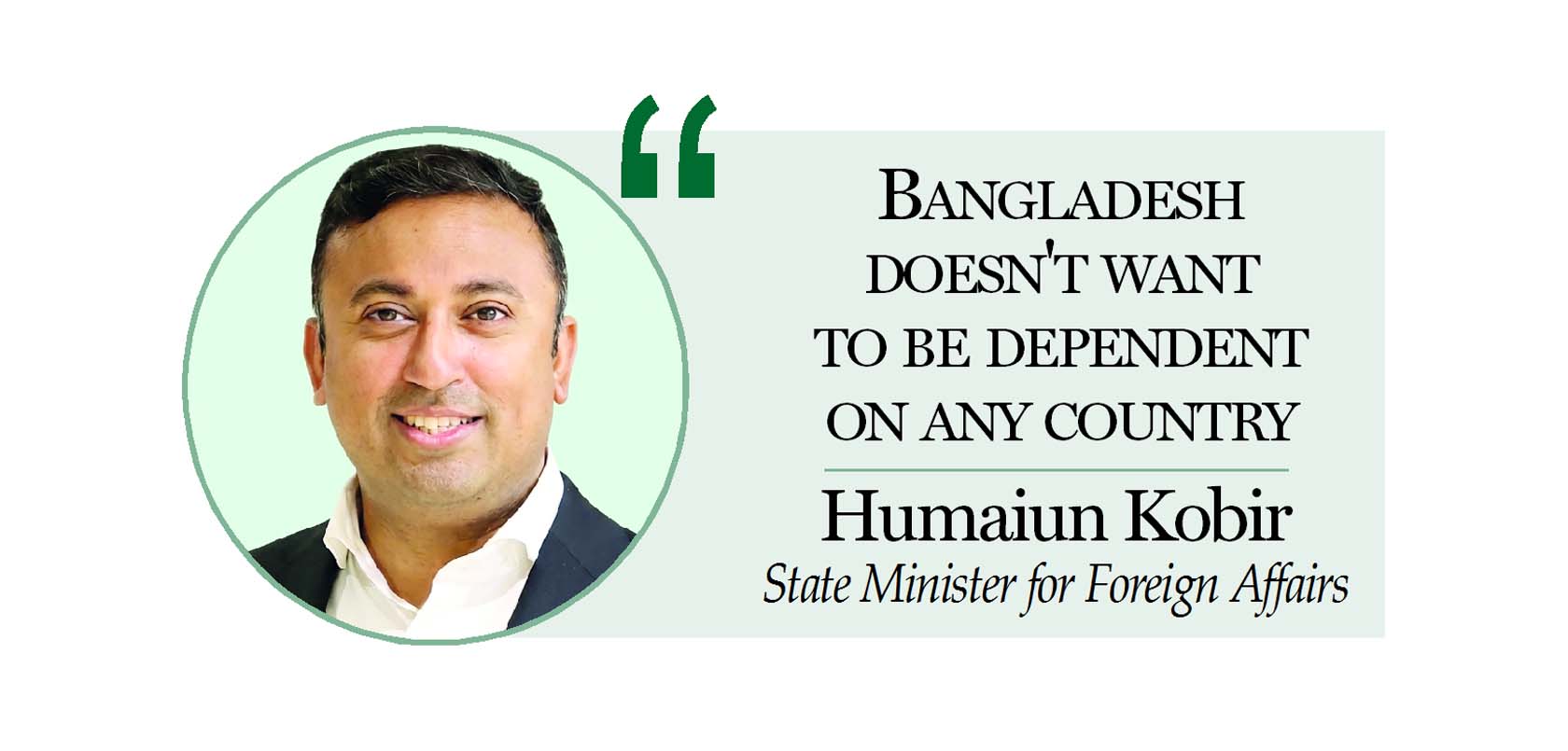
“Bangladesh doesn’t want to be dependent on any country. Bangladesh will now move towards investment partnerships and business partnerships. It’s a win-win for all,” State Minister for Foreign Affairs Humaiun Kobir said on Saturday.
The state minister came up with the speech while speaking at a national seminar titled “From Workforce to Strategic Partnership: Reimagining Bangladesh-KSA Relations”, organised jointly by the Bangladesh Institute of International and Strategic Studies (BIISS) and North South University (NSU) at the Foreign Service Academy in Dhaka.
“Bangladesh today stands tall and, under the watch of the Prime Minister Tarique Rahman, will not be a country that begs to the world, but does business with the world,” he added.
He said Bangladesh and Saudi Arabia should move beyond a relationship traditionally centred on labour migration and remittances to one encompassing investment, technology, skilled human capital, innovation and strategic cooperation.
Describing the relationship as one built on faith, history, people and mutual respect, Kobir said the two countries had reached an important turning point in their bilateral engagement.
“The question before us is not whether Bangladesh and Saudi Arabia should deepen their relationship, but how far we can take it,” he said.
On defence cooperation, the state minister said Bangladesh viewed positively the proposed Makkah Joint Defence Agreement, while stressing that any decision would be guided by the country’s national interests and security considerations.
“We are having positive discussions on the Makkah Defence Agreement. We are viewing it positively,” he said.
“If it falls within the national interests of Bangladesh and converges, and we feel that our peacekeeping expertise can add value in serving Muslim nations and keeping a stable, peaceful Middle East, then there is every scope to take a positive decision on the matter,” he added.
Highlighting the contribution of Bangladeshi workforce, the state minister said millions of Bangladeshis had contributed to Saudi Arabia’s economy and society, while their remittances, skills and knowledge had played an important role in Bangladesh’s development.
However, he said the future of bilateral relations should not be confined to exporting entry-level workers.
“While that foundation remains important, it cannot be the ceiling of our ambition,” he said, calling for a shift towards skilled professionals in construction, healthcare, hospitality, engineering, logistics, digital services and advanced technologies.
He urged stronger cooperation between educational institutions, training centres and industries in both countries to ensure that Bangladeshi workers acquire skills and professional certifications suited to Saudi Arabia’s evolving labour market.
“We want our workers to be viewed not just as a source of labour, but as partners in development,” he said.
On investment front, he identified investment as a major priority, saying Saudi capital could contribute to Bangladesh’s development in renewable energy, power, infrastructure, ports, logistics, agriculture, fisheries, food security, healthcare, pharmaceuticals, information technology and artificial intelligence.
“We have already been in discussions with the Kingdom of Saudi Arabia and are trying to see how we can develop a potential investment fund to look at joint investment and partnership in certain priority sectors of interest,” he said.
He added that Saudi private-sector interest in Bangladesh’s ports and logistics sector offered opportunities to expand connectivity through shipping, aviation and supply chains.
The two countries could also benefit from cooperation in technology and knowledge transfer, he said, noting that Saudi Arabia’s economic diversification drive under Vision 2030 complemented Bangladesh’s expanding industrial and digital capabilities.
Kobir said attracting investment would require Bangladesh to ensure a predictable and transparent business environment, reduce unnecessary barriers, improve coordination and facilitate timely decisions.
“The next chapter of Bangladesh-Saudi relations should therefore be defined by value creation rather than volume alone,” he said.
“More workers should mean more skills, more trade should mean more diversified products, more investment should mean more technology, and stronger political relations should mean stronger economic and institutional partnerships,” he added.
On political engagement, he said, Saudi Crown Prince Mohammed bin Salman had invited Prime Minister Tarique Rahman to visit the Kingdom and that the prime minister had accepted the invitation. The visit is expected to take place at a mutually convenient time, he added.
Kobir also said the Crown Prince had expressed interest in visiting Bangladesh, with Dhaka ready to welcome him.
“With our longstanding friendship with the Kingdom, truly it will be, and we believe, a comprehensive strategic partnership,” he said.
In his remarks, BIISS Director General Major General ASM Ridwanur Rahman said Bangladesh needed to view its relationship with Saudi Arabia through a broader strategic lens, taking into account developments in the Middle East and their possible implications for the Indian Ocean and the Bay of Bengal.
Referring to the Makkah Joint Defence Agreement, he said, “A strategic partnership does not necessarily mean an alliance-built relationship. Rather, it means developing sufficient institutional depth, mutual trust, and policy coordination to enable both countries to work together across areas of shared interest.”
In his speech, Professor Abdul Hannan Chowdhury, Vice-Chancellor of North South University said, “The next chapter of Bangladesh-Saudi relations should move beyond manpower and remittances to a partnership based on trade, investment, skill mobility, energy cooperation, technology and education.”
“We do not want to continue sending the same type of workforce to Saudi Arabia; we want to equip Bangladeshi workers with advanced skills so they can enter the Saudi labour market at higher levels and bring greater value to both countries,” he added.