Slow pace of traffic on 5th day of Ramadan

Staff Reporter :
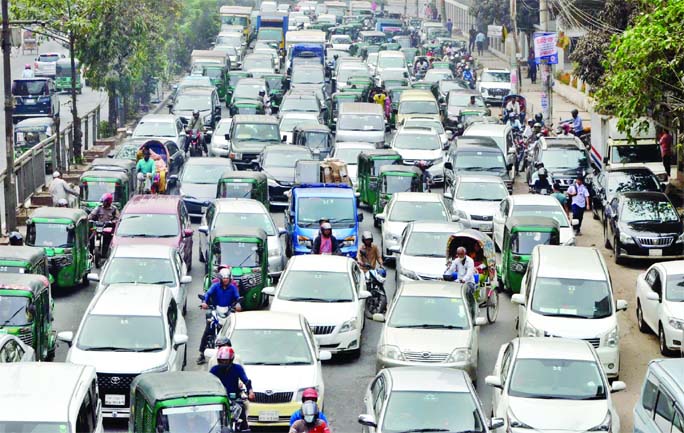
Severe traffic congestion gripped major roads across Dhaka on the fifth day of Ramadan, leaving commuters stranded for hours and intensifying frustration among office-goers and students alike.
From early morning to late evening, key intersections witnessed an unusually slow pace of traffic, with vehicles barely moving in some areas during peak hours.
Roads in Motijheel, Farmgate, Mirpur, Mohakhali and Gulshan experienced heavy gridlock as thousands rushed to reach workplaces before shortened Ramadan office hours began.
The situation worsened in the afternoon as people attempted to return home early to prepare for iftar. Many commuters reported spending more than double their usual travel time on the road.
“I left home at 8:00am but reached my office after 10:30am. The vehicles were barely moving,” said a private bank employee stuck near Farmgate.
“During Ramadan, we expect some congestion before iftar, but now traffic remains slow almost the entire day.”
Traffic police officials acknowledged the pressure on city roads, citing a combination of factors including increased use of private vehicles, ongoing utility repair works, and a surge in shopping activity ahead of Eid.
Markets in New Market, Bashundhara and Baily Road areas drew large crowds, adding to the volume of vehicles and pedestrian movement.
According to transport analysts, traffic patterns during Ramadan often shift significantly.
Office hours are adjusted, educational institutions operate on reduced schedules, and many businesses close early.
As a result, vehicle movement becomes concentrated within shorter timeframes, leading to severe bottlenecks.
A senior official from the Dhaka Metropolitan Police (DMP) Traffic Division said additional personnel had been deployed at key intersections to manage the rush.
“We are trying to ease congestion through manual control and diversion where possible. However, the volume of vehicles is extremely high,” he said.
Public transport users appeared to suffer the most. Buses were overcrowded, and ride-sharing fares surged during peak periods.
Rickshaw pullers and CNG-run auto-rickshaw drivers also reported increased demand but complained about the difficulty of navigating through jam-packed roads.
Urban planning experts argue that the recurring Ramadan congestion exposes deeper structural problems in Dhaka’s transport system.
“The city lacks adequate traffic management coordination and strict enforcement of parking rules,” said a transport researcher at a local university.
“Illegal parking, roadside vendors and random stopping of buses significantly reduce road capacity.”
Many commuters expressed concern that traffic conditions may worsen further in the coming days as Eid approaches and shopping activities intensify.
Several office-goers urged authorities to introduce staggered work hours and strengthen monitoring to ease pressure during peak times.
Despite repeated assurances from authorities each year before Ramadan, residents say little improvement is visible on the ground.
“We hear plans and promises, but the suffering remains the same,” said a university student traveling from Mirpur to Dhanmondi.
“Ramadan is meant to be a month of patience and reflection, but spending hours in traffic makes daily life exhausting.”
With nearly two weeks of Ramadan still ahead, the challenge for authorities remains balancing increased movement, religious observance schedules and the city’s already strained infrastructure.
For now, commuters in Dhaka continue to brace for longer journeys and slower roads as the holy month progresses.