


Italy bans face veils in schools, caps foreign students

The education reform has drawn backlash from opposition lawmakers, who accuse the government of discrimination and racism
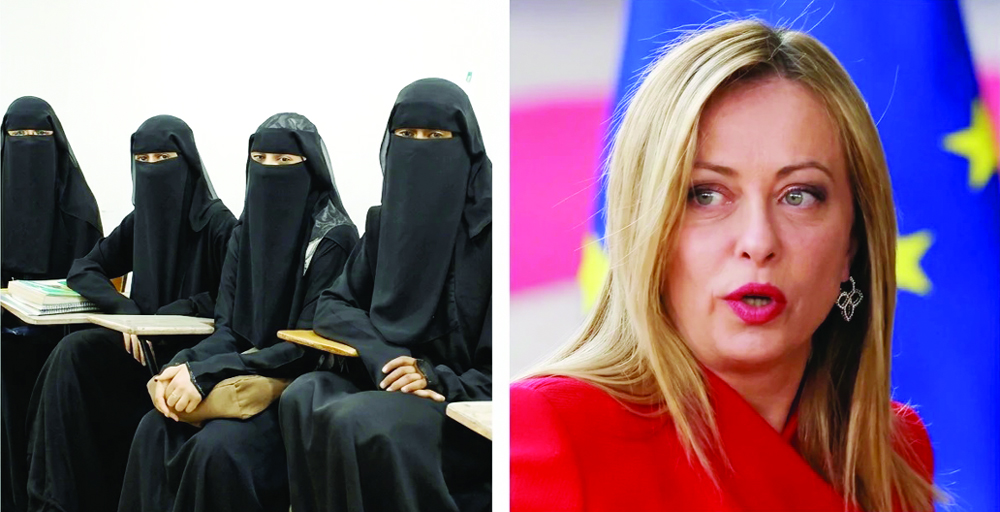
Italy’s Parliament has approved an education reform banning burqas, niqabs and other face-covering garments in schools, while limiting the proportion of foreign students in classrooms to 30%.
The legislation, known as Decreto Scuola, received final approval from the Chamber of Deputies with 142 votes in favour, 112 against and four abstentions, according to The Week. The Senate had approved the bill on Nov 20.
The 30% cap will not apply to students who have already acquired adequate proficiency in Italian, under the new law.
Opposition lawmakers have criticised the reform, arguing that it fails to address the actual challenges facing the education sector.
“The problem is not how many foreign children there are in a class, but how many teachers and what tools we provide to guarantee everyone the right to learn. Everything else is discrimination and racism,” Five Star Movement MP Antonio Caso was quoted as saying by AOL.
Several opposition lawmakers also protested the legislation by displaying placards reading, “At school, nobody is a foreigner.”
The face-covering ban is expected to particularly affect Muslim students who wear burqas and niqabs to school. Authorities have argued that such garments prevent teachers and school staff from identifying students during routine checks.
The hijab, which does not cover the face, remains permitted under the new rules.
Violations of the face-covering ban will carry administrative fines ranging from €200 to €1,000. If the violation involves a minor, the fine will be imposed on the person exercising parental responsibility.
Earlier this year, Prime Minister Giorgia Meloni announced plans to ban burqas and niqabs in schools and restrict the proportion of foreign students in classrooms.
“It is unacceptable that in an Italian classroom the children who end up feeling pushed into a corner are Italian children because they have become the minority. That cannot be allowed,” Meloni was quoted as saying by The Week.
According to research institution Fondazione ISMU, students without Italian citizenship account for 11.6% of enrolments in Italian schools, or nearly 12 in every 100 students.