



Islamabad pushes for stronger Dhaka ties

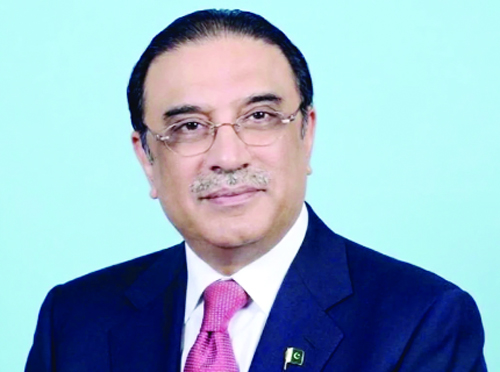
Bangladesh and Pakistan are seeking to build a stronger and broader relationship through renewed diplomatic engagement, with Islamabad expressing interest in expanding cooperation in trade, defence, connectivity and parliamentary affairs. The commitment was reiterated by Pakistan’s President Asif Ali Zardari and Prime Minister Shehbaz Sharif during separate meetings with Bangladesh Parliament Speaker Hafiz Uddin Ahmed in Islamabad.
The discussions reflect growing efforts by the two countries to strengthen bilateral ties through institutional exchanges and economic cooperation, moving beyond traditional diplomatic engagement.
During a meeting with the visiting Bangladeshi delegation on Wednesday, President Zardari said Pakistan attached “great importance to its relations with Bangladesh, which are rooted in shared history, common faith and deep cultural and familial affinities”, according to a statement issued by the President’s Office.
Prime Minister Shehbaz, in a separate meeting on Thursday, reaffirmed Pakistan’s commitment to its “fraternal ties” with Bangladesh, emphasising closer institutional cooperation and stronger people-to-people contacts.
The meetings took place during Hafiz Uddin’s six-day official visit to Pakistan, which began on Monday at the invitation of National Assembly Speaker Sardar Ayaz Sadiq. It is the first official visit to Pakistan by a Speaker of the Bangladesh Parliament.
At the meeting at Aiwan-i-Sadr, President Zardari called for a forward-looking approach to bilateral relations based on “sovereign equality, mutual respect and mutual benefit”.
He said relations had gained fresh momentum through high-level exchanges and cooperation in education, trade, culture and people-to-people engagement.
Zardari also reaffirmed Pakistan’s readiness to expand defence cooperation with Bangladesh, indicating Islamabad’s interest in broadening bilateral engagement beyond conventional diplomatic and economic areas.
He identified agriculture, industry, food security, disaster management, digital governance and space research as other potential areas for collaboration.
Trade and economic cooperation featured prominently in the discussions. Acknowledging that bilateral trade remained below its potential, the Pakistani president called for more effective use of existing mechanisms, including the Joint Economic Commission (JEC) and the Joint Working Group on Trade.
He suggested exploring preferential trade arrangements and advancing areas of cooperation identified at the JEC meeting held in October last year.
Encouraging greater private-sector participation in trade and investment, Zardari identified textiles, pharmaceuticals, leather, automobiles, construction materials, minerals, chemicals, ceramics and jute as sectors offering considerable opportunities.
He also welcomed the launch of direct Biman Bangladesh Airlines flights in January and called for increasing flight frequency and adding destinations to meet growing demand.
On regional cooperation, Zardari welcomed progress under the China-Bangladesh-Pakistan Trilateral Mechanism, particularly the identification of 12 priority areas at a meeting held in Kunming, China, on June 19, 2025.
Regarding the Rohingya crisis, he appreciated Bangladesh’s humanitarian role in sheltering more than one million refugees and reiterated Pakistan’s support for their safe, voluntary and dignified return to Myanmar in accordance with international law.
Recalling his personal memories of Pakistan, Hafiz Uddin stressed the importance of parliamentary diplomacy and expressed interest in strengthening engagement between the two legislatures through regular exchanges and institutional interaction.
On Thursday, Prime Minister Shehbaz hosted a dinner at the Prime Minister’s House in honour of the Bangladeshi Speaker and his delegation.
Welcoming the visitors, Shehbaz said Pakistan attached “great importance to its fraternal ties with Bangladesh”, referring to their shared history and cultural connections.
He said the extensive engagements of the Bangladeshi parliamentary delegation during the visit demonstrated significant potential for cooperation in the parliamentary sphere.
“Regular parliamentary exchanges would provide a robust foundation for closer bilateral cooperation across various avenues of mutual interest,” the Prime Minister’s Office quoted him as saying.
Shehbaz’s emphasis on parliamentary exchanges echoed Zardari’s call for stronger institutional links, indicating that Islamabad considers parliamentary diplomacy an important means of strengthening bilateral relations.
The Bangladeshi delegation included MPs Jahrat Adib Chowdhury, Humam Quader Chowdhury, Muhammad Nazibur Rahman, Nilufar Chowdhury Moni and Nasser Rahman, along with Bangladesh High Commissioner to Pakistan Iqbal Hussain Khan.
The Pakistani side included National Assembly Speaker Sardar Ayaz Sadiq, Senators Sherry Rehman and Saleem Mandviwalla, MNAs Naveed Qamar and Dr Shazia Sobia Aslam Soomro, and representatives of the Pakistan-Bangladesh Parliamentary Friendship Group.
The latest engagements follow a series of high-level exchanges between the two countries. Pakistan’s Deputy Prime Minister and Foreign Minister Ishaq Dar visited Dhaka in August 2025 and held meetings with the interim government led by Muhammad Yunus.
National Assembly Speaker Sardar Ayaz Sadiq also visited Bangladesh in December 2025 to attend the funeral of former prime minister Khaleda Zia. In February this year, Pakistan’s Planning Minister Ahsan Iqbal attended the swearing-in ceremony of Prime Minister Tarique Rahman.