



Trump’s tariffs have become America’s new normal

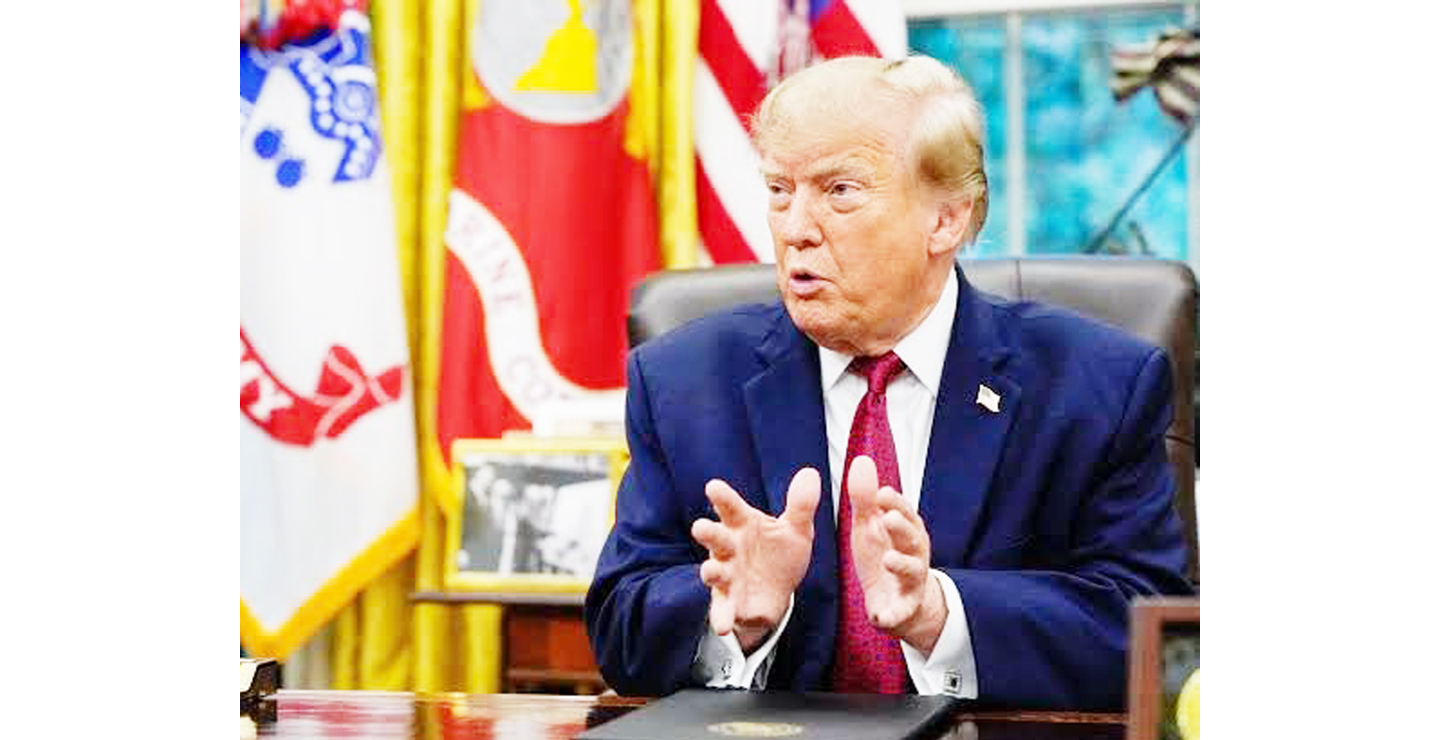
Markets hardly blinked at the announcement of a new series of proposed tariff schedules from United States President Donald Trump’s administration on November 25. Although the affected economies – including the European Union, China, Japan, Indonesia and Taiwan – account for more than 53 percent of US goods trade, the announcement was met with something of a whimper.
On November 25, the S&P 500 and the benchmark 10-year Treasury bond hardly moved. Compare that with the turmoil that followed Trump’s April 2, 2025, “Liberation Day” announcements.
The S&P 500 fell 10.5 percent over the next two trading days, wiping some $5 trillion off its value – a record two-day loss.
US Treasuries, normally a haven in times of stress, sold off alongside them as the yield on 10-year Treasuries posted its biggest weekly jump since 2001.
US markets may face volatility driven by artificial intelligence (AI) and its geoeconomics, but they no longer treat tariffs as so frightful.
That is because Trump’s tariffs have become normalised – in two senses of the word. The first is that the markets have accepted that tariffs will be a fact of life under the Trump administration.
There should be no doubt that Trump is a true believer. He told ABC: “I believe very strongly in tariffs.
I believe that Japan … should pay a major tax, like a 15 or a 20 percent tax on any product they sell in the United States” – in 1989. Fifteen percent is indeed Japan’s proposed tariff rate. You can’t teach an old dog new tricks.
True, Trump suffered a landslide rebuke to his economic policies and geopolitical agenda in the November 3 midterms.
Democrats took both houses of Congress and flipped at least seven Senate seats – including Kansas, which had not elected a Democratic senator in nearly a century. But with his almost gleeful vow to become “Mr Veto”, there should be no expectation that tariffs will be swiftly overturned.
The second normalisation is in the sense that Trump and the Office of the US Trade Representative (USTR) are now pursuing the tariffs using far less controversial and less blunt instruments.
That follows a string of defeats at the US Court of International Trade and the US Supreme Court for his broader approach of using justifications under the International Emergency Economic Powers Act (IEEPA).