



Unity against fascism

Political parties, civil society representatives and citizens have broadly welcomed Prime Minister Tarique Rahman’s initiative to bring anti-fascist forces under a common platform, calling for wider national unity to protect democracy and sovereignty and prevent the return of authoritarian rule. However, they have stressed that lasting unity will depend on implementing the July Charter and the referendum verdict.
Without concrete action on these issues, they warned, the proposed dialogue could achieve little beyond exchanging views over cups of tea and coffee.
The first round of talks took place at the Secretariat on Monday, when the Prime Minister met a four-member National Citizen Party (NCP) delegation led by Convener Nahid Islam.
The delegation included Member Secretary Akhtar Hossen, Senior Joint Convener Hasnat Abdullah and political council member Akram Hossain.
Leader of the Opposition and Bangladesh Jamaat-e-Islami Ameer Dr Shafiqur Rahman returned to Dhaka on Wednesday morning after shortening his visit to Australia to meet the Prime Minister.
He arrived at Hazrat Shahjalal International Airport around 9:30am, according to a Jamaat statement. He cut short his Sydney visit following a request from the Prime Minister’s Office for a meeting on the evolving political situation, particularly concerns over the banned Awami League and its alleged sabotage activities.
Shafiqur left for Australia on 19 November and was originally scheduled to visit Malaysia before returning on 26 November.
Speaking to reporters, he called for sustainable national unity to prevent the resurgence of fascism.
“Unity cannot be merely transitional or fleeting. We must move towards sustainable unity,” he said.
He criticised former prime minister Sheikh Hasina for refusing to face legal proceedings, condemned the recent violence in Gopalganj and said people would resist any attempt by her to return to Bangladesh.
July Charter as basis for unity
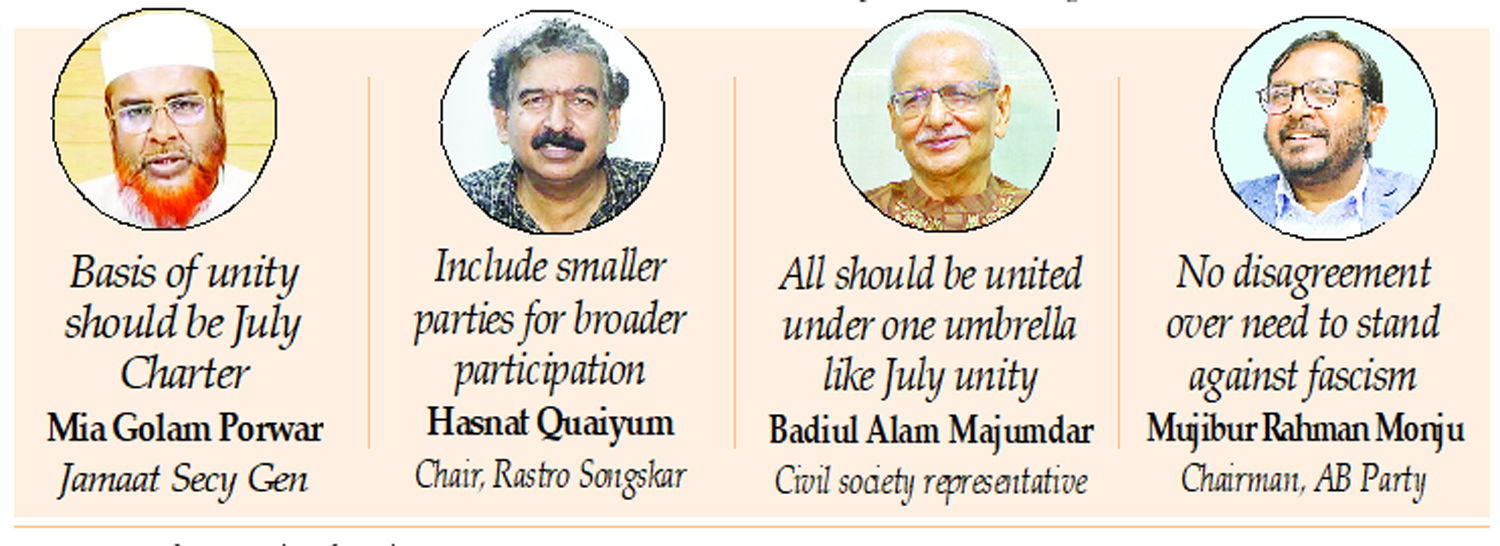
Jamaat Secretary General Mia Golam Porwar told The New Nation that his party welcomed the initiative and urged the government to make concessions in the greater national interest to resist the forces removed from power during the July Uprising of 2024.
“The basis of the unity should be implementation of the July Charter and the referendum verdict. Then there will be no more division in the nation,” he said, calling on all anti-fascist forces to unite under a common platform against groups seeking to destabilise the country.
Warning that delays in implementing the referendum verdict could deepen divisions among parties that opposed the Hasina government, he said, “The longer the government delays this, the more it will harm the government.”
The Prime Minister’s initiative comes amid concerns over violence across the country, including killings and arson attacks on buses and houses, as the ousted prime minister reportedly threatens to return from India on 16 December.
Major parties urged to honour promises
Bangladesh Rastro Songskar Andolan President Hasnat Quaiyum described the initiative as positive and necessary but cautioned that previous political dialogues had often failed because major parties did not honour their commitments.
“Even after political parties reached agreement, the big parties ultimately failed to keep their promises,” he said. “So we cannot say a positive initiative will automatically produce a positive outcome. Our past experience was bad.”
He said the talks could succeed only if all parties recognised the challenges facing the country and worked sincerely towards a common goal. Although his party had not received an invitation, he urged the Prime Minister to include smaller parties to ensure broader participation.
Political analyst and civil society representative Badiul Alam Majumdar also welcomed the initiative, stressing that major parties must honour their commitments.
“We should all be united under one umbrella like the July unity to resist fascist forces,” he said, adding that mutual trust and confidence were essential for lasting national unity.
AB Party Chairman Mujibur Rahman Bhuiyan Monju supported the initiative but pointed to differences within the ruling BNP over the implementation of the July Charter and the future of the Awami League.
“I think there is a division among the ruling BNP’s men,” he said.
“Some are in favour of fully implementing the July Charter, while others oppose it, citing constitutional obligations. Some are in favour of banning the Awami League, while others think it should not be done. So the ruling party should also be united in order to forge a greater unity.”
He said the July Charter and referendum verdict should form the foundation of national unity and urged the government to make concessions to achieve that goal.
Smaller parties await invitations
Smaller political parties are also waiting to be included in the dialogue following the positive response from opposition leaders.
Monju said there were indications that a meeting between the Prime Minister and his party might take place on 26 or 27 November. His party would seek a clear agenda before joining the discussions.
“We have no disagreement over the need to stand against fascism,” he said, adding that any proposed agenda would be discussed within the party and with its alliance partners.sk
Bangladesh Labour Party Chairman Mostafizur Rahman Iran also welcomed the initiative but said the framework, roadmap and objectives of the proposed dialogue remained unclear.
His party has not received an invitation, either independently or as part of an alliance.
“If we are invited as an alliance, we will discuss the matter at the 11-party alliance forum and make a decision. If we are invited as a separate party, we will discuss it within our party as well,” he said.