



Ziaul killed over 115 people: ICT boss

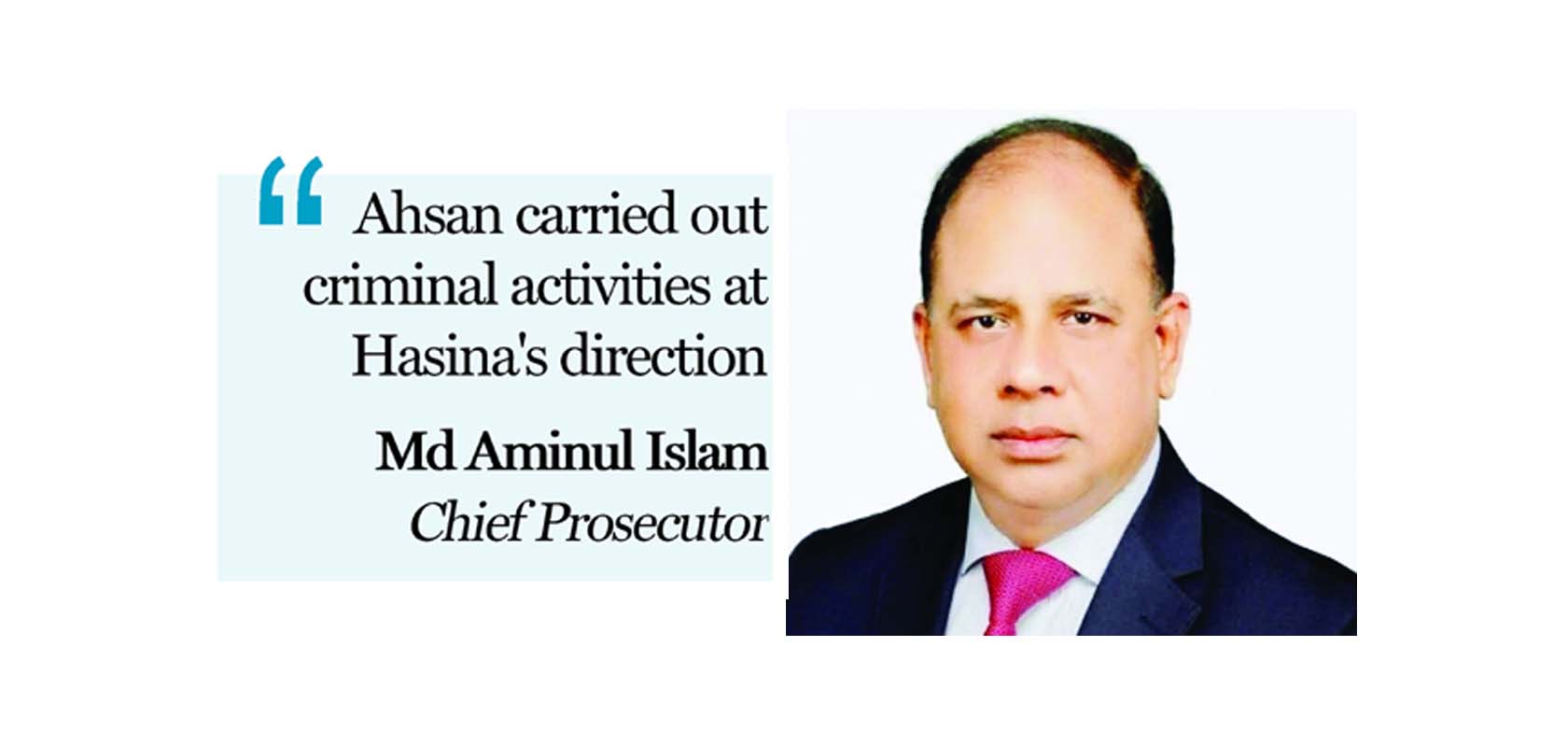
Former military officer Major General (retd) Ziaul Ahsan was directly involved in the killing of more than 115 people and carried out crimes at the direction of ousted prime minister Sheikh Hasina, Chief Prosecutor of the International Crimes Tribunal (ICT) Md Aminul Islam has alleged.
He said witness accounts suggested Ahsan had killed between 150 and 200 people indiscriminately at different times, although investigators had identified around 115 victims so far.
The chief prosecutor made the remarks while speaking to reporters on Tuesday after concluding arguments in the crimes against humanity case against Ahsan over more than 100 incidents of enforced disappearance and killing.
Islam said Ahsan had been one of Hasina’s key instruments in suppressing opposition parties and operated under the patronage of the former prime minister and her military adviser Tarique Ahmed Siddique.
According to witness statements, Ahsan carried out criminal activities at Hasina’s direction and was beyond the control The chief prosecutor said witness testimony, including that of former army chief General Iqbal Karim Bhuiyan and other military officers, had revealed Ahsan’s unchecked activities.
He also alleged that Ahsan’s associate commander Sohel conducted operations in Char Duani and other areas with several journalists, who later published reports based on their own accounts while concealing the actual events.
Islam said Ahsan had repeatedly received promotions despite his alleged involvement in crimes, eventually becoming a major general.
He also alleged that Ahsan spent years in the Rapid Action Battalion (RAB) instead of returning to the army, carrying out operations against opposition political groups at Hasina’s direction.
The chief prosecutor said the case was significant as it marked the first trial of enforced disappearance at the tribunal and the first time arguments had been presented in such a case in Bangladesh’s history.
He said testimony from military officers was crucial because those involved in the incidents had firsthand knowledge of the crimes.
Some individuals involved in the alleged offences were made witnesses instead of accused, as permitted under the country’s criminal justice system.