



US faces 12-year backlog in Israel rights cases

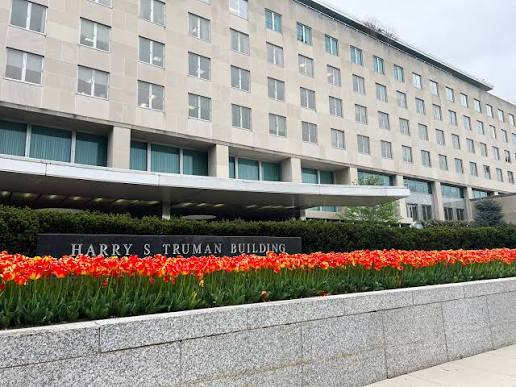
Charles Blaha, a former State Department official who served from 2013 to 2023, said the OIG’s findings “demonstrate that the Department has created an unlawful de facto exemption to the law for Israel”, says the Middle East Eye.
The Leahy Law prohibits US military assistance to foreign security units when credible information indicates they have committed gross human rights violations.
However, in a September 2025 report to Congress, the State Department listed units in Ukraine, Egypt and Jordan that were ineligible for assistance but did not include Israel, despite previously identifying Israeli assistance as “non-traceable assistance” (NTA).
The OIG defined NTA as situations where the State Department “cannot identify recipient units in advance of the transfer of assistance or training, or the units are not known with sufficient detail to make Leahy vetting possible”.
The watchdog found that the department had failed to distribute guidance or training on NTA vetting. It also found that nearly half of US missions overseas had failed to respond to annual certification requirements.
In April 2024, the State Department identified five Israeli units responsible for grave human rights violations. Four were subsequently cleared after claiming to have taken remedial action.
The fifth was allowed to “remain indefinitely eligible while the State Department engaged with the government of Israel ‘on identifying a path to effective remediation of this unit'”.
Blaha said the department “has never delivered a list of ineligible Israeli units to the government of Israel. Not once”.
He also said the standard for declaring Israeli units ineligible for assistance was unusually high. While Leahy Law determinations for other countries are handled by subject-matter experts at the working level, decisions involving Israel require approval from the deputy secretary of state.
“The standard for ineligibility is almost impossibly high,” Blaha said.
“A determination that any Israeli unit is Leahy-ineligible rests with the deputy secretary of state. This is true for no other country in the world,” he said.
He attributed the approach to a lack of political will, saying “the underlying culprit is lack of political will”.
The State Department also established an “Israel Leahy Vetting Forum”, which a lawsuit alleged was designed “to impede any prompt and effective determination that Israeli units have committed” gross human rights violations.
In December 2024, five Palestinians living in the United States and Gaza, supported by Democracy for the Arab World Now (DAWN), filed a lawsuit against then-Secretary of State Antony Blinken over the department’s failure to enforce the Leahy Law.
State Department leadership reportedly avoided enforcing the law partly out of concern that doing so could jeopardise separate ceasefire negotiations. Blaha described the reasoning as far-fetched and said it had become obsolete following the October 2025 Gaza peace plan.
Other US laws also provide mechanisms for conditioning arms transfers.
The Export Control Act requires US weapons to be used for defensive rather than offensive purposes, while Section 620I of the Foreign Assistance Act prohibits arms transfers to governments that obstruct humanitarian assistance.
Former State Department official Hala Rharrit said Blinken repeatedly invoked Israel’s right to defend itself in public statements to satisfy Export Control Act requirements.
“It’s not by accident that the words that came out of his mouth,” Rharrit said.