



National unity needs long-term roadmap

The National Citizen Party (NCP) has called for a broader political and social front against what it described as attempts by ousted fascist Sheikh Hasina and her supporters to destabilise Bangladesh, urging the government to build national unity around democracy, sovereignty, justice and constitutional reforms.

The party stressed that unity should go beyond addressing immediate political tensions and instead be based on a long-term roadmap to protect national security and economic interests.
It also proposed a common foreign policy to safeguard Bangladesh’s sovereignty and counter external interference.
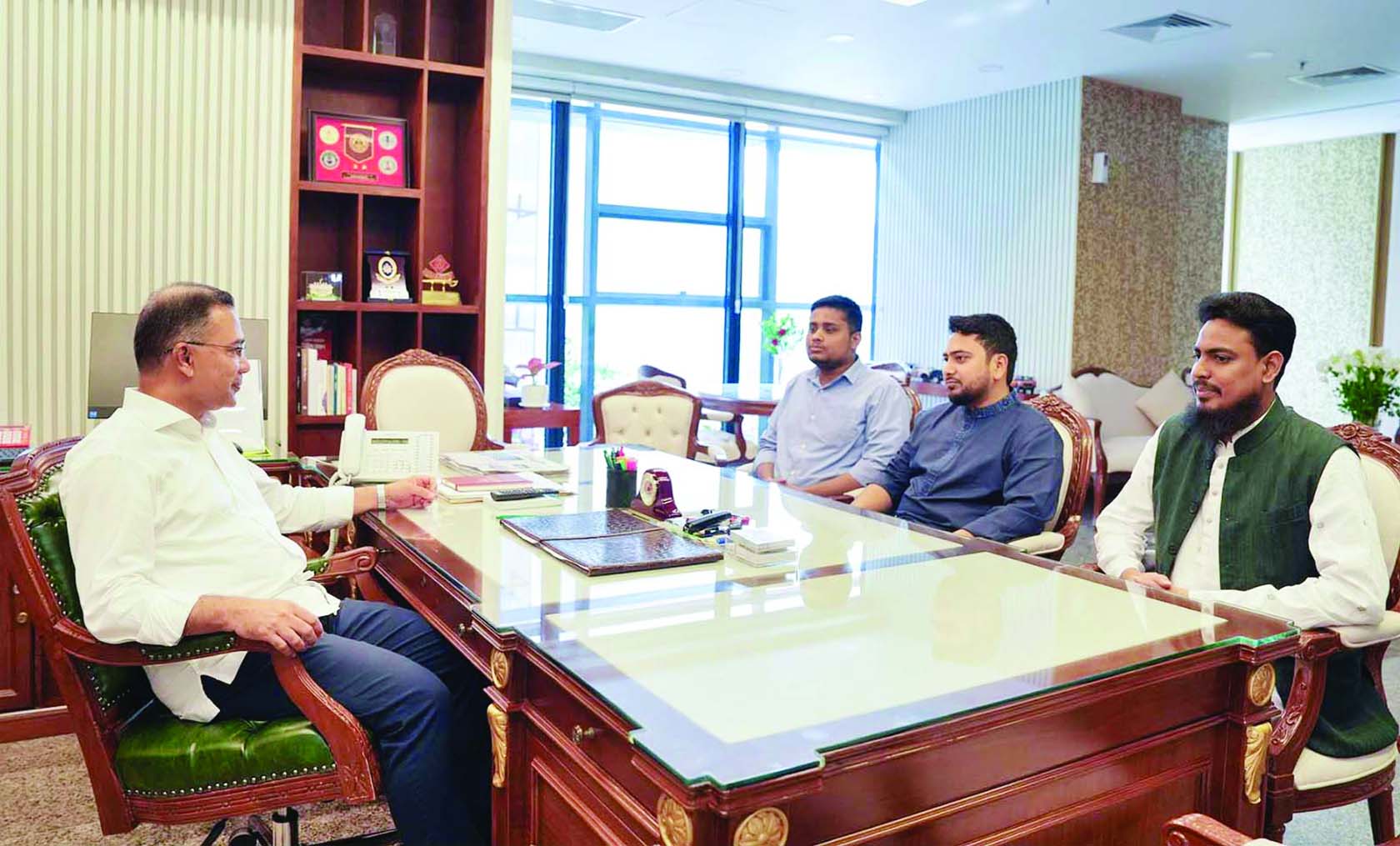
NCP Convener and Opposition Chief Whip Nahid Islam made the proposals after leading a four-member delegation to meet Prime Minister Tarique Rahman at the Secretariat on Monday afternoon.
The meeting, held from 1:20pm to 2:00pm, was attended by NCP Member Secretary Akhter Hossen, Senior Joint Convener Hasnat Abdullah and Joint Convener Akram Hossain.
Briefing reporters afterwards, Nahid said the discussions covered the deteriorating law and order situation, political developments, constitutional reforms and prospects for national unity.
He said the Prime Minister had expressed concern over the security situation and urged political parties to remain united against fascist forces and in defence of the July uprising.
Nahid, however, blamed the government for failing over the past seven to eight months to maintain law and order, take a firm position against the activities of the banned Awami League and clarify its diplomatic approach towards India.
He alleged that forces associated with the former ruling party were involved in violence and arson in different parts of the country, affecting public safety and political stability.
“Any form of national unity must prioritise July, reform, justice and sovereignty. We have recommended making reform one of the key agendas of the unity process,” he said.
Nahid urged the government to bring together political and social forces that participated in the July 2024 uprising to address the country’s long-term challenges.
“We do not want discussions merely for the sake of discussions.
We want dialogue to continue, but we also want to see what steps the government takes to make it fruitful,” he said, adding that the Prime Minister had agreed to consider the proposals.
On constitutional reform, Nahid called for members of the Constitutional Reform Council to take their oaths and demanded the dissolution of the constitution amendment committee.
He argued that the existing one-party panel was obstructing implementation of the July National Charter and the referendum verdict.
The NCP also called for faster investigations and the submission of charge sheets in cases related to the July uprising, alongside stronger institutional capacity for the International Crimes Tribunal.
Nahid urged the government to take steps to bring Hasina back from India to face the court verdict against her. He also called for the return of those responsible for the killing of Sharif Osman Hadi.
On Bangladesh-India relations, he accused India of allowing the Awami League to use its territory for activities aimed at destabilising Bangladesh, describing the issue as a geopolitical concern beyond domestic political rivalry.
“The Awami League was defeated on August 5. The fight now is against Indian hegemony.
India is trying to destabilise Bangladesh from across and inside the border using the Awami League and local forces. The people of Bangladesh must unite to face it,” he said.
He also urged the government to take a firm position in negotiations over the Ganges Water Sharing Treaty, which expires on December 12, to secure Bangladesh’s fair share.
The party further demanded security and rehabilitation for participants in the July uprising, whom Nahid described as ‘July warriors’.
He also proposed involving religious minorities, cultural organisations, religious leaders and other social groups in the national unity initiative to strengthen social cohesion and counter misinformation.
Asked whether the NCP had set conditions for joining the proposed unity initiative, Nahid said the objective was to establish common ground among political parties with differing views.
He said the NCP would continue its fight for democracy, sovereignty and economic security, even without the support of other political parties or the government.
Asked whether he was satisfied with the meeting, Nahid said its success would depend on whether the discussions translated into concrete government action.
“If the government takes action and tries to earn the trust of the people and political parties, we can then say the meeting was successful,” he added.