



Garment unrest costs $428m in 18 days

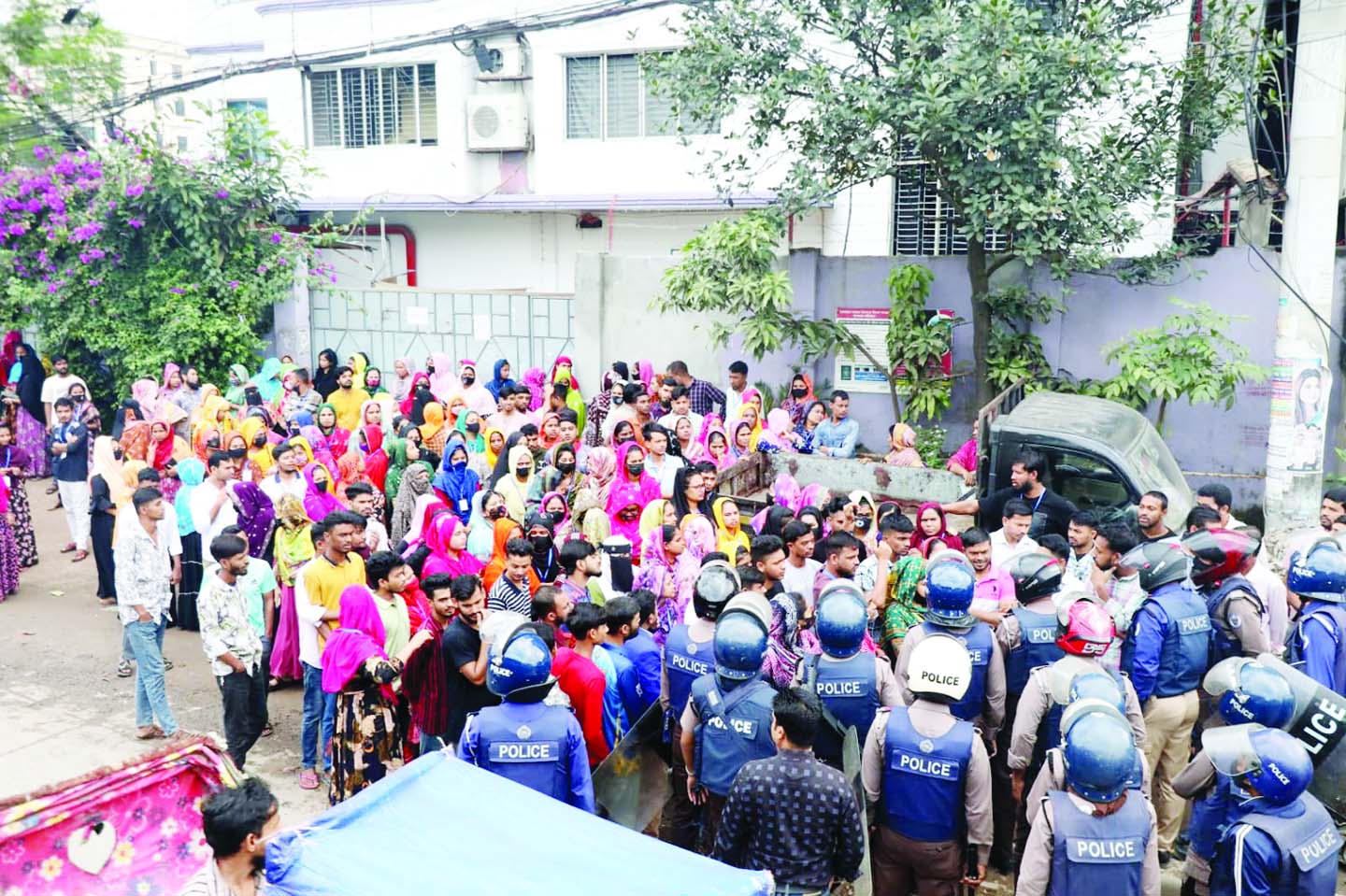
Bangladesh’s garment industry is counting mounting losses from prolonged labour unrest, with factory closures disrupting production, export shipments and workers’ livelihoods.
While manufacturers face the loss of international orders and declining buyer confidence, thousands of workers are struggling with uncertainty over their jobs and earnings amid the continuing wage dispute.
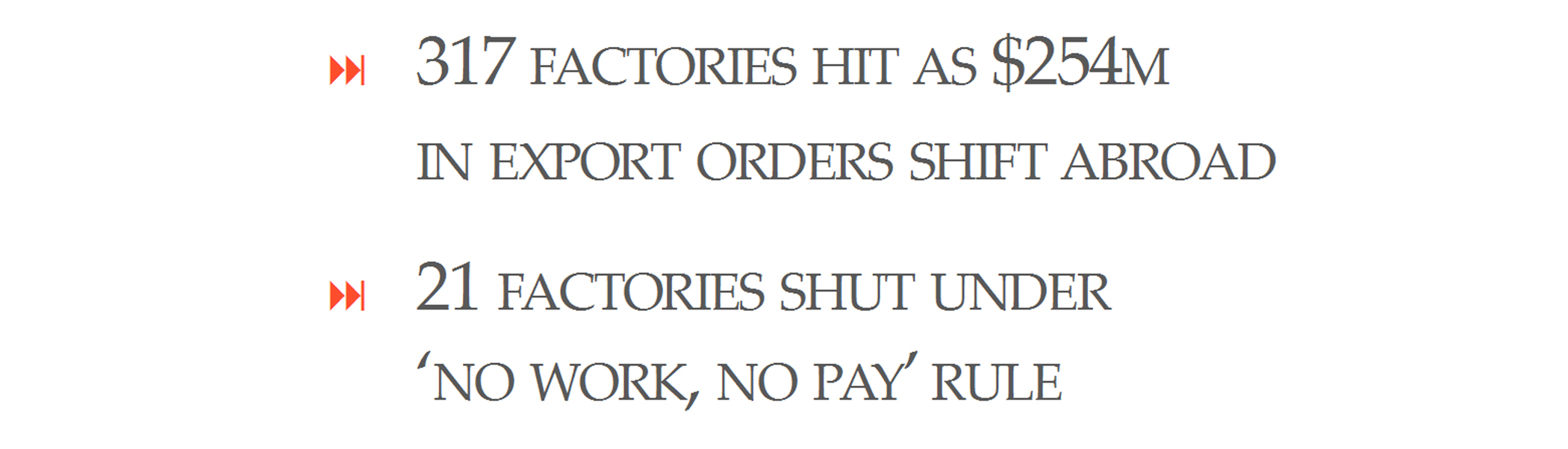
The Bangladesh Garment Manufacturers and Exporters Association (BGMEA) said 317 factories suffered production losses worth $428 million in just 18 days, between November 1 and 18. Buyers also shifted 59 million pieces of garments, worth an estimated $254 million, from confirmed orders to other countries.
In a press release on Sunday, the association said an emergency survey of member factories found that production had been suspended for periods ranging from one to 16 days because of instability in industrial areas.
The BGMEA warned that delayed shipments had put many other orders at risk, forcing factories to consider expensive air shipments, substantial price discounts and even cancellations to meet delivery deadlines.
The actual damage could be considerably higher, as more than 600 member factories had been affected, while only 317 participated in the survey.
The association said the unrest was also damaging Bangladesh’s reputation and reliability among international buyers, threatening the industry’s long-term prospects.
Wage dispute
Meanwhile, disagreement over the proposed minimum wage continues to fuel tensions between workers and factory owners.
At the second meeting of the Minimum Wage Board on November 9, workers’ representatives proposed a minimum monthly wage of Tk 32,000.
Their proposal includes Tk 48,000 for Grade 1 workers, Tk 43,000 for Grade 2, Tk 38,000 for Grade 3 and Tk 32,000 for Grade 4 workers, while apprentices would receive Tk 30,000.
The owners’ side is reportedly considering a minimum wage of Tk 15,000 to Tk 16,000, arguing that declining international garment prices and rising production costs have reduced the industry’s capacity to absorb a substantial wage increase.
Under the existing 2023 wage structure, a Grade 4 worker receives Tk 12,500 a month. Including overtime, festival allowance, earned leave encashment and attendance bonus, the estimated take-home amount is Tk 19,520.
The corresponding take-home amounts are Tk 23,660 for Grade 1, Tk 22,416 for Grade 2 and Tk 21,234 for Grade 3 workers. The average across all grades is around Tk 22,051.
These calculations assume 78 hours of overtime a month, the monthly average of festival allowance and earned leave encashment, and a Tk 300 attendance bonus.
Actual earnings vary depending on working conditions and overtime opportunities.
The Centre for Policy Dialogue (CPD) has called for an evidence-based approach to wage determination, taking into account workers’ living costs, household size, housing expenses and basic needs, alongside the industry’s productivity, export orders, production costs and employment situation.
Labour and Employment Minister Ariful Haque Chowdhury expressed hope that workers’ expectations would be addressed through the new wage board.
He said the public was vocal against what he described as a conspiracy in the garment sector and hoped to see owners and workers operating in a harmonious environment within the next year.
State Minister for Foreign Affairs Shama Obaed said the government was making every effort to ensure workers received their rightful entitlements, alleging that a particular quarter was trying to damage the country and the garment industry through destructive activities.
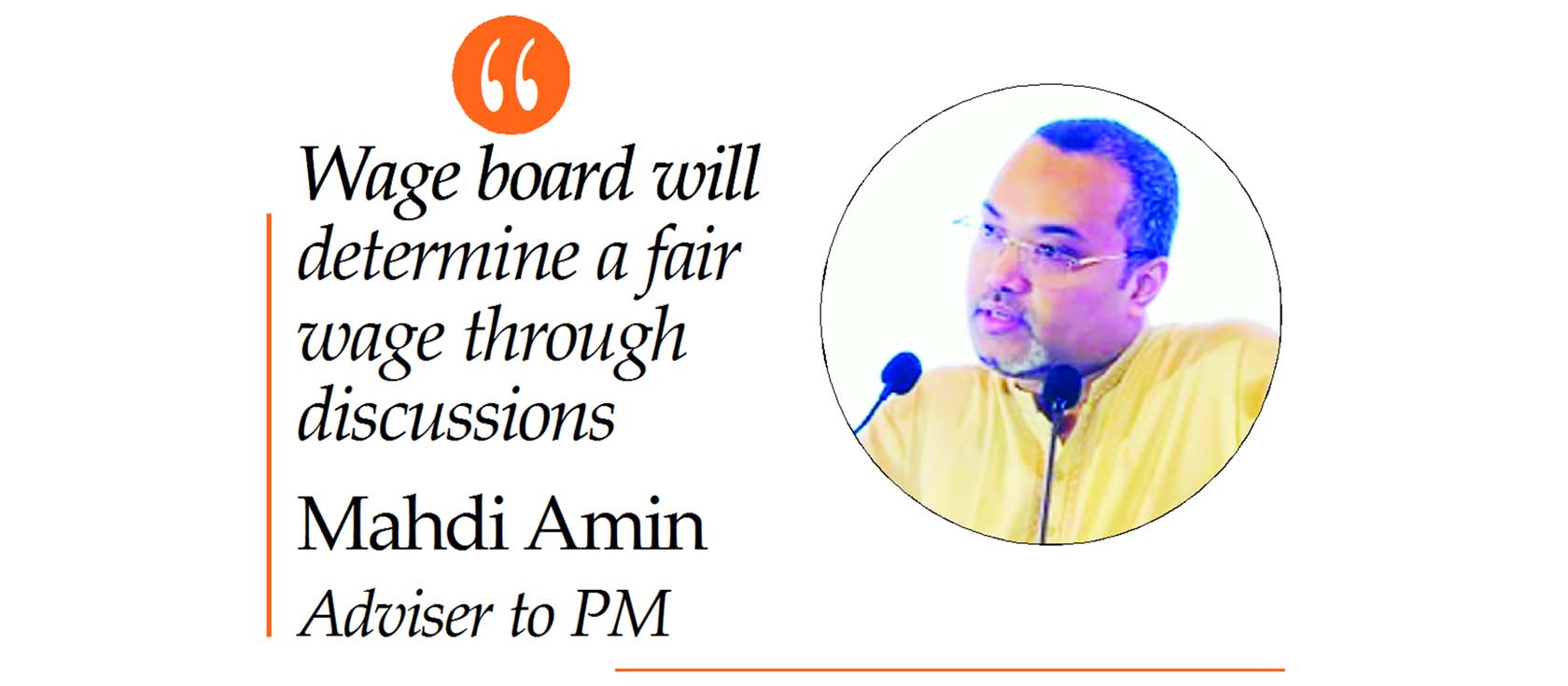
Mahdi Amin, adviser to the Prime Minister on labour and employment and expatriates’ welfare and overseas employment, said the government would extend its fullest cooperation to improving workers’ living standards through the wage board.
He alleged that political provocation and infiltration by a particular group had contributed to the recent instability, adding that the government was committed to resolving the problems peacefully.
He said the Labour Act 2026 placed workers’ interests at the forefront and that the wage board would determine a fair wage through discussions involving workers’ representatives, owners and neutral members.
He stressed that industrial growth, business sustainability and workers’ welfare must advance together.
Fresh unrest in Gazipur
Labour unrest continued in parts of Gazipur on Sunday, with workers attempting to block the Dhaka-Mymensingh highway at several points in the Gorgoria Masterbari area.
Workers from several factories, including Hams Garments, Aman Cotton and Danimec Garments, stopped work in the morning.
After the factories were declared closed for the day, groups of workers carrying sticks gathered along the highway and attempted to block traffic.
They later moved towards Ansar Road and gathered in front of the Sublime factory at Ashpara intersection, where they allegedly threw bricks and stones at police.
Law enforcement personnel fired sound grenades and tear gas shells to disperse them, disrupting traffic.
In Savar and Ashulia, 21 factories were closed under Section 13(1) of the labour law, meaning workers would not receive wages during the shutdown under the ‘no work, no pay’ provision. Another 15 factories declared holidays after workers reported for duty but did not start production.
Mohammad Mominul Islam Bhuiyan, superintendent of police of Ashulia Industrial Police-1, confirmed the closures at around 1:30pm on Sunday. Two additional factories had also declared general holidays for the day.
The unrest has centred on workers’ demand for a minimum monthly wage of Tk 30,000. However, the situation remained relatively calm in most factories, with no protests reported in the Savar-Ashulia industrial belt until 1pm.
Workers’ organisation leaders said conditions had improved compared with previous days and that production had resumed in some factories by noon despite earlier holiday declarations.