


BADC pulse, oilseed project plays vital role in food security

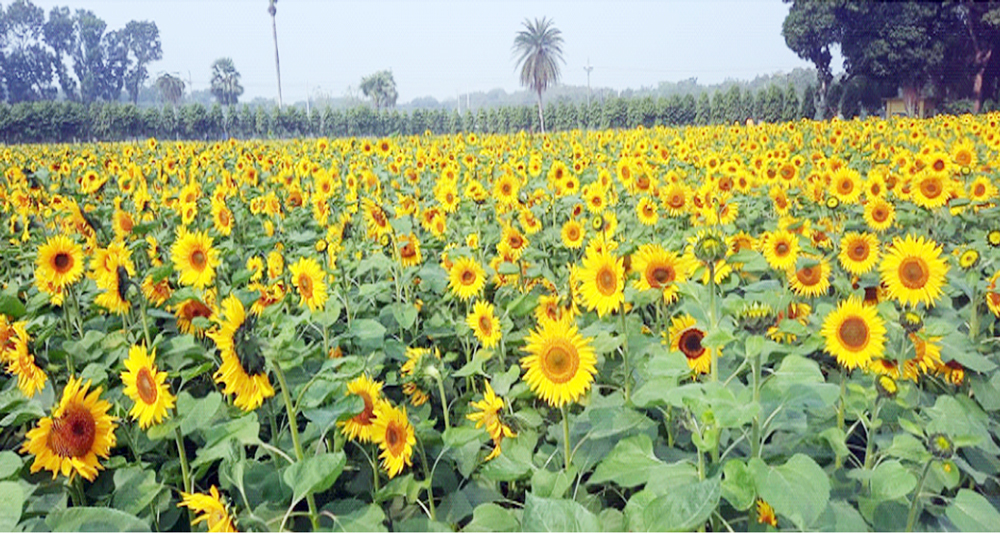
Bangladesh Agricultural Development Corporation (BADC) has implemented a project titled “Strengthening Sustainable Nutritional Security through the Production of Pulses and Oilseeds (Phase 2)” which plays a vital role in ensuring the country’s food and nutritional security, as well as achieving long-term economic prosperity, by delivering high-quality seeds to farmers in a timely manner and enhancing the productivity of agricultural produce.
Currently, the annual demand for pulses in the country is 2.50 million metric tons, while production is only 0.937 million metric tons; similarly, the annual demand for edible oil is 2.482 million metric tons, with production standing at just 1.064 million metric tons (Source: DAE).
Consequently, pulses and edible oil must be imported from abroad to meet the excess demand, which results in the expenditure of a significant amount of the country’s foreign currency.
To reduce the country’s dependence on imports of pulses and edible oils, it is essential to increase the domestic production of these crops. This requires the production of high-quality, high-yielding varieties of pulses and oilseeds.
In this context, the project titled “Strengthening Sustainable Nutritional Security through the Production of Pulses and Oilseeds (Phase 2)” is being implemented by the Pulses and Oilseeds Division of the Bangladesh Agricultural Development Corporation (BADC) to enhance the capacity for producing and supplying high-quality pulses and oilseeds.
Approved by ECNEC on December 8, 2024, this project is being implemented from July 2025 to June 2029. Its primary objective is to meet the nation’s demand for seeds, increase production, and ensure nutritional security through the production, collection, processing, storage, and distribution of high-quality pulse and oilseed seeds among farmers.
The project has set a target to produce a total of 18,000 metric tons of high-quality pulses and oilseeds. Currently, project activities are being implemented across 42 districts, two city corporations, and 200 upazilas-spanning all eight divisions of the country-through three pulse and oilseed farms, three seed processing centers, and 12 contract-farming zones.
Using 18,000 metric tons of pulses and oilseeds-produced by farmers-across an estimated 3,029,849 acres of land is expected to yield approximately 1,282,896.83 metric tons of crops, with an estimated value of 14,822.35 croretaka. The use of high-quality pulses and oilseeds typically results in a 15-20% increase in crop yield.
It is estimated that the use of 18,000.00 metric tons of high-quality pulses and oilseeds-produced over the project period-by farmers across the country will lead to an additional crop yield of approximately 256,499.365 metric tons across an area of about 3,029,849 acres. This additional production has an estimated market value of BDT 2,964.47 crore. Therefore, the successful implementation of the project is expected to contribute BDT 2,964.47 crore to the national economy.
On the other hand, under the aforementioned project, 2,000 contract farmers will be provided with training on the techniques for producing pulses and oilseeds.
The project also entails the procurement of equipment and machinery, as well as the construction of infrastructure, which will be considered permanent assets of the pulses and oilseeds division.