


Surveillance intensified along Sylhet border

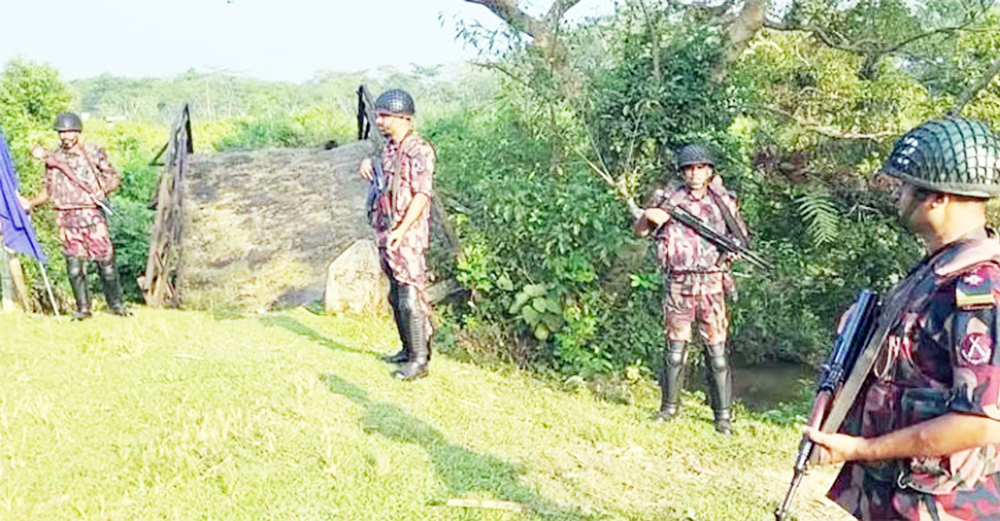
The Border Guard Bangladesh (BGB) has strengthened technology-driven surveillance along the borders of the Sylhet division to prevent illegal entry, smuggling, and the trafficking of drugs and humans.
In the border areas of Moulvibazar, Sunamganj, and Habiganj, the BGB has increased the use of drones, night-vision cameras, sensor-based CCTV systems, searchlights, and solar-powered equipment, alongside regular patrols. Special initiatives have also been implemented to ensure surveillance in remote areas that lack access to electricity.
According to BGB sources, high-risk and crime-prone border areas have been identified and brought under constant surveillance through the use of technology.
Furthermore, the BGB is gathering intelligence and conducting special operations with the involvement of local residents.
Over the past three weeks, there have been several attempts to enter Bangladesh illegally from India through the hilly and forested border regions of Moulvibazar. In response, the 52nd Battalion of the BGB has heightened vigilance and increased patrols along the border.
Lieutenant Colonel Md. Ataur Rahman, Commander of the 52nd BGB Battalion, stated that the BGB’s proactive measures have successfully thwarted attempts by approximately 70 to 75 individuals to cross the border illegally over the last three weeks.
He explained that, in addition to regular patrols, the BGB is conducting intelligence-based surveillance and special operations to ensure border security.
In remote areas, the force has deployed drones, night-vision cameras, sensor-based CCTV systems, and solar-powered lighting. Additionally, local residents have been urged to promptly notify the BGB if they observe the movement of suspicious individuals or any attempts at illegal entry.
Lieutenant Colonel Md. Ataur Rahman emphasized that any attempt to infiltrate across the border will be strictly thwarted. BGB personnel remain on high alert, and the cooperation of local residents plays a crucial role in strengthening border security.
Meanwhile, the 28th Battalion of the BGB is working to bring high-risk routes along the Sunamganj border under camera surveillance. More than 40 locations have been identified along the district’s approximately 90-kilometer-long border. Over the past two days, surveillance cameras have already been installed at seven locations.
According to BGB sources, priority is being given to installing cameras at locations known for past instances of illegal movement between Bangladesh and India. Sites with a history of vehicles-such as cars and motorcycles-crossing the border have also been identified.
The police and various intelligence agencies are being consulted throughout this process.
Locations have been selected for camera installation at several Land Customs (LC) points, including Lalghat, Lakma, Charagaon, and Bareker Tila in Tahirpur Upazila.
This initiative is being carried out in the border areas of Jamalganj, Dharmapasha, Tahirpur, and Madhyanagar Upazilas, which fall under the Sunamganj-1 constituency.
The installed cameras will be monitored from a BGB control room. Additionally, they will be linked to the mobile phone of the battalion commander. Technical measures are also in place to detect any attempts to vandalize or damage the cameras. In areas lacking a power grid, the cameras will be powered by solar panels.
Monirul Alam, a resident of the Tahirpur border area, noted that installing cameras in high-risk zones will make it easier to control illegal border crossings and could also help curb the activities of smugglers.
Anwar Mia, another local resident, expressed hope that the installation of cameras would lead to a reduction in border-related crimes. However, Helal Mia, a resident of Bishwambharpur, cautioned that relying solely on cameras is not enough; surveillance must also be strengthened in areas that fall outside the camera coverage zones.
Local resident Mofiz Mia pointed out that many roads in the Sunamganj border region are rugged and in poor condition. He added that installing cameras at key locations would make it easier to identify individuals involved in criminal activities.
Lieutenant Colonel Zakaria Kadir, Commander of the 28th BGB Battalion, stated that over 40 locations along the Sunamganj border have been identified for camera installation, with work already underway.
Cameras have already been set up at seven of these sites.
The project is supported by government funding. Surveillance will also be maintained over areas outside the specifically designated locations to prevent the commission of crimes.
Meanwhile, the 55 BGB (Border Guard Bangladesh) has strengthened its technology-based security system along the Habiganj border.
Remote-controlled and sensor-based CCTV cameras, searchlights, and solar-powered lighting have been installed in the Balla, Dudhpatil, New Balla ICP, Guibil, and Chimtibil areas. The Habiganj Battalion shared this information in a press release issued last Monday evening.
The 55 BGB stated that the installation of this equipment has brought key areas under 24-hour surveillance. These measures will assist in identifying individuals involved in illegal border crossings, drug trafficking, human trafficking, and smuggling. Furthermore, necessary steps are being taken in coordination with the district police.
Lieutenant Colonel Md. Tanzilur Rahman, Commanding Officer of the 55 BGB, stated that the use of modern technology has enhanced the BGB’s surveillance capabilities along the border. He emphasized that the BGB remains steadfast in its “zero tolerance” policy against human trafficking, smuggling, and drug-related activities.
According to experts in border security, the combination of technology-based surveillance, regular patrols, intelligence operations, and cooperation from the local population will be effective in controlling border-related crimes.