


Dhaka yet to hear India’s terms on Hasina

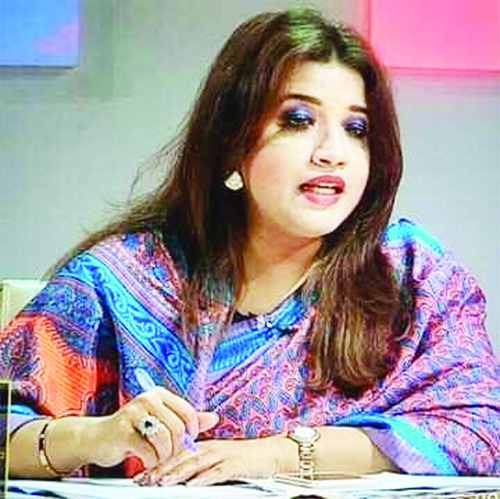
Bangladesh has received no formal conditions from India regarding the return of former Prime Minister Sheikh Hasina, including any proposal to allow her to appeal against her death sentence or reopen her trial over the July-August 2024 crackdown, State Minister for Foreign Affairs Shama Obaed Islam said on Monday.
Dismissing media reports that New Delhi had placed two conditions on Hasina’s extradition, Shama said no such proposals had been communicated to Dhaka through official channels.
“No, not at all. We have had no such conversations with them on this matter,” she told reporters at the Ministry of Foreign Affairs.
Her remarks came amid renewed speculation over Hasina’s continued stay in India following her conviction and the diplomatic efforts to secure her return to Bangladesh.
Referring to a BBC Bangla report published on 12 November, which claimed that Indian officials had indicated two possible conditions for handing Hasina over to Dhaka, the State Minister said the government was not concerned about unverified media reports and that the alleged conditions had no basis in Bangladesh’s laws.
According to the report, one proposed condition was that the Bangladesh military should take responsibility for bringing Hasina back, as she had travelled to India aboard a military aircraft.
The other was that Bangladesh should guarantee her the opportunity to appeal against her death sentence and reopen her trial over the killings during the July 2024 uprising.
Shama said Dhaka would consider and respond to any formal communication from New Delhi but maintained that no such proposal had so far been received.
“If anything comes formally from the Indian Ministry of External Affairs or the Indian government, we will receive it and respond accordingly. But we do not have time to look at who is publishing what in the Indian media,” she said.
She said Bangladesh had approached India several times under the existing extradition treaty to secure the return of Hasina and other convicted individuals staying abroad.
The issue is currently being examined by the Ministries of Law and Home Affairs, which are reviewing the legal and technical aspects of the extradition process, she added.
Hasina was sentenced to death in a case involving crimes against humanity committed during the July-August 2024 uprising.
The Bangladesh government maintains that she should be returned under the existing extradition arrangement, like any other convicted person, to serve her sentence.
Passport eligibility
The State Minister also questioned Hasina’s eligibility to obtain a Bangladeshi passport, saying citizenship alone did not automatically guarantee the issuance of such a travel document.
“Just because someone is a Bangladeshi citizen does not necessarily mean that they will be issued a Bangladeshi passport. If someone is a convicted accused or faces a case, the government is not obliged to issue them a passport,” she said.
She added that the Ministry of Law was also examining the legal implications of the matter.
Bilateral ties
On the possible impact of Hasina’s presence in India on bilateral relations, Shama said the extradition issue should not overshadow the broader relationship between the two neighbouring countries.
“Bangladesh-India relations are a much bigger deal than Sheikh Hasina,” she said, pointing to the longstanding ties between the countries, which date back to before Bangladesh’s Liberation War.
She argued that bilateral relations should not be defined by a single issue, noting that the two countries had several areas of mutual interest that needed to be addressed through diplomatic engagement.
“We are making this issue much more important than it needs to be. Bangladesh has many other issues to discuss. The government is doing a lot of work. Our relationship with India is not limited to one issue.
We have various issues, and we will resolve them through diplomacy,” she said.
However, Shama accused Hasina of attempting to destabilise Bangladesh while staying in India. She alleged that the former ruling Awami League’s political activities and recent incidents of violence were linked to efforts to create unrest in the country.
Referring to the party’s past involvement in petrol bomb attacks and arson, she said the government could not overlook attempts to destabilise Bangladesh from a country with which it maintains diplomatic relations.
“If someone is sitting in a country with which we have relations and trying to destabilise Bangladesh, it is necessary for the government to address the matter,” she said.
Consular dialogue postponed
Meanwhile, Shama clarified that the Bangladesh-India Consular Dialogue, scheduled for 17-18 November, had been postponed and not cancelled, dismissing reports suggesting that the meeting had been called off.
“The meeting has not been cancelled; it has been postponed. It is a secretary-level meeting. Both sides feel that it would be better to hold it at a mutually convenient time after a few days. It will take place later,” she said.
The dialogue serves as an important bilateral platform for discussing consular matters and issues affecting citizens of the two countries. Its postponement comes amid several sensitive issues between Dhaka and New Delhi, including Hasina’s extradition and the broader state of bilateral relations.
Asked whether Bangladesh was continuing diplomatic efforts to improve ties with India, the State Minister declined to elaborate.
She indicated, however, that several important foreign dignitaries would visit Bangladesh in the coming days, adding that the Ministry of Foreign Affairs would disclose details at an appropriate time.
Shama also declined to confirm whether India-related matters, including the Ganges water-sharing issue, had figured in her meeting with Prime Minister Tarique Rahman earlier on Monday.
She said various issues could have been discussed with the Prime Minister but did not disclose the details of their conversation.