


Young Bangladeshis fall to BSF bullets

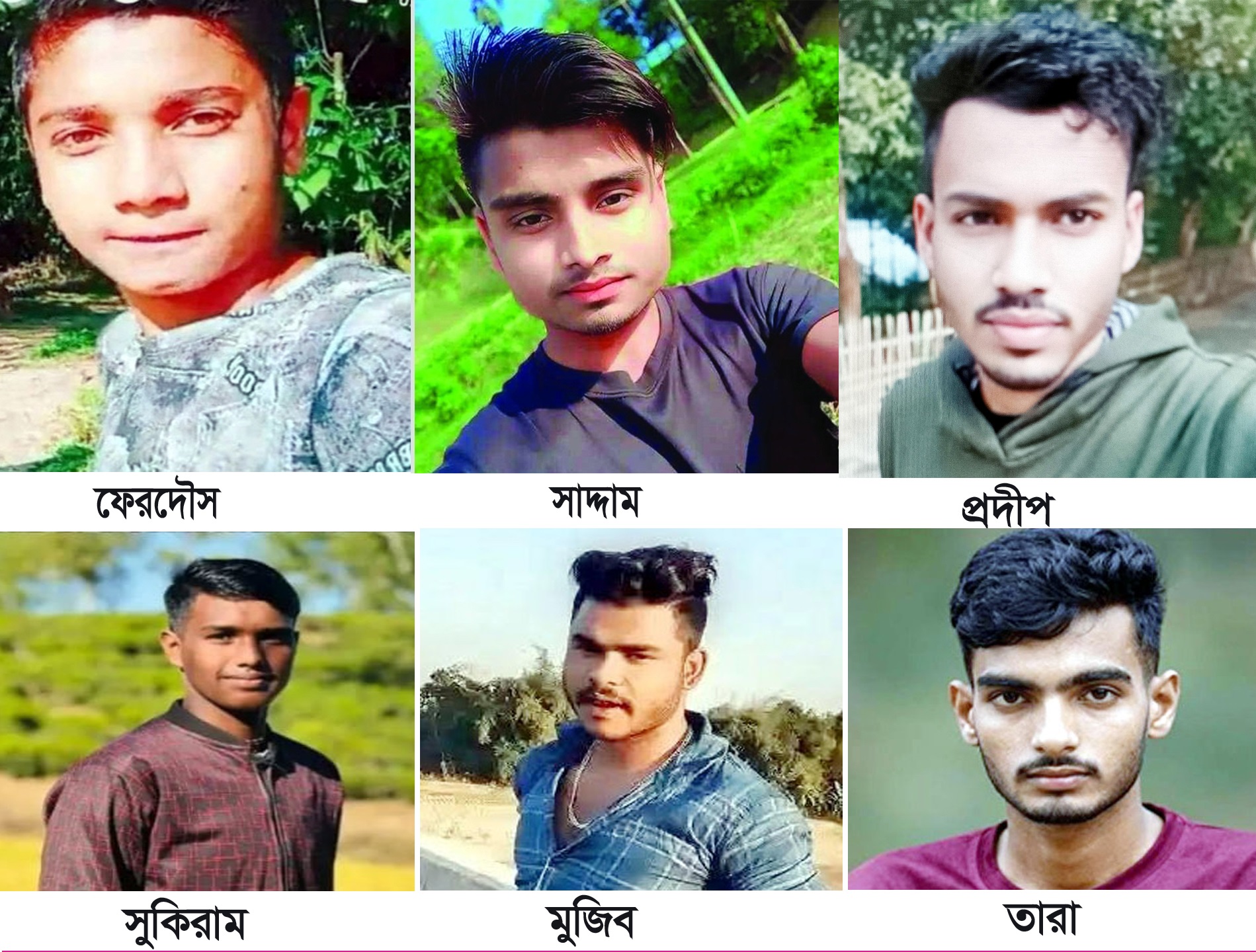
The killing of young Bangladeshis by India’s Border Security Force (BSF) and the growing influence of smuggling syndicates have turned the border areas of Kulaura in Moulvibazar into increasingly dangerous territory, raising serious concerns over the use of lethal force and the abuse of power along the frontier.
Over the past three years, at least seven Bangladeshis have been killed by BSF gunfire in incidents linked to alleged cross-border smuggling and illegal movement, while a young man was hacked to death by a local syndicate over a dispute involving smuggling activities.
The victims include teenagers and young adults, highlighting how vulnerable border residents are becoming entangled in criminal networks and deadly confrontations.
Around 30 villages in Karmadha, Prithimpasha and Sharifpur unions of Kulaura Upazila lie close to the Indian border, where smuggling sks are particularly high.
Various Indian goods, including narcotics, are brought into Bangladesh through these areas in collaboration between Bangladeshi and Indian smugglers.
Taking advantage of the remote, hilly terrain, dense forests and extensive stretches of the border, smugglers have developed different methods to move goods illegally across the frontier.
According to the Border Guard Bangladesh (BGB), police, intelligence agencies and local sources, the smuggling networks deal in Phensedyl, cattle, Yaba, cannabis, Nasir Biri and foreign cigarettes, among other goods.
Smugglers reportedly exploit shift-change intervals of the BSF to transport goods across barbed-wire fences, using wooden planks, ladders and concealed routes.
Investigations have documented several fatal incidents in the area. On 2 October 2023, the BSF shot and wounded 14-year-old Ferdous Ahmad at the Lalarchak border in Sharifpur Union.
He died two days later at Sylhet MAG Osmani Medical College Hospital. Ferdous was the son of the late Mahmud Ali of Lalarchak.
On 17 March 2024, 15-year-old Parvez Hossain Saddam was shot dead by the BSF at the Shikariya border in Prithimpasha Union. He was the son of Askir Miah of Muraichhara settlement in Karmadha Union.
Another fatal incident occurred on the night of 1 September 2024, when 16-year-old Swarna Rani Das was shot dead by the BSF near the barbed-wire fence at Lalarchak while attempting to cross into India to visit her brother.
An eighth-grade student, she was the daughter of Parendra Chandra Das of Kalnigarh village in Paschim Juri Union of Juri Upazila.
On 31 May 2025, around 11:00pm, 22-year-old Pradip Baidya was killed by BSF gunfire near the Dattagram border in Sharifpur Union. He was the son of Shailendra Baidya of the same village.
On 4 December 2025, 25-year-old Sukiram Urang was shot dead by the BSF while working on agricultural land near the border in Karmadha Union. He was the son of Dasnu Urang of Muraichhara Tea Garden settlement.
On 12 June 2026, 30-year-old Mujibur Rahman Mujib was killed by BSF gunfire inside Indian territory, opposite the Dattagram border in Sharifpur Union. He was the son of the late Ojibur Rahman.
More recently, on the night of 8 August, 19-year-old Tara Mia was reportedly shot dead by the BSF in the Maguruli area inside Indian territory, opposite Prithimpasha Union. He was the son of Abdul Malek of Muraichhara Basti in Kulaura.
Meanwhile, smuggling-related violence has also claimed local lives. On the evening of 1 March 2025, Jabel Mia was hacked to death in Nishchintapur village of Sharifpur Union following a longstanding dispute among members of smuggling networks.
According to local accounts, a group of around 30-40 people, allegedly led by Jaber Mia, Asaid Mia and Suman Mia, a known smuggler from Amuli village in Prithimpasha Union, attacked Jabel with locally made weapons. His father, Rahmat Ali, filed a case with Kulaura Police Station on 2 March, naming 12 people as suspects.
Despite regular BGB patrols, intelligence surveillance and special operations, smuggling remains a persistent challenge. Officials say limited manpower and resources, coupled with weaknesses in existing laws and procedural delays, allow many arrested suspects to secure bail and return to criminal activities.
As a result, the masterminds behind the networks often remain beyond the reach of law enforcement, while young people are recruited with promises of quick money to undertake dangerous cross-border assignments.
Lieutenant Colonel Abdullah Al Moin Hasan, commander of the 46 BGB Sreemangal Battalion, said border security and the protection of the lives and property of border residents were among the force’s top priorities.
He said some young people, tempted by financial gains, were risking their lives by illegally crossing into India. To prevent such incidents, the BGB was conducting regular patrols, intelligence-based surveillance, special operations and public awareness campaigns.
He added that whenever incidents of BSF firing or mistreatment occurred along the border, the BGB raised protests through bilateral channels, including flag meetings.
However, he stressed that bringing the masterminds of smuggling networks to justice and ensuring coordinated action by the administration, police and intelligence agencies were essential to curbing border crimes. He urged residents to refrain from illegal crossings and smuggling, adding that efforts to prevent border killings would continue.
Sheikh Jahirul Islam Munna, officer-in-charge of Kulaura Police Station, said smuggling syndicates had been active along the border for a long time. Police regularly conducted operations against drug trafficking and smuggling, arresting suspects and sending them to jail.
Following several recent murders, police surveillance in the border areas had been intensified, he said, calling on all relevant agencies and local stakeholders to remain vigilant and cooperate in tackling the problem.