


Bangladesh Achieves Nuclear Power Generation Milestone

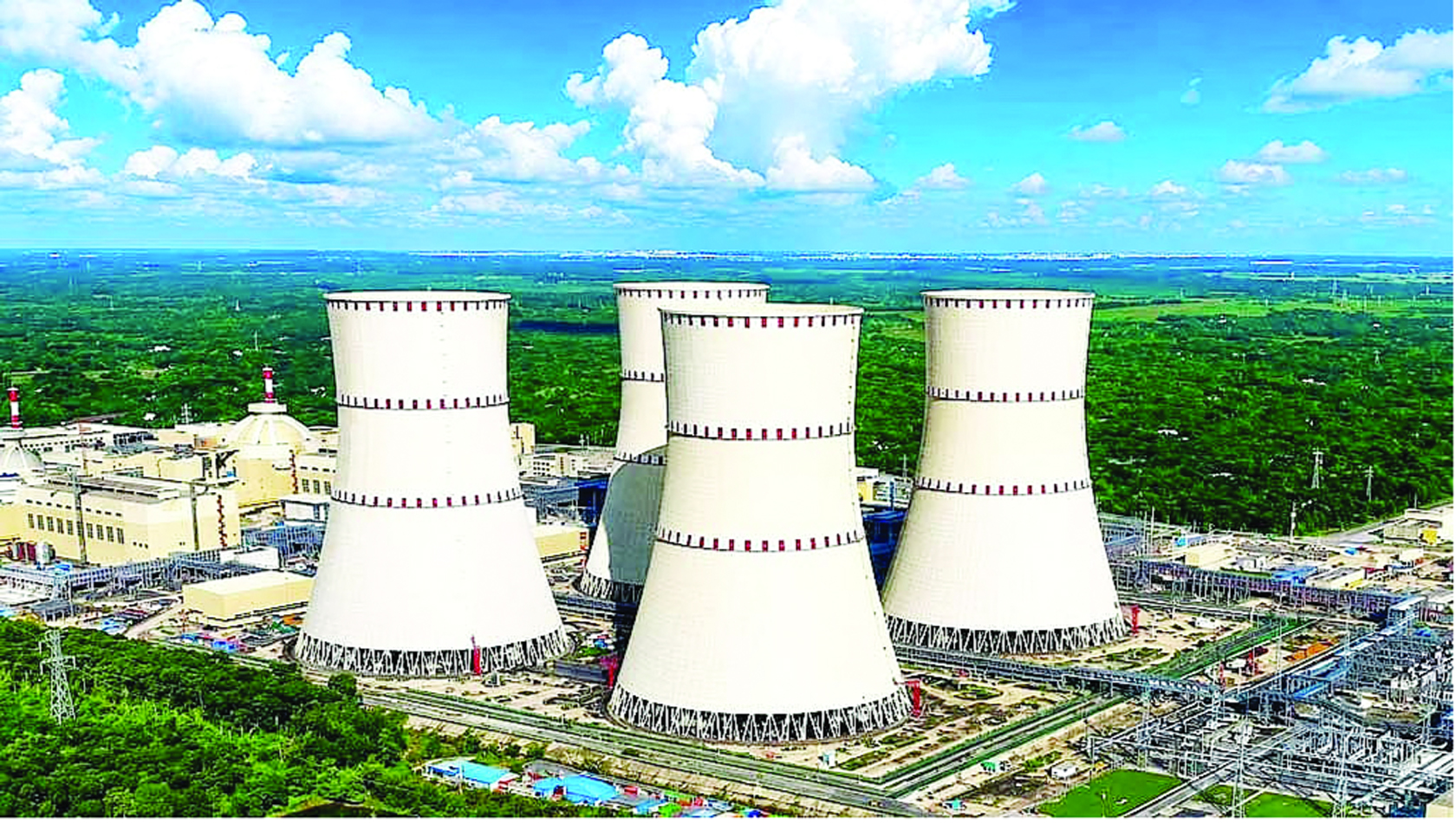
On Tuesday, November 17, Bangladesh crossed a threshold it has been working toward for more than half a century.
Unit 1 of the Rooppur Nuclear Power Plant supplied 350 megawatts to the national grid for the first time, on a trial basis, at around 3:16pm, in the presence of Science and Technology Minister Faqir Mahbub Anam.
Authorities had initially planned a more modest supply of up to 240 megawatts for a few hours. Commercial production is still expected to be about a year away.
 With this step, Bangladesh joins the roughly 30 countries worldwide that generate electricity from nuclear power.
It is a clean, safe and proven technology, and it moves the country meaningfully toward energy security and independence.
The current government under Prime Minister Tarique Rahman deserves recognition for carrying the project over the line after taking office, and Minister Anam for steering it through the final stretch.
Credit also belongs to the interim government under Professor Muhammad Yunus, which inherited a project strained by a payment crisis.
Russia had demanded roughly $630 million in overdue and current interest on the project loan, and Western sanctions meant money could not be sent directly.
The interim under Dr. Yunus’s administration worked to resolve the payment channel, including routing payments through China, and sought to extend the principal repayment period.
The current government has continued that work. Transferring the money remains a real challenge, but the project stayed on track. The deeper significance of Rooppur is economic.
Bangladesh has leaned heavily on heavy fuel oil-based power plants, which are expensive to run and environmentally damaging.
According to BPDBsources, HFO-based capacity is in the range of 4,500 megawatts, and these plants are paid capacity charges even when they sit idle, producing power at 27 taka per kwh versus around 8 takafor Rooppur.
Reliable, lower-cost baseload power from Rooppur gives the government real leverage to renegotiate and retire these costly arrangements and to eliminate capacity payments expeditiously.
Most major Asian economies have largely moved away from oil-fired baseload power, while Bangladesh still carries over five thousand six hundred megawatts of it, probably by far the largest deployment of such HFO based units in a non-oil producing country.
Moving off that model also reduces the country’s exposure to volatile global oil prices, which have repeatedly strained the budget and the grid.
The subsidy bill makes the case plainly. The government provided Tk 43,196 crore in power sector subsidies in fiscal year 2025-26, because the cost of buying electricity stayed above the wholesale selling price.
Even after the latest tariff revision, roughly Tk 41,000 crore of subsidy burden is expected to remain for 2026-27 in the power sector alone.
High electricity costs flow into the price of everything Bangladesh makes. For the garment sector, which competes on thin margins against regional rivals, expensive power is a direct competitive disadvantage. Over-reliance on capacity payments to idle or underused plants compounds the problem.
Bangladesh aspires to be a manufacturing hub, and that ambition depends on the price of energy. Much cheaper baseload power is the way out.
Under the Quick Enhancement of Electricity and Energy Supply (Special Provisions) Act of 2010, the previous government could award power and energy projects to private firms mostly aligned with the Hasina government without international floating tenders bypassing country’s own public procurement act.
The law was passed for five years initially but amended repeatedly.
Around forty projects-that enjoy USD indexed capacity payments and fuel charges-were awarded this way, and their cost continues to drain Bangladesh’s budget and the country’s foreign exchange reserves.
The public interest must come first. Valid contracts should be honored, but deals signed under an unaccountable regime without international competition deserve a fresh look.
Did Germany honor every agreement Adolf Hitler signed? Transparency is also at stake here: the public should knowwhere this money is going today.
Pakistan for example, has renegotiated or cancelled contracts awarded without open bidding, and the same is justified here.
Each contract should be tested againsttwoquestions: Is there a need for these costly projects and were theyawarded at the best price the country could have secured? The Anti-Corruption Commission and the NBR should scrutinize every payment made to these projects today.
For Bangladesh government, the next step is to pursue further nuclear projects for baseload power, because few other sources can match nuclear on long-run cost.
The task now is to turn this trial run into commercial operation, and to use the leverage it creates to clear the expensive oil-fired plants out of the system.
Bangladesh must not rest on its laurels. Unit 2 is currently expected to reach commercial operation by December 2027, and that schedule is not acceptable.
The government should press the contractor to bring it forward, so that nuclear power can complement other sources before next summer’s peak demand.
Every megawatt of nuclear baseload lets Bangladesh cut its reliance on costly US dollar draining HFO plants, and those plants can then be phased out gradually within a year or two with the help of solar.
Bangladesh has joined the nuclear club, howeverit should not stop at one plant with 2400MWs only.