


The New Nation at 47 A Free Press in a Renewed Democracy

As The New Nation marks its 47th anniversary, Bangladesh stands at a historic turning point.
The newspaper, founded in 1979 by Barrister Mainul Hosein, has spent nearly five decades championing a free press, the rule of law, and democratic accountability.
That mission has never been more relevant than in the period following the collapse of Sheikh Hasina’s long rule.
For more than fifteen years, the Awami League government under Hasina concentrated power, weakened independent institutions, and restricted political space.
Critics and human rights organisations documented enforced disappearances, extrajudicial killings, the weaponisation of law enforcement agencies, and severe constraints on the media and opposition.
Elections were widely seen as lacking credibility, and dissent was met with intimidation or force. The July-August 2024 student-led uprising brought that era to an abrupt end.
Hasina fled the country, an interim administration led by Professor Muhammad Yunus took charge, and the stage was set for a return to competitive politics.
The February 2026 parliamentary elections, held under the interim government, produced a decisive result.
The Bangladesh Nationalist Party, led by Tarique Rahman, secured a two-thirds majority and formed the government.
For the first time in nearly two decades, Bangladesh conducted a widely recognised competitive election in which major opposition forces could participate freely.
The Awami League was barred from contesting pending legal proceedings against its leadership – a decision that remains controversial but reflected the depth of public resentment over the preceding years of repression.
The vote also included a referendum on constitutional reforms under the July National Charter, signalling a broader public desire to reset the rules of governance.
What has been achieved
The most significant gain is the restoration of competitive politics. Power now rests with an elected parliament rather than an entrenched authoritarian apparatus.
Political parties can organise and campaign without the systematic barriers of the previous era.
The press operates with greater freedom than under the Hasina government, and citizens once again have a formal mechanism to change their government through the ballot.
Law and order, while still imperfect, has improved from the chaotic period immediately after August 2024.
Many politically motivated cases filed under the previous regime have been reviewed or dismissed, and the space for public debate has widened.
Economic stabilisation efforts under the interim government also prevented a deeper crisis, giving the elected administration a foundation on which to build.
Public expectations
These gains have raised expectations. Citizens now look for concrete delivery on economic recovery – controlling inflation, creating jobs, and managing energy and price pressures.
They expect the rule of law to be applied evenly, with accountability for past abuses conducted through fair process rather than retribution.
There is a clear demand for institutional reform so that no future government can again concentrate power unchecked.
People also want sustained improvements in law and order, protection of minorities, and a foreign policy that safeguards national interests without isolation.
Above all, the public expects the new government to protect the political freedoms won in 2024 and not allow old patterns of repression to re-emerge under a different name.
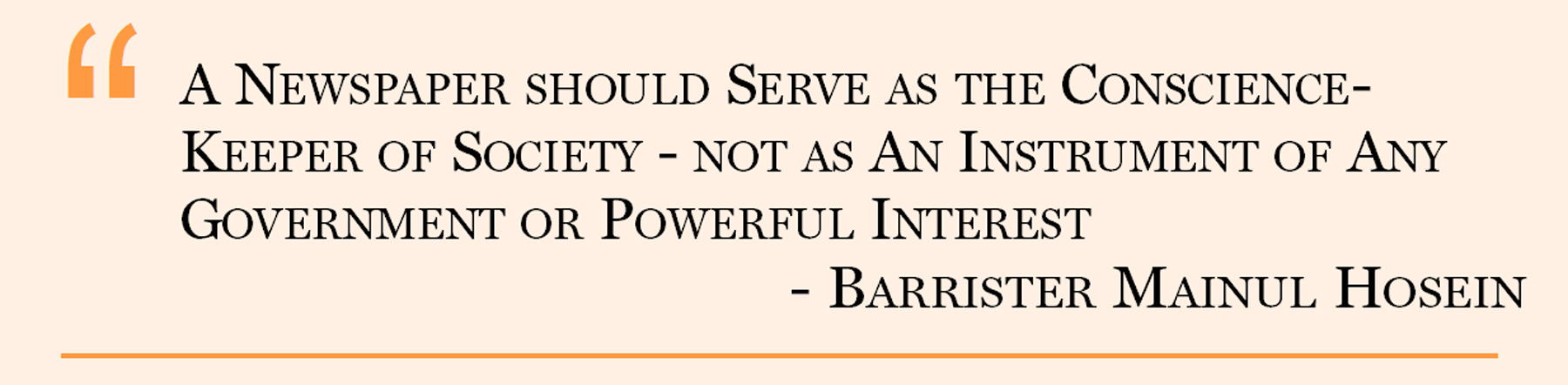
This moment resonates deeply with the ideals that shaped The New Nation. Barrister Mainul Hosein, a lawyer, columnist and democratic voice, established the paper as an independent platform committed to truth and public accountability.
His commitment to an independent press was rooted in experience.
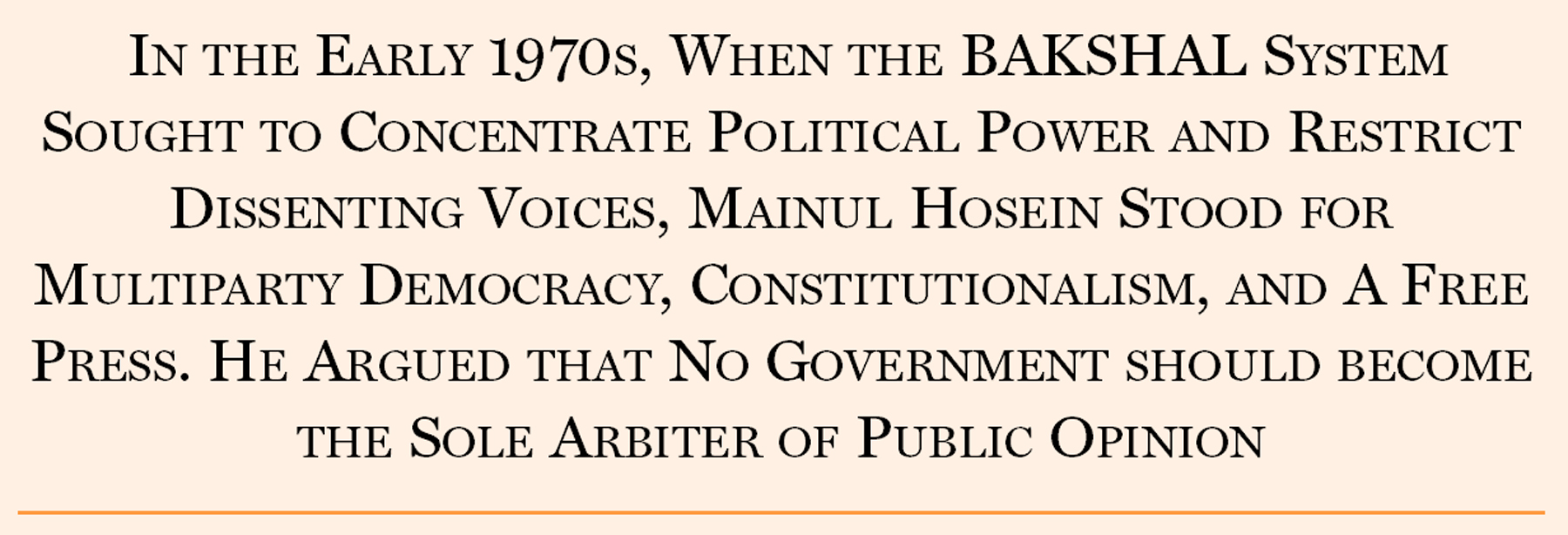
In the early 1970s, when the BAKSHAL system sought to concentrate political power and restrict the space for dissenting voices, Mainul Hosein stood for multiparty democracy, constitutionalism, and a free press.
He argued that no government – however well-intentioned – should become the sole arbiter of public opinion. That conviction later became the foundation of The New Nation.
His father, Tofazzal Hossain Manik Mia – founding editor of The Daily Ittefaq and a fearless political journalist – spent his life using the pen to advance the rights of the people and resist authoritarian rule.
Their shared belief that a free press is indispensable to a just society remains the newspaper’s guiding principle.
In times of both restriction and openness, the paper has sought to report without fear or favour, holding power to account and giving space to competing views.
In the years ahead, Bangladesh’s democratic consolidation will depend on whether institutions are strengthened, the rule of law is applied evenly, and the press remains free to scrutinise power.
The new government faces the dual task of delivering on economic stability and protecting the hard-won political freedoms of the post-2024 period.
The New Nation enters its 48th year committed to that task: reporting without fear or favour, holding the government to its promises, and defending the space for debate that was so long constricted.
The journey from authoritarian control to an elected government is incomplete, but it is real.
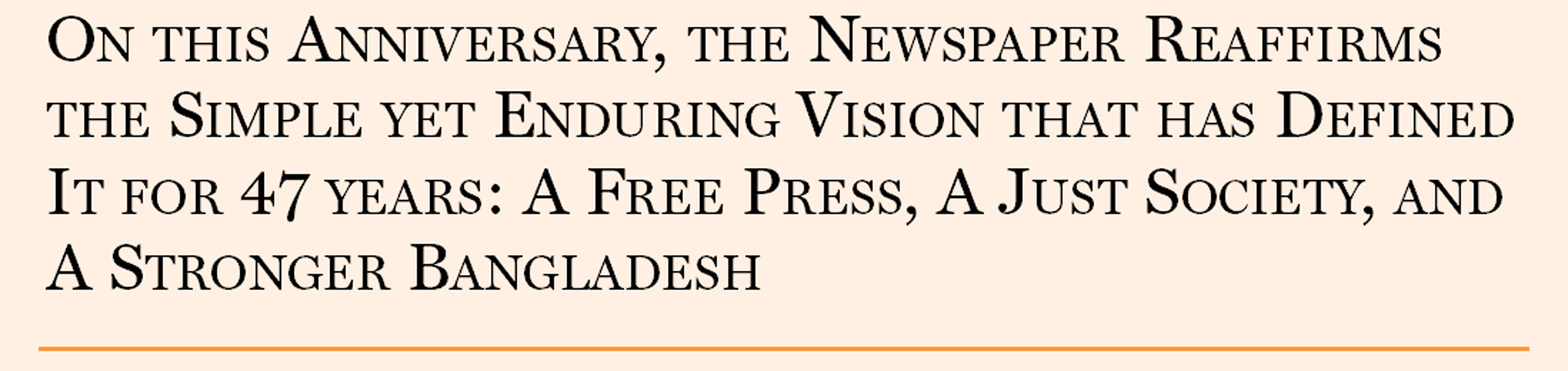
On this anniversary, the newspaper reaffirms the simple yet enduring vision that has defined it for 47 years: a free press, a just society, and a stronger Bangladesh.