


Ctg Chamber seeks ILO partnership to develop skilled workforce, create jobs

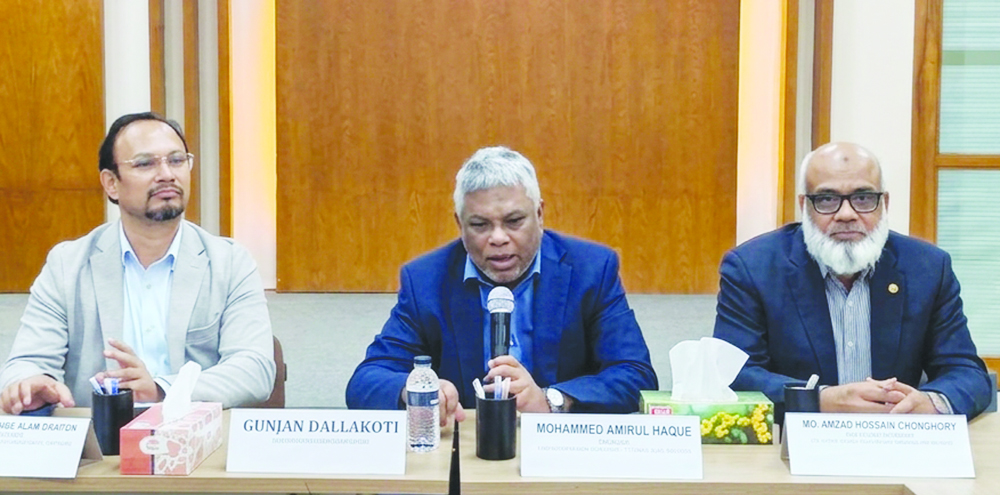
The Chittagong Chamber of Commerce and Industry (CCCI) has expressed its interest in partnering with the International Labour Organization (ILO) to develop an industry-oriented skilled workforce, expand employment opportunities and bridge the gap between academic education and the demands of the industrial sector.
The collaboration is being considered against the backdrop of a government initiative to establish Employment Exchange Centres across the country under the Ministry of Labour and Employment, with technical assistance from the ILO.
The proposed partnership will focus on strengthening links between industrial enterprises and technical educational institutions, introducing work-based learning, improving vocational training and providing employment support services to job seekers, reads a press release.
These issues were discussed at a meeting between the Chamber leadership and an ILO delegation on Tuesday .
Chamber President Mohammed Amirul Haque said the country’s education system needed substantial reforms to prioritise technical and practical education in line with actual industrial requirements.
Although thousands of students obtain general academic degrees every year, industries continue to face difficulties in recruiting workers with the necessary technical skills. At the same time, many educated young people remain unemployed or struggle to find suitable jobs, reflecting a mismatch between education and labour market requirements.
Referring to vocational training models in developed countries, including Canada, he stressed the need for short-term, demand-driven training in practical trades such as plumbing, painting, cutting, sewing and gas utility services to prepare young people for employment.
He also emphasised modernising educational curricula and training methods to address the changing demands of the workplace, particularly the growing influence of advanced technologies, including Artificial Intelligence (AI).
The Chamber president urged the ILO to prepare recommendations based on the actual needs of industries and submit them to the relevant government ministries and policymakers.
He assured the organisation of the Chamber’s cooperation as a private-sector representative in implementing the government’s target of creating 10 million jobs.
Joining the meeting virtually, ILO Country Director for Bangladesh Max Tunon said the organisation works to address the respective needs and interests of the government, workers and employers.
He said the ILO’s key priorities include creating more and better-quality employment opportunities, improving workplace conditions, increasing productivity and ensuring that the workforce possesses skills relevant to industrial requirements.
Tunon stressed that stronger collaboration between technical educational institutions and industrial enterprises was essential to addressing the country’s employment challenges. Work-based learning, internships and practical training could help young people gain the experience and competencies required by employers.
He pointed out that Bangladesh faces a dual challenge: a large number of educated but inadequately skilled young people are struggling to secure jobs, while industries are finding it difficult to recruit suitably qualified workers.
To address this mismatch, the ILO is planning to introduce an Employment Support Service in Chattogram. The proposed service will facilitate the exchange of employment-related information, connect job seekers with employers, provide career counselling and create opportunities for internships and workplace-based training.
It will also establish links with skill-development institutions to ensure that training programmes reflect the requirements of local industries.
Tunon said the initiative could be expanded to other parts of the country if successfully implemented in Chattogram. The ILO is therefore keen to work with the Chamber and its member organisations to develop a practical action plan for the initiative.
During the meeting, ILO National Programme Officer Mohammad Wasfi Tamim delivered a presentation outlining different aspects of the proposed Employment Exchange Programme.
The meeting was attended by Chamber Senior Vice-President Md Amjad Hossain Chowdhury, Director Shahidul Alam and BGMEA Director Enamul Aziz Chowdhury.
Among others, ILO Chief Technical Adviser Peter Baleen, Head of Programme Gunjan Dallakoti, Senior Programme Officer Tanzel Ahsan, BGMEA Chief Coordinator for ILO and Labour Affairs A.N.M. Saifuddin, and Ritzy Group Managing Director Mirza Md Jamshed Ali were present.