

US and Iran trade attacks as Strait of Hormuz dispute deepens

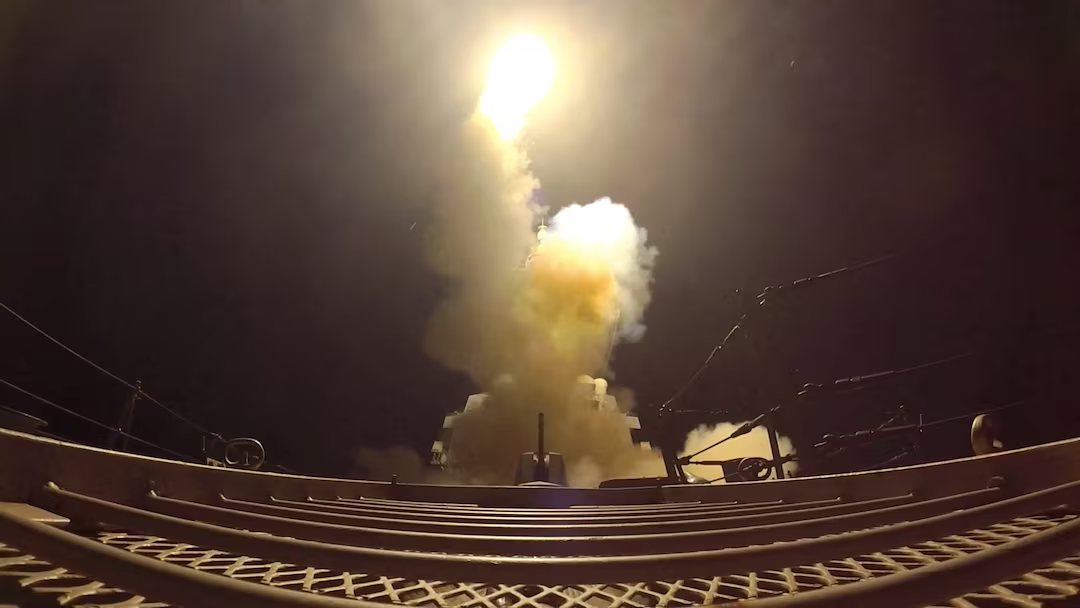
US and Iranian forces exchanged missile and drone attacks on Monday and clashed over control the Strait of Hormuz, casting doubt on the viability of an interim deal to halt their war and driving oil prices higher.
After Iran’s announcement of the strait’s closure over the weekend, US President Donald Trump said on Monday the United States would probably take over the waterway and should be reimbursed for controlling the vital shipping route.
Iran’s Revolutionary Guards said on Monday they had targeted US military facilities in Bahrain and Kuwait, destroyed radar systems in Oman and hit fuel tanks and ammunition depots at Prince Hassan Air Base in Jordan in response to US strikes.
The US military said it had struck Iranian air defence systems, coastal radar sites, missile and drone capabilities and small boats on Sunday, using aircraft, naval vessels and drones.
On Monday, the US attacked military sites in southern parts of Iran, including Qeshm, Bandar Abbas and Abadan, Iran’s official news agency IRNA said, citing a local official.
Bahrain said its air defence systems had destroyed several Iranian missile and drone attacks early on Monday.
The latest exchanges mark an escalation in both the pace and geographic reach of attacks over the past week, throwing into question an interim US-Iranian agreement signed last month to reopen the strait and halt hostilities while the sides pursued a further 60 days of negotiations.
Trump has said he considers the ceasefire over, while leaving the door open to further talks.
“We had a deal. It was a done deal, and then they broke it. They always break it. We’ve had 10 deals with these people, and so we’re just going to hit them very hard,” he said in a phone interview on Fox News’ “Fox & Friends” programme on Monday.
Iran’s top negotiator, Mohammad Baqer Qalibaf, struck a similarly defiant tone, posting on X on Sunday: “The era of one-sided deals is OVER. We told you: keep your word or pay the price. Reality is knocking.”
The war launched by the United States and Israel against Iran on Feb 28 has destabilised the Gulf and spread across the region, with Iran attacking US bases in multiple countries.
The Iran-aligned Houthi movement that controls northern Yemen accused Saudi Arabia on Monday of launching airstrikes against the airport in Sanaa, and vowed to retaliate.
Oil Prices Jump
Control of the Strait of Hormuz, a vital waterway for global oil supplies, has become one of the main battlegrounds of the conflict. Iran’s effective blockade of the strait has pushed up energy prices and increased concerns about inflation globally.
Brent crude jumped by more than 3 percent on Monday on fears of disruption to one of the world’s most important energy shipping routes, although prices remained below the peaks reached earlier in the conflict.
After announcing the strait’s closure on Saturday following what it described as an unauthorised transit, Tehran said on Sunday that passage remained suspended.
Trump said on Monday the US would control the strait.
“We’ll become the guardian of the strait. Maybe we’ll call it the guardian angel of the strait. And we should be reimbursed for that,” he said in the Fox News phone interview.
Higher energy prices, particularly gasoline costs, are politically sensitive for Trump before congressional elections in November.
Thousands of people have been killed during the war, mainly in Iran and Lebanon. On Monday, Iranian state media confirmed the deaths of two people in Abadan in southwestern Iran.
Iran has not released an overall death toll from attacks over the past week, but state media reports and official statements on individual incidents suggest about 20 people have been killed by renewed US strikes.
Iran Seeks Oman Deal on Strait Traffic
Iran’s Revolutionary Guards said in a statement on Monday that the only way to restore regular shipping traffic through the strait was to end US military interventions in the waterway, and warned that “continued interference could lead to greater incidents in the global oil and gas sector.”
Foreign Ministry spokesperson Esmaeil Baghaei said Iran was seeking to establish a joint mechanism with Oman to manage traffic through the strait, adding that US pressure on Oman had hindered discussions.
Iran has sought to establish a permanent fee and permit system for vessels using the waterway, which before the war carried about a fifth of global oil and liquefied natural gas shipments.
The US, which revoked a licence waiving sanctions on Iranian crude sales last week after earlier attacks on shipping, said its forces were positioned to safeguard freedom of navigation despite what it called “aggression, harassment, threats, and arbitrary declarations” from Iran.
“Iran does not control the strait. Traffic is flowing,” it said.
US officials said around 20 vessels had been escorted through the strait in the previous 24 hours, though ship-tracking data showed little traffic moving. MarineTraffic said on Monday that vessel activity through the strait declined by about 52 percent over Jul 10 to 12 compared to the previous week.



