Guardians of the Coast: Marziat Rahman’s Path from the Meghna to the Frontiers of Climate Science

On the fragile, shifting banks of the Meghna River in Noakhali, the horizon is a beautiful but treacherous neighbor. For Marziat Rahman, the sound of the river was not a lullaby; it was a constant reminder of fragility. She grew up watching homes vanish into the churning water and families retreating before the relentless advance of salinity and storms.
In these coastal reaches, climate change is not a theoretical model discussed in air-conditioned halls—it is a daily battle for survival. Today, that young girl who once stood on the eroding edges of Noakhali has moved from the riverbanks to the laboratories and international stages. As a leading environmental researcher and educator, Marziat is no longer just witnessing the crisis; she is decoding it to save her community.
The Seed of Resilience
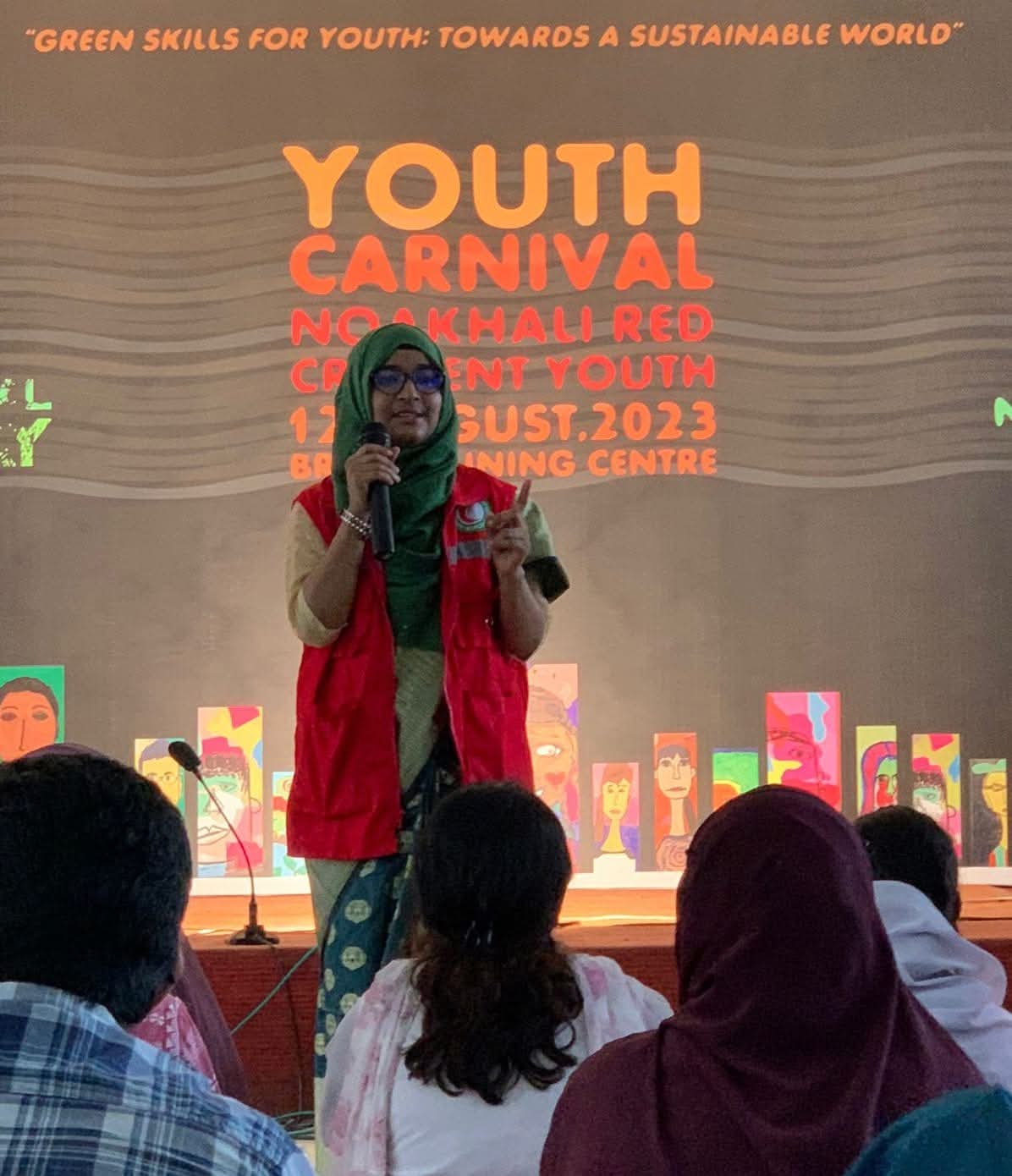
The turning point came at age 12. While most children were focused on play, Marziat joined a coastal youth camp organized by the Bangladesh Red Crescent Society. Amidst the lessons on disaster preparedness and first aid, she had a profound realization: the cyclones and floods that haunted her village weren’t just “fate.” They were challenges that could be studied, anticipated, and mitigated.
That early spark of volunteerism ignited a twenty-year journey. For two decades, Marziat has remained a fixture in the Red Crescent, evolving from a trainee to a master trainer, teaching the next generation how to stand tall when the waters rise.
A Legacy of Academic Brilliance
Marziat’s ascent is a testament to the power of education in the face of adversity. Coming from a rural coastal background, the path to higher education was steep, yet she climbed it with unprecedented excellence.
After topping her class at Chattogram Polytechnic Institute, she moved to Stamford University Bangladesh, where she achieved a feat rarely seen: a perfect CGPA of 4.00/4.00 in both her Bachelor’s and Master’s programs in Environmental Science. Her mantelpiece now holds the Vice Chancellor’s Award and the Dean’s Award, but her real reward lies in the data she produces—data that gives a voice to the voiceless.
Science with a Soul
Now the Lead Researcher at the Center for Atmospheric Pollution Studies (CAPS), Marziat has published over 20 scientific articles. While her expertise in air quality is globally recognized, her most poignant work focuses on the intersection of climate and biology: the impact of salinity on women’s reproductive health.
“In the coast, climate change is personal,” Marziat explains. “When salt creeps into the water, it doesn’t just kill the crops; it affects the bodies of pregnant women. My research aims to ensure that climate policy isn’t just about carbon—it’s about health and dignity.”
Beyond the lab, she is a mentor to over 100 students, bridging the gap between technical science and grassroots activism. She is a familiar face at BAPA (Bangladesh Poribesh Andolon) and has represented the youth voice in over 70 national and international conferences, advocating for a future where “climate victim” is a term of the past.
Leading the Way for 2026 and Beyond
As we celebrate International Women’s Day 2026, Marziat Rahman embodies this year’s spirit of resilience. Her journey from the banks of the Meghna to becoming a premier environmental scientist sends a powerful message to every girl in a remote village: your geography does not define your destiny.
“For girls from vulnerable communities, education and courage are the only currencies that matter,” Marziat says. “We are not just the faces of a climate tragedy; we are the architects of the solution.”
In the story of Marziat Rahman, we see a shift in the narrative of Bangladesh—a country that is no longer just surviving the climate crisis, but is leading the scientific charge against it, one coastal daughter at a time.