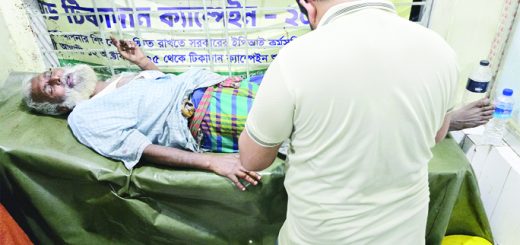
National TB control programme in crisis

Staff Reporter :
The National Tuberculosis Control Programme (NTP) is facing a new funding crisis.
After the withdrawal of funding by USAID, the Global Fund is now set to discontinue its financial support as well.
As a result, 479 officers and staff members are losing their jobs. Meanwhile, the stock of TB medicines is nearly depleted, and experts warn that without immediate action, this could severely undermine the country’s TB eradication efforts.
According to the Directorate General of Health Services (DGHS), nearly 379,000 people contract TB in Bangladesh each year, with 44,000 deaths annually. Bangladesh aims to reduce the yearly number of infections to 70,000 and deaths to 6,000 by 2030. However, 17 percent of TB patients in the country still remain undiagnosed.
DGHS data shows that from January to October 2025, a total of 278,607 TB patients were detected in Bangladesh. Among them, 1,258 are drug-resistant TB patients-a matter of great concern, according to experts.
On 12 November, the World Health Organization (WHO) reported that TB is a preventable and curable disease caused by bacteria. It typically infects the lungs and spreads through the air when an infected person coughs, sneezes, or spits. Last year, TB caused an estimated 1.23 million deaths worldwide. In the same period, about 17 million people contracted TB-5.8 million men, 3.7 million women, and 1.2 million children. On 25 November, officials and field-level staff of the National TB Control Programme were notified that the Global Fund’s financial support will end on 31 December. According to the notice, their employment contracts will expire with the funding.
Without new financial support, contract extension is impossible. Several NTP officials said that starting from the new year, TB detection services across 650 centres nationwide will shut down. Earlier, the closure of USAID funding led to the dismissal of 2,200 staff members, causing service disruption in many areas.
Several DGHS officials said that the stockpile of TB drugs and diagnostic kits is depleting rapidly. Typically, procurement begins six months in advance to ensure uninterrupted services, but this time the process has been significantly delayed. This raises the risk of rapid transmission of TB bacteria. Experts say shortages of drugs and a slowdown in programme activities are contributing to an increase in drug-resistant TB. Every year, 5,000 people develop drug-resistant TB, but half of them remain undiagnosed.
Government Funding Also Stalled
For nearly three decades, the National TB Control Programme operated under the Operational Plan (OP) of the Health, Population, and Nutrition Sector Programme (commonly known as the Sector Programme). However, this programme expired in June 2024.
Although a new Development Project Proposal (DPP) has been submitted, it has not yet been approved. As a result, the government has allocated virtually no funds for TB prevention for more than a year and a half-aside from limited emergency funding for essential kits and medicines. Public health experts warn that without immediate funding and administrative approval, the TB control programme may face a major breakdown by 2025.
Weak Coordination in TB Control
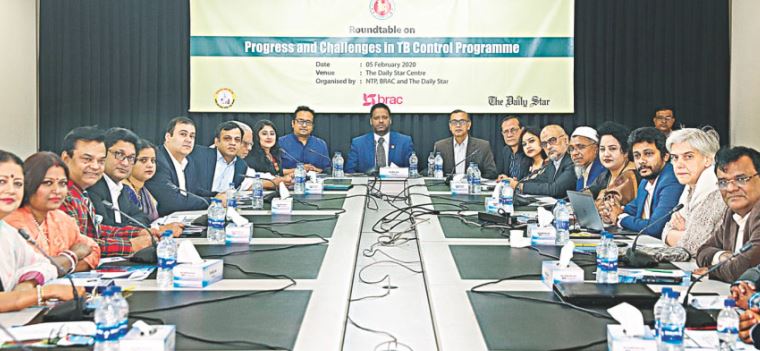
Chest disease specialist and President of the citizens’ organisation Swasthyer Bangladesh, Kazi Saifuddin Bennur, said the National TB Control Programme has always been heavily bureaucracy-driven. He said the programme has failed to build proper coordination among doctors and other healthcare workers. No significant research or special initiatives have been taken to address existing problems. As a result, Bangladesh’s TB diagnosis rate remains below international standards. DGHS officials say urgent administrative approvals and financial support are needed to avoid a crisis; otherwise, TB diagnosis and treatment may be severely disrupted as early as next year.
Dr. Mohammad Ali Habib, Director of the National TB Control Programme, declined to comment on the discontinuation of Global Fund support.
Mohammad Huzur Ali, Director of the Central Medical Stores Depot (CMSD), said that procurement has begun using government funds, tenders have been issued, and there will be no shortages in the supply of TB drugs.
Health Secretary Saidur Rahman said that the Development Project Proposal has been submitted and will be approved soon, and that the procurement of medicines is already underway.