Energy crisis looms as gas reserves dying fast


Reza Mahmud :
Once capable of meeting nearly 70 percent of national energy demand from domestic gas fields, Bangladesh now faces a starkly different reality as production continues to decline and exploration nearly halting.
According to a recent report by the Bangladesh Petroleum Exploration and Production Company (BAPEX), more than 20 trillion cubic feet (TCF) of gas-out of the country’s total proven reserves of about 28-29 TCF-have already been extracted.
Current estimates suggest that only 8.66 TCF remain recoverable, meaning almost two-thirds of Bangladesh’s natural gas reserves are already depleted.
If present consumption trends persist, experts warn that domestic reserves could be nearly exhausted within the next 8-10 years unless new gas fields are discovered.
Experts said, Myanmar, Pakistan and India gains exploring offshore gas, but Bangladesh still lagging behind.
They said, with China’s cooperation, Pakistan has recently discovered a vast reserve of natural gas in the seabed of the Arabian Sea through a joint survey. However, the exact quantity of the reserve has not yet been announced.
Myanmar settled its maritime boundary dispute with Bangladesh in March 2012. After completing surveys and exploration, the following year the neighboring country discovered a large gas reserve in the Bay of Bengal – right along Bangladesh’s maritime border.
When contacted, eminent energy expert Professor Dr. Ijaz Hossain on Monday told The New Nation, “Our government has hesitated on negotiations with foreign bidders on exploring offshore oil and gas explorations. As a result, Bangladesh still lags behind on surveying mineral resources.”
He expressed optimisms that there are huge potential reserves of oil and gas at our deep sea and it will be exploring through international tendering.
When contacted, Energy Adviser Muhammad Fouzul Kabir Khan told The New Nation, “It is true that our gas reserve is dying fast.
We have tried to explore offshore and onshore gas and oils through international biddings. But international bidders have not showed interest to work with such a government which tenure will be ended within months.”
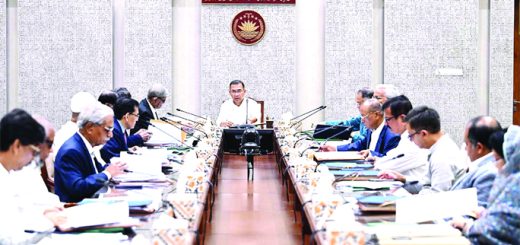
The Adviser said, “We are preparing all the documentations and procedures so that the upcoming government could call international tender soon after elected.”
He said there are huge potentials of gas reserve in our offshore and onshore fields which will be enough to meet the demands of the country.
Sources said, the gas shortage has already disrupted industrial production, especially in key export-oriented sectors such as garments, ceramics, glass, cement, and fertilizers. Electricity generation has been severely hampered, causing frequent load-shedding that affects both households and industries.
The increased demand for dollars to finance LNG imports has further weakened foreign reserves, while energy price hikes have directly impacted consumers.
Among the 29 gas fields discovered so far, the largest include Bibiyana, Titas, Jalalabad, Habiganj, and Rashidpur. The Bibiyana field, operated by Chevron, supplies around 45 percent of total national gas production but is also seeing a rapid decline in reserves. Similarly, the Titas field, once holding 6.36 TCF of gas, now has about 1.1 TCF left.
Gas exploration in Bangladesh has made limited progress over the past two decades. The last major discovery occurred in the early 2000s, with only a few smaller finds since then, such as at Shreepur and Bhola.
The government plans to drill or refurbish 50 new wells by 2025 and an additional 100 by 2028, aiming to boost daily output by 648 million cubic feet. Experts, however, argue that the country’s real potential lies in offshore exploration-an area that remains largely untapped.
Since the 2014 maritime boundary settlement with Myanmar, Bangladesh has gained access to 26 offshore blocks in the Bay of Bengal, but only three have been partially surveyed. While India and Myanmar have already begun offshore gas extraction, Bangladesh has yet to start commercial operations.
To address this, the government has recently launched a new round of international bidding to attract foreign investors, offering policy incentives and improved contract terms. Specialists stress that ensuring transparency and timely execution in this process is crucial to reviving exploration momentum.
As domestic production continues to fall, Bangladesh’s dependence on imported liquefied natural gas (LNG) is growing. Since 2018, LNG imports-mainly from Qatar and Oman-have supplied about 25 percent of the country’s total gas consumption.
These imports are regasified at floating terminals and injected into the national grid. However, the post-Russia-Ukraine war surge in global gas prices tripled import costs, significantly burdening the economy. Rising subsidies, higher electricity production costs, and mounting pressure on foreign exchange reserves have added to the economic strain.