Fuel rationing raises transport concerns ahead of Eid

A government-imposed fuel rationing system, introduced amid global energy disruptions, has triggered growing concerns about a possible transport crisis ahead of the upcoming Eid travel rush.
The situation follows escalating tensions in the Middle East after US and Israeli military strikes in Iran, which disrupted oil shipments and delayed the arrival of three tankers scheduled to reach Chattogram in March.
The delays have reduced fuel imports and prompted the government to introduce restrictions on fuel sales to manage supplies.
Under the rationing system, motorcycles are allowed to purchase a maximum of two litres of fuel per day, while private cars can buy up to 10 litres. Sports utility vehicles (SUVs), jeeps and microbuses are permitted to purchase between 20 and 25 litres of petrol or octane.
Diesel-powered pickup trucks and local buses are allowed between 70 and 80 litres, while long-distance buses, trucks, covered vans and container carriers are limited to 200 to 220 litres.
Transport operators say the rationing policy has created serious operational difficulties at a time when preparations for Eid travel are intensifying.
Many vehicle owners, fearing further shortages, have rushed to filling stations to secure fuel, resulting in long queues that are delaying public transport services.
Leaders of transport owners’ associations say the queues at fuel stations have become a bigger problem than the supply shortage itself.
They warn that if buses cannot obtain fuel on time, it will be difficult to maintain schedules during the Eid rush.
Transport operators have already sold advance tickets for Eid journeys based on current fuel prices.
Any disruption in fuel supply or increase in prices could therefore create both operational and financial challenges for bus companies.
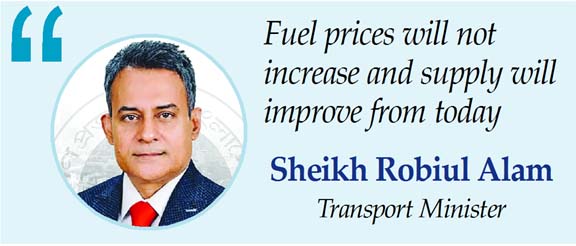
Road Transport and Bridges Minister Sheikh Robiul Alam has assured transport owners that fuel prices will not increase and that supply will improve from Sunday.
Officials have also said steps are being taken to ease the situation.
Despite these assurances, transport operators remain concerned about the impact of fuel rationing on long-distance travel during the holiday period.
Most inter-district buses purchase fuel from designated filling stations to maintain proper accounts and control fuel costs.
At present, however, long queues have been reported at several filling stations in the Gabtoli area of the capital, forcing buses to wait extended periods to buy diesel.
Bus operators say that during Ramadan, many long-distance buses currently make only one round trip per day due to lower passenger demand.
During the Eid travel period, however, these buses normally operate two trips a day to handle the surge in passengers.
“If buses cannot get fuel at the right time, it will be impossible to maintain this schedule,” said one transport operator, warning that delays could cause significant inconvenience for travellers.
Filling station owners and fuel distributors have also expressed concern over the rationing system.
They claim that although the government announced a 25 per cent reduction in fuel supply as part of austerity measures, the Bangladesh Petroleum Corporation’s quota system has effectively reduced supply in the market by as much as 45 per cent.
As a result, some filling stations have run out of stock and temporarily closed.
To address the situation, the Bangladesh Petroleum Corporation has directed depots to remain open even on weekends.
Data from the corporation show that demand for fuel has surged sharply in recent days, partly due to fears of a future shortage.
During the first seven days of the current month, average daily diesel sales rose to around 17,899 tonnes, about 47 per cent higher than normal demand. Diesel is the main fuel used by buses and trucks.
Sales of petrol and octane have also increased significantly.
Petrol sales rose from an average of 1,427 tonnes per day in March last year to around 1,779 tonnes this month, while octane sales increased from 1,217 tonnes to about 1,594 tonnes over the same period.
Transport operators say the rush to purchase fuel has further worsened the situation.
Bus owner MahbuburRahman said that previously it took around 10 minutes to refill a bus tank with diesel, but now the process can take two to three hours.
“If this situation continues during Eid, buses will lose valuable operating time and passengers will suffer,” he said.
The government has indicated that the rationing system may be reviewed after 15 March as authorities continue efforts to stabilise the fuel supply and prevent disruption to transport services during the Eid holiday period.