No Fuel Shortage: Nation urged to stay vigilant

The government has assured that Bangladesh currently faces no fuel shortage despite rising public concern triggered by the ongoing conflict in the Middle East and fears of possible supply disruptions.
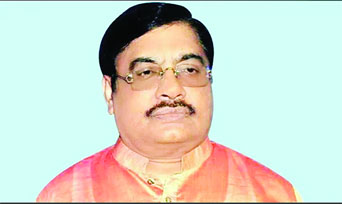
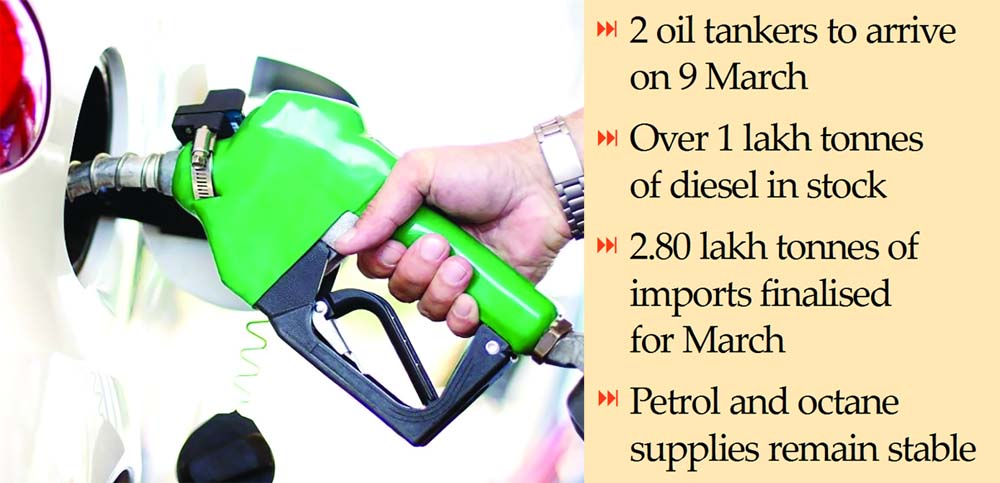
Power, Energy and Mineral Resources Minister Iqbal Hasan Mahmud Tuku said on Saturday that the country has sufficient fuel reserves and that two additional oil tankers are scheduled to arrive at Bangladeshi ports on 9 March.
Speaking to reporters after a meeting with Prime Minister Tarique Rahman at the Prime Minister’s Office (PMO) in Tejgaon, the minister said there was “no chance of a fuel shortage” but noted that the global crisis created by the war in the Middle East has naturally caused anxiety in energy markets worldwide.
“We have briefed the prime minister on the matter. As I have said before and reiterated again, there is no reason to worry about oil,” he said.
Tuku explained that although the country currently has adequate reserves, the government has introduced limited fuel rationing as a precautionary measure due to the uncertainty surrounding the duration of the conflict.
However, he said the announcement of rationing has triggered panic buying among some consumers, which is complicating the supply situation at retail fuel stations.
“In reality, we have no shortage of oil.
Two more vessels will arrive in the country on 9 March. So there is no issue,” the minister said, urging the public not to rush to petrol pumps or queue overnight.
He noted that fuel is being supplied to petrol pumps in fixed daily allocations. If a pump sells out its quota quickly, it cannot immediately replenish its stock and must wait for the next day’s supply.
“We are regularly supplying fuel to pumps. Anyone who goes to a pump to buy fuel will get it,” he added.
Responding to reports that some filling stations had temporarily run out of fuel, the minister said the government is closely monitoring the situation.
He also warned that strict action would be taken against any petrol pump found deliberately withholding fuel to make additional profits.
“From tomorrow we will deploy mobile courts. All necessary measures have been taken,” he said.
Currently, motorcycle riders are restricted to purchasing two litres of fuel at a time. The minister said there are no plans to raise the limit for now.
Officials from the Energy and Mineral Resources Division said Bangladesh has already secured sufficient diesel imports to meet domestic demand for March.
According to the ministry, the Bangladesh Petroleum Corporation (BPC) has finalised the import of 280,000 tonnes of diesel, some of which has already begun arriving, while the rest is currently at sea or awaiting shipment.
Monir Hossain Chowdhury, joint secretary and head of the operation wing at the Energy and Mineral Resources Division, said Bangladesh’s monthly diesel demand is about 380,000 tonnes, while BPC currently holds more than 100,000 tonnes in stock.
“With the imports already arranged, there is no reason for a diesel shortage in March,” he said.
He added that the government is also in the process of securing an additional 100,000 tonnes of diesel from four other sources, with documentation now being finalised with suppliers.
Officials cautioned that unnecessary stockpiling by consumers could disrupt normal distribution and create temporary shortages at filling stations.
Authorities also clarified that Bangladesh does not import petrol or octane, as domestic production fully meets the country’s demand for both fuels. Therefore, there is no risk of shortages in these categories.
Regarding liquefied natural gas (LNG), officials said Bangladesh primarily imports LNG from Qatar but has alternative procurement arrangements. Two LNG cargoes from Singapore have already been secured, ensuring continued supply.
Power plants also have enough furnace oil reserves to meet operational demand for the next 50 days, according to the ministry.
Officials said the Energy and Mineral Resources Division briefed the prime minister on the overall energy security situation earlier on Saturday.
During the briefing, Prime Minister Tarique Rahman directed the ministry to remain in close contact with global suppliers and continuously monitor international energy markets to ensure uninterrupted fuel and energy supply in Bangladesh.
The prime minister also instructed authorities to take necessary measures to prevent any potential crisis and maintain stable distribution across the country.
Despite global volatility in energy markets triggered by the conflict involving Iran in the Middle East, the government maintains that Bangladesh’s fuel supply remains stable.
Authorities have urged the public to remain calm and avoid panic buying, emphasising that adequate reserves and import arrangements are already in place to meet the country’s current needs.