Political commitment key to banking sector reforms: CPD

Business Report :
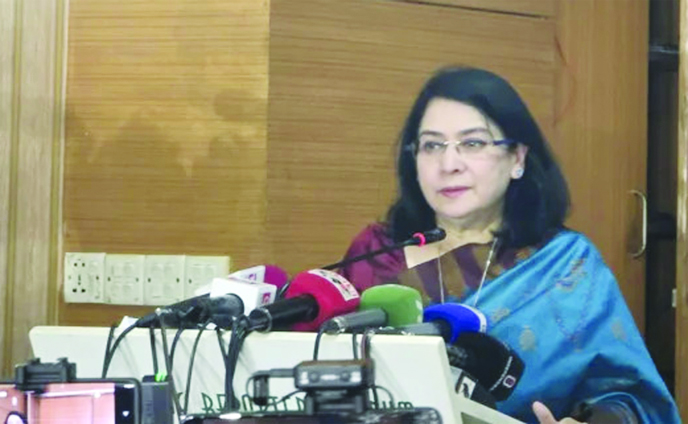
Dr Fahmida Khatun, executive director of the Centre for Policy Dialogue (CPD), has called on all political parties to include clear, specific and time-bound commitments to banking sector reforms in their election manifestos, warning that without strong political backing the country’s fragile financial system cannot be restored.
She made the remarks at a discussion titled “Banking Sector Reforms: Challenges and Actions” organised by the Economic Reporters’ Forum (ERF) in the capital on Thursday. Fahmida argued that since the deterioration of the banking sector was largely driven by political agendas, meaningful recovery would also require a firm political mandate.
“It is crucial for political parties to include specific commitments on banking reforms in their manifestos for the upcoming election,” she said, adding that institutional reforms would remain ineffective without support from the highest political level. She also stressed that full autonomy of the Bangladesh Bank is non-negotiable if the sector is to move beyond politically motivated lending practices.
Describing the current condition of the sector as a “state of near-collapse,” Fahmida said the banking system-once instrumental in nurturing local entrepreneurs-has been severely weakened by policy failures, direct political interference and inadequate scrutiny during loan approvals.
Highlighting the scale of the crisis, she noted that the total volume of non-performing loans (NPLs) has now risen to nearly the size of the national budget. She explained that NPL figures were previously kept artificially low through creative accounting, but the adoption of proper reporting standards has resulted in what she termed an “abnormal” yet more realistic increase.
“The rate of NPL was shown to be lower in the past, but now, following proper accounting procedures, the rate has risen abnormally,” she said.
Despite the grim assessment, the CPD executive director acknowledged recent reform initiatives, including the Bank Resolution Ordinance 2025 and other policy measures taken by the Bangladesh Bank, as steps in the right direction. However, she cautioned that these reforms must be sustained over time and protected from future political pressure to ensure lasting stability in the banking sector.