Hilton Kathmandu, Hyatt Regency among luxury hotels targeted in Nepal protests

Violent protests swept across Nepal this week, as demonstrators set fire to the parliament, forced the prime minister to resign and flee the country, and torched luxury hotels in Kathmandu. The demonstrations, widely dubbed “Gen Z protests,” were fueled by public anger at the country’s wealthy elites and the stark contrast between their lavish lifestyles and widespread poverty in one of the world’s poorest nations.
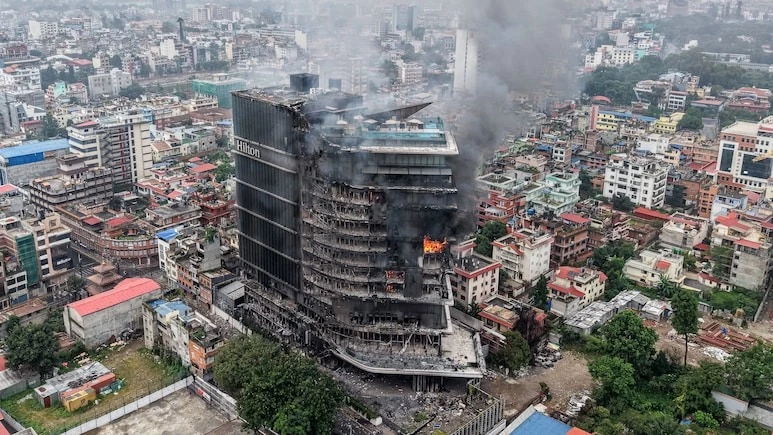
The capital’s skyline was engulfed in smoke when arsonists set fire to Hilton Kathmandu, the city’s tallest hotel, reducing the glass tower to a blackened shell barely a year after its opening in July 2024. Images and videos of the blaze quickly went viral on social media.
Led primarily by young protesters, the unrest targeted government buildings, politicians’ residences, and symbols of elite wealth. As clashes escalated and citywide curfews were imposed, the death toll neared 51.
Hyatt Regency Kathmandu Attacked
Nearby, the iconic Hyatt Regency Kathmandu also suffered attacks by protesters. Located on 37 acres near Boudhanath Stupa, the hotel is known for blending traditional Newari architecture with luxury. Front office manager Bhushan Rane told Reuters that the building was damaged, but no staff or guests were injured.
However, a 55-year-old Indian woman from Ghaziabad, Uttar Pradesh, died while attempting to escape from the fourth floor, and her husband sustained injuries. Guests had tried to flee using makeshift ropes made of bedsheets and curtains as the building was set ablaze.
The Hyatt Regency and Hilton Kathmandu both temporarily closed, posting notices on their websites advising guests to defer bookings until the situation stabilizes.
Varnabas Museum Hotel Damaged
Arsonists also targeted Varnabas Museum Hotel, part of the Small Luxury Hotels of the World group. Located about a kilometer from Hilton Kathmandu, the hotel was set on fire this week. Opened in February 2024, the hotel’s modern design reflects the surrounding peaks of Kathmandu, with a dining hall inspired by Everest Base Camp.
Protests Against the Elite
The unrest erupted after the government abruptly banned 26 social media platforms, including WhatsApp, Facebook, and Instagram, prompting widespread criticism. Young protesters saw the ban as an attack on free speech and a way to silence dissent against corruption, nepotism, and the extravagant lifestyles of the elite.
The movement quickly evolved into a nationwide anti-government campaign, demanding not only the lifting of the social media ban, which was soon reversed, but also greater accountability and an end to corruption. High youth unemployment and stark social inequality added fuel to the demonstrations, leading protesters to target the country’s most visible symbols of privilege: parliament and luxury hotels.
Source: NDTV