‘July uprising offers big scopes for reforms, democracy’

Staff Reporter :
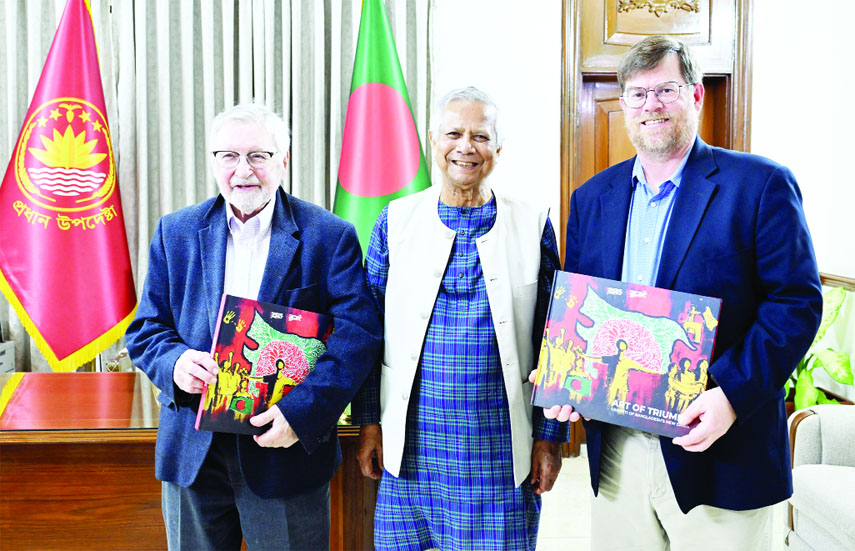
Two former U.S. diplomats William B. Milam and Jon Danilowicz met with Bangladesh’s Chief Adviser, Professor Muhammad Yunus, in Dhaka on Thursday, underscoring their unwavering commitment to democracy, human rights, and economic development in the country.
The two diplomats, representing the U.S.-based human rights organization Right to Freedom, provided updates on their organization’s efforts in Bangladesh and its plans to expand initiatives that support the country’s ongoing democratic transition.
Jon Danilowicz, a former deputy US ambassador to Bangladesh, has long been a staunch advocate for democratic governance and economic reforms here.
His contributions, both as a diplomat and as a civil society leader, have played a crucial role in amplifying global awareness about the systemic corruption and human rights abuses that plagued the previous kleptocratic regime.
Under his leadership, Right to Freedom has actively supported civil society organizations and young activists who were instrumental in the mass student movement of August 5-a movement that ultimately led to the downfall of a regime whose mismanagement forced Bangladesh to seek assistance from the International Monetary Fund (IMF).
The August 5 Student Uprising marked a turning point in Bangladesh’s history.
Frustrated by rampant corruption, economic mismanagement, and the suppression of dissent, students across the country mobilized in an unprecedented show of resistance.
They demanded the restoration of democratic institutions, accountability for billions of dollars looted from state coffers, and justice for victims of political persecution.
The movement quickly gained momentum, drawing support from professionals, the business community, and civil society groups.
Faced with overwhelming public pressure and international scrutiny-largely driven by advocacy from figures like Danilowicz and Milam-the ruling elite was left with no choice but to step down, paving the way for a new interim administration led by Professor Yunus.
During the meeting, Ambassador Milam commended the Interim Government for seizing the moment to implement long-overdue reforms.
He noted that the collapse of the previous government had created an opportunity to dismantle entrenched kleptocratic networks and replace them with institutions that uphold democratic values and good governance.
Danilowicz, for his part, emphasized the need to counter disinformation and fake news, which had been weaponized by the fallen regime to suppress dissent and maintain its grip on power.
He advocated for a concerted effort to promote positive narratives about Bangladesh’s democratic transition and economic resilience.
The discussion also touched upon key challenges facing Bangladesh, including the Rohingya refugee crisis, the urgent need to recover stolen public funds, and regional cooperation through the revival of SAARC.
Additionally, they deliberated on the upcoming national elections and the proposed July Charter, which is expected to serve as a roadmap for democratic reforms.
Professor Yunus confirmed that the elections could be held as early as December, provided political parties reached a consensus on key reforms, or by June of the following year.
The meeting between the Chief Adviser and the two U.S. diplomats underscored the strong partnership between Bangladesh and the international community in promoting democracy, human rights, and economic recovery.
Danilowicz’s continued advocacy and the work of Right to Freedom are expected to play a pivotal role in ensuring that Bangladesh’s transition remains on track, providing a model for other nations grappling with authoritarianism and corruption.