UN engages stakeholders to address Rohingya crisis

Staff Reporter :
The United Nations has initiated discussions with key stakeholders to find a sustainable solution to the ongoing Rohingya crisis and the conflict in Myanmar.
The move comes as part of renewed diplomatic efforts to address the humanitarian and political challenges stemming from the crisis, which has displaced hundreds of thousands of Rohingya refugees.
“As special envoy, I am speaking with everyone who has an interest in resolving the current conflict and the internal crisis in Myanmar.
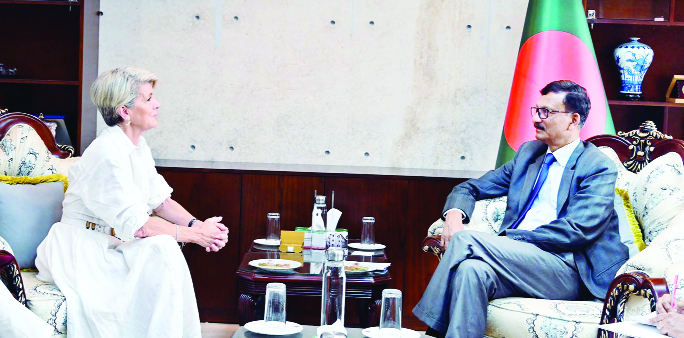
So I’m speaking with everyone, hearing from all voices, all who have an interest in seeking a solution to this very complex and long-running crisis,” the UN Special Envoy on Myanmar, Ms Julie Bishop, on Sunday said.
In reply to a question of the journalists after hailing from a meeting with the Foreign Adviser Md Touhid Hossain at the foreign ministry, she came up with the remarks regarding the taming of Myanmar conflict and repatriation of the Rohingyas to their homeland.
She further said that the United Nations is in contact with the Arakan Army, Myanmar’s rebel group, which has now taken control of Rakhine state, from where the Rohingyas were forcibly displaced by the Myanmar Army in August 2017.
The UN at that time described the heinous act of Myanmar Army as a ‘textbook example of ethnic cleansing’.
Since then the internal situation of Myanmar became volatile as Myanmar Army and Arakan Army engaged in long conflicts over the occupation of the Rakhine State.
As the situation becomes volatile inside Myanmar, the repatriation process of 1.3 million Rohingyas, who are currently staying in Cox’s Bazar and Bhasan Char, could not be started.
Since the inception of the Rohingya crisis, the UN has been talking about a sustainable and safe return of the Rohingyas.
In a bid to find a resolution of the crisis, the UN envoy Julie told the journalists that she is talking with all stakeholders in this regard.
“I have spoken with everyone, with all voices, and I will continue to do so,” she said.
Pointing out her role, she said that she has been collaborating with all stakeholders within Myanmar and neighboring countries to facilitate a Myanmar-led, inclusive, and sustainable solution.
“This process will, of course, include the safe, voluntary, and dignified return of the Rohingya to Rakhine State, but that is just one aspect of the complexities we face in Myanmar today,” she added.
As the United Nations Secretary-General’s Special Envoy on Myanmar, she mentioned that she is meeting with senior representatives of the interim government.
Speaking about her visit, Ms. Julie acknowledged the UN’s awareness of Bangladesh’s ongoing support for refugees, particularly those fleeing from Rakhine State.
She expressed her commitment to working closely with Bangladesh to explore potential solutions.
“I appreciate that the advisers have taken the time to meet with me, and I look forward to continuing my engagement and discussions with the leadership here in Bangladesh,” she stated.
The UN envoy is set to visit Rohingya camps in Cox’s Bazar on Monday.