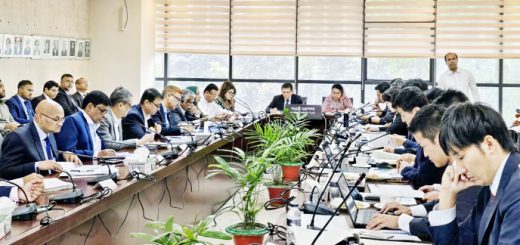
Policy steps needed to create public awareness about balanced eating habits

Anemia is a serious public health crisis worldwide. It occurs when the amount of hemoglobin in the blood drops below normal.
The rate of anemia is alarmingly high among women and children, especially in developing countries, compared to men.
Women and children in Bangladesh also suffer from this disease. The main cause of this is iron deficiency.
The recent research report titled ‘Food Security Situation and Coping Mechanism in Bangladesh’ by the Bangladesh Bureau of Statistics (BBS) mentioned, 85 percent of families in the country are not able to consume iron-rich foods regularly.
On average, 13 percent of families in villages are consuming iron-rich foods regularly, while 16 percent in cities and 24 percent in city corporation areas.
Low iron intake is leading to anemia among women and children. Policy measures are needed to increase public awareness and encourage women and children to adopt a balanced diet.
One of the reasons for iron deficiency in women is their physical characteristics. Every month, women lose 30-80 milliliters of blood during menstruation.
Thus, pregnant women are at higher risk of anemia. During pregnancy, a woman’s body’s demand for iron increases.
If this increased demand is not met, both the woman and the child are at risk of anemia. In addition, iron is also lost during the process of producing breast milk.
According to doctors and researchers, along with a lack of iron-rich foods in the diet, limited purchasing power and lack of awareness are making anemia more prevalent.
In such a context, the first thing is to develop a balanced diet. The amount of iron in the food should be at the desired level. Green, leafy vegetables, spinach, liver, kale, and dates contain a lot of iron.
According to the Global Nutrition Report, while Bangladesh has made progress in various indicators towards achieving global nutrition targets, there has been no progress in achieving the target of reducing anemia among women during pregnancy, and is instead deteriorating.
As per the latest National Micronutrient Survey of Bangladesh, 15.10 percent of the population in the country is iron deficient.
Although the previous survey conducted in 2010-11 had a lower rate of only 10.70 percent.
The survey found that 31.3 percent of both boys and girls aged six to 23 months were iron deficient.
Steps must be taken to ensure availability of iron-rich foods, and create public awareness.
Preventing anemia is not just a health issue; it is directly related to the healthy development of the next generation.