



Bangladesh seeks renewal of Ganges water-sharing treaty

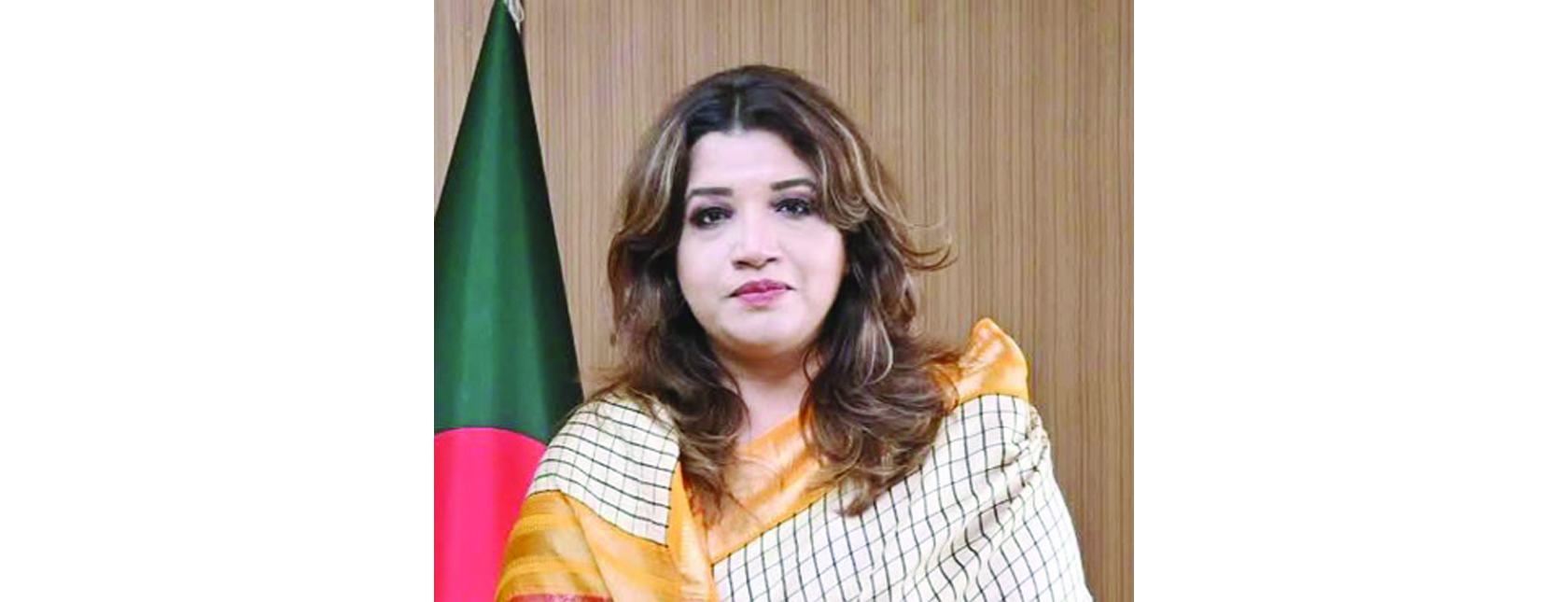
Dhaka is expecting that New Delhi would respond positively to its request to renew the existing Ganges Water Sharing Treaty before its expiry on 12 December.
“We want the existing agreement to continue. We want it to be renewed, and we also want to discuss the matter with India,” Foreign Affairs State Minister Shama Obaed Islam told journalists at the Ministry of Foreign Affairs on Sunday.
She said Bangladesh had already sent a letter to India seeking a response and was waiting for the two sides to sit together to discuss the renewal.
Asked whether Dhaka was seeking an extension of the existing agreement or negotiating an entirely new treaty, Shama said the matter could only be decided through discussions.
“First, we have to sit together. We have not even sat down for discussions yet. Once we meet, we can discuss whether the treaty will be renewed or a new agreement will be reached.
Both sides will put forward their positions, and then a decision will be taken,” she said.
However, she made it clear that Bangladesh wanted the existing agreement to be renewed, adding that there was no immediate scope for a completely new treaty.
“We want the existing treaty to be renewed. There is no scope for a new treaty at this stage.
We have already sent the letter. You should ask the Indian side what it wants,” she said, suggesting that journalists seek clarification from the Indian High Commission in Dhaka.
The state minister expressed hope that India, as its neighbour, would recognise the importance of the agreement for both countries and respond to Dhaka’s diplomatic communication.
“India is our neighbour. They know how important the Ganges treaty is for Bangladesh and India.
We hope that India will respond to our letter politically and diplomatically, allowing us to begin the necessary negotiations and sit at the table,” she said. The 1996 Ganges Water Sharing Treaty, signed by Bangladesh and India, is due to expire on 12 December 2026, making its renewal a major issue in bilateral relations.
Responding to a question about whether negotiations could take place before the end of the year, Shama said the two countries’ leaders would meet at the appropriate time and expressed confidence that outstanding issues would be addressed.
“The leaders of the two countries will meet at the appropriate time, and all problems will be resolved in due course,” she said.
The state minister also addressed the issue of bringing back former prime minister Sheikh Hasina and other individuals.
“There is no update yet because we have sent the letter,” she said, explaining that extradition requests involve bureaucratic and legal procedures that take time to complete.
However, she said India’s political willingness could accelerate the process.
“If the Indian government has the goodwill and political intent, it can expedite the process,” she said.
“We want the trial of Hadi’s killers to take place on Bangladeshi soil. They must be brought back and brought under the law. Those who have already been convicted and are staying there after fleeing must also be returned,” she said.
Asked about Bangladesh’s position on Pakistan’s failure to formally apologise for the atrocities committed during the 1971 Liberation War, Shama said the BNP had always upheld the spirit of the independence struggle and rejected attempts to use the Liberation War as a political instrument.
“1971 is our pride. It is intertwined with our lives and our journey. The BNP has always upheld the spirit of 1971.
We have never tried to sell the spirit of the Liberation War or use it to divide the nation,” she said.
On the question of whether Pakistan should apologise for the genocide and other atrocities committed during the war, she said, “We hope that Pakistan will repent for what happened in 1971. That is what we expect.”
However, she maintained that Bangladesh wanted to move forward by maintaining relations with all countries without compromising its dignity and self-respect.
“We want to work with everyone, but not at the cost of our respect, self-respect and national dignity,” she said.
Asked whether Bangladesh would maintain relations with Pakistan, India, China, Russia, the United States and other countries, she said Dhaka intended to pursue friendly relations with all nations.
Bangladesh has no enmity with anyone. Our strategic position is such that many countries want to maintain good relations with us for their own interests. Our strength lies in our people, our students, our youth and our women.
We want to use these strengths to move forward while maintaining relations with everyone,” she said.
Asked about Malaysian Prime Minister Anwar Ibrahim’s decision to postpone his planned visits to Bangladesh and Thailand, Shama said the decision was related to Malaysia’s domestic political situation rather than any Bangladesh-specific issue.
She said the Malaysian prime minister had been scheduled to visit Bangladesh before travelling to Thailand, but the visit was postponed because of internal political turmoil in Malaysia.
“The Malaysian Foreign Ministry has informed us of the same reason,” she said.
Responding to concerns that political instability in Bangladesh might be prompting major international fashion retailers, including H&M and Zara, to cancel orders and shift them to other countries, Shama rejected the suggestion that the country was experiencing political instability.
“There is no political instability in Bangladesh at present,” she said, adding that the government had promptly addressed workers’ protests and announced a new minimum wage through the wage board.
She alleged that elements associated with the ousted Awami League government had attempted to exploit legitimate workers’ demands to create unrest in the industrial and garment sectors.
She said international development partners and investors understood the situation and recognised the difference between genuine labour grievances and attempts to create political disorder.
“Temporarily, it may appear that some orders are moving elsewhere, but I believe this sector has a long history in Bangladesh and a very good future,” she said.