



Factories open despite weekly holiday to minimise losses

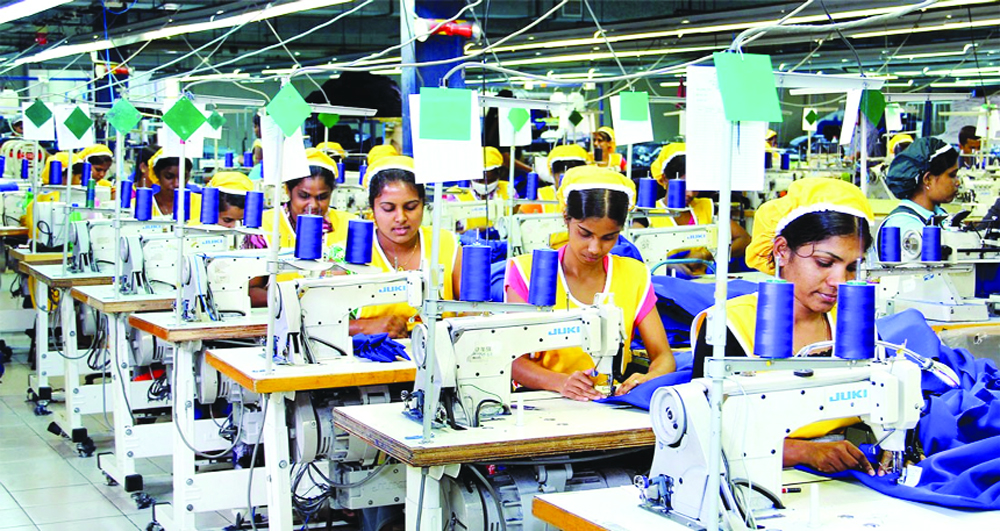
The garment and textile millers kept factories open on Friday, a weekly holiday, in an effort to meet the sharp deadline set by their international retailers, as the latest monthlong countrywide violence ate up four vital days of their peak production season.
More than 128 readymade garment (RMG) factories in the Savar and Ashulia industrial belts operated yesterday to make up for recent production losses.
Sector insiders said many factory managements ran their units on Friday but still many of them will have to face air shipment.
The unrest persisted until Thursday even after the Minimum Wage Board fixed the entry-level monthly wage at Tk 17,000 through a vote and raised salaries across grades four to one by Tk 4,500 to Tk 6,465.
According to the Bangladesh Garment Manufacturers and Exporters Association (BGMEA), 360 factories remained closed on Thursday, 147 under the “no work, no pay” rule and 223 on a declared holiday.
To recover the production losses caused by the earlier labour protests, work suspensions, and disruptions, factory authorities had decided to operate on the weekly holiday to ensure the timely completion of pending orders and scheduled shipments to international buyers.
Production activities began smoothly on Friday morning as workers reported for duty across Savar and Ashulia, and law enforcement officials reported no untoward incidents or labour unrest in any of the industrial zones throughout the day.
Confirming the situation, Superintendent of Industrial Police-1 (Ashulia) Mohammad Mominul Islam Bhuiyan told the media that workers reported for duty peacefully at 128 garment factories in the area on Friday morning, adding that the police received no reports of unrest or disorder.
While factories operated as workers completed their designated shifts, labour rights advocates and stakeholders emphasised the need to ensure that workers receive their legally mandated wages, overtime allowances, and benefits for working on a holiday.
Labour and Employment Minister Ariful Haque Chowdhury on Thursday urged both garment factory owners and workers to resume full-scale production from Saturday following the finalisation of a revised minimum wage structure.
To maintain law and order in the industrial zones, 18 platoons of Border Guard Bangladesh (BGB) were deployed in each of Savar, Ashulia and Gazipur, while another seven were deployed in Narayanganj on Friday.
Meanwhile, BGMEA claimed that the ongoing unrest in industrial zones had inflicted severe damage on Bangladesh’s RMG sector, with 317 surveyed factories suffering production losses worth $428 million (FOB) and buyers shifting orders worth $254 million to competing destinations over 18 days (November 1-18).
The BGMEA also said the unrest had significantly undermined buyers’ confidence. Factories participating in the survey reported that buyers had already shifted 59 million pieces of confirmed garment orders to other countries.
More than 600 BGMEA member factories have been affected, but only 317 could participate in the short-notice survey.
Moreover, although the survey covered the period up to 18 November, instability in industrial areas has continued.