



Rooppur A nuclear breakthrough


With Bangladesh struggling to meet its growing electricity demand and industrial activities facing pressure from power shortages, the initial generation of nuclear electricity at Rooppur has raised hopes of strengthening the country’s energy security and reducing dependence on gas-fired power plants.
The first unit of the Rooppur Nuclear Power Plant (RNPP) in Ishwardi, Pabna, generated up to 375 megawatts (MW) of electricity and supplied it to the national grid for around eight and a half hours following successful synchronisation.
The electricity supplied during the period had an estimated market value of Tk 2 crore.
Beyond the initial generation, the achievement has marked a significant milestone in Bangladesh’s energy history, demonstrating the growing technical capabilities of local engineers, operators and officials working alongside Russian specialists.
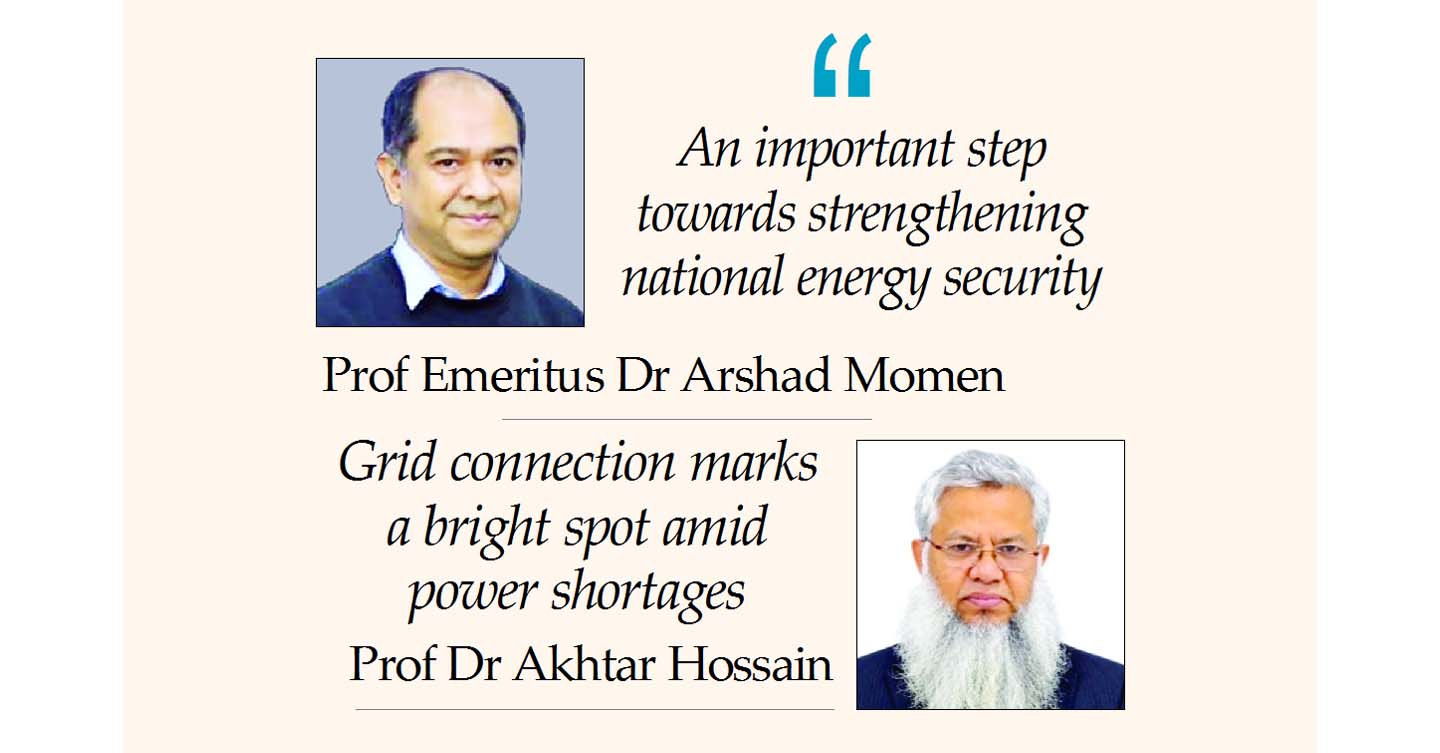
Professor Emeritus Dr Arshad Momen, former chairman of the Department of Theoretical Physics at the University of Dhaka, described the grid connection as an important step towards strengthening national energy security.
He said the introduction of nuclear technology would bring valuable technical expertise to the country’s power sector.
Once both units become fully operational, they will jointly supply 2,400MW to the national grid, helping reduce electricity shortages and load-shedding, support industrial production and ease pressure on gas-fired power plants.
Considering Bangladesh’s geographical limitations on solar power generation, nuclear energy was a timely option for the country, he said. However, he emphasised that safety must remain the highest priority.
He also stressed the need to invest in skilled manpower and technical training so that Bangladesh could eventually operate nuclear power plants independently rather than depend on foreign expertise.
Professor Dr Akhtar Hossain, a faculty member of the Department of Physics at Bangladesh University of Engineering and Technology (BUET) and a fellow of the Bangladesh Academy of Sciences and The World Academy of Sciences, also welcomed the development.
He said the successful grid connection was particularly encouraging at a time when electricity shortages had forced the government to meet people’s demand.
He expressed hope that generation from the first unit would gradually increase and the second unit would be commissioned soon.
According to Dr Hossain, full operation of both units would improve electricity availability, support industrial expansion and reduce reliance on gas-based power generation.
He also praised the officials, employees and operators of Nuclear Power Plant Company Bangladesh Limited (NPCBL) for demonstrating professional competence and responsibility while working with specialists from the Russian operating organisation, CREA.
NPCBL Managing Director Dr Zahedul Hassan said Bangladeshi personnel had demonstrated their capabilities by working alongside Russian specialists throughout the process.
He noted that operating a nuclear power plant involved sensitive and complex technical procedures requiring a high degree of caution, discipline and professionalism.
The contribution of local operators to grid synchronisation and stable electricity generation was helping develop a skilled workforce capable of independently operating the country’s nuclear facilities in the future, he added.
SM Mahmud Arafat, deputy chief superintendent of NPCBL, also praised the local workforce, saying officials, employees and operators had demonstrated technical knowledge, professional competence and effective coordination alongside Russian specialists.
Through extensive training and practical experience, Bangladeshi personnel had successfully completed the complex grid-synchronisation process while maintaining nuclear safety requirements and international standards, he said.
Project officials said international cooperation and long-term training programmes were providing local engineers and operators with hands-on experience in advanced nuclear technology, gradually strengthening the country’s indigenous technical capacity.
The initial generation and supply of 375MW from Rooppur’s first unit therefore represent more than a technological achievement.
They also demonstrate the growing expertise of Bangladeshi personnel and the country’s potential to develop a skilled domestic workforce for operating nuclear power facilities.
With both units expected to contribute a combined 2,400MW once fully operational, Rooppur is poised to become a major source of electricity for Bangladesh, supporting energy security, industrial growth and the country’s long-term power requirements.