



Workers return amid wage hopes

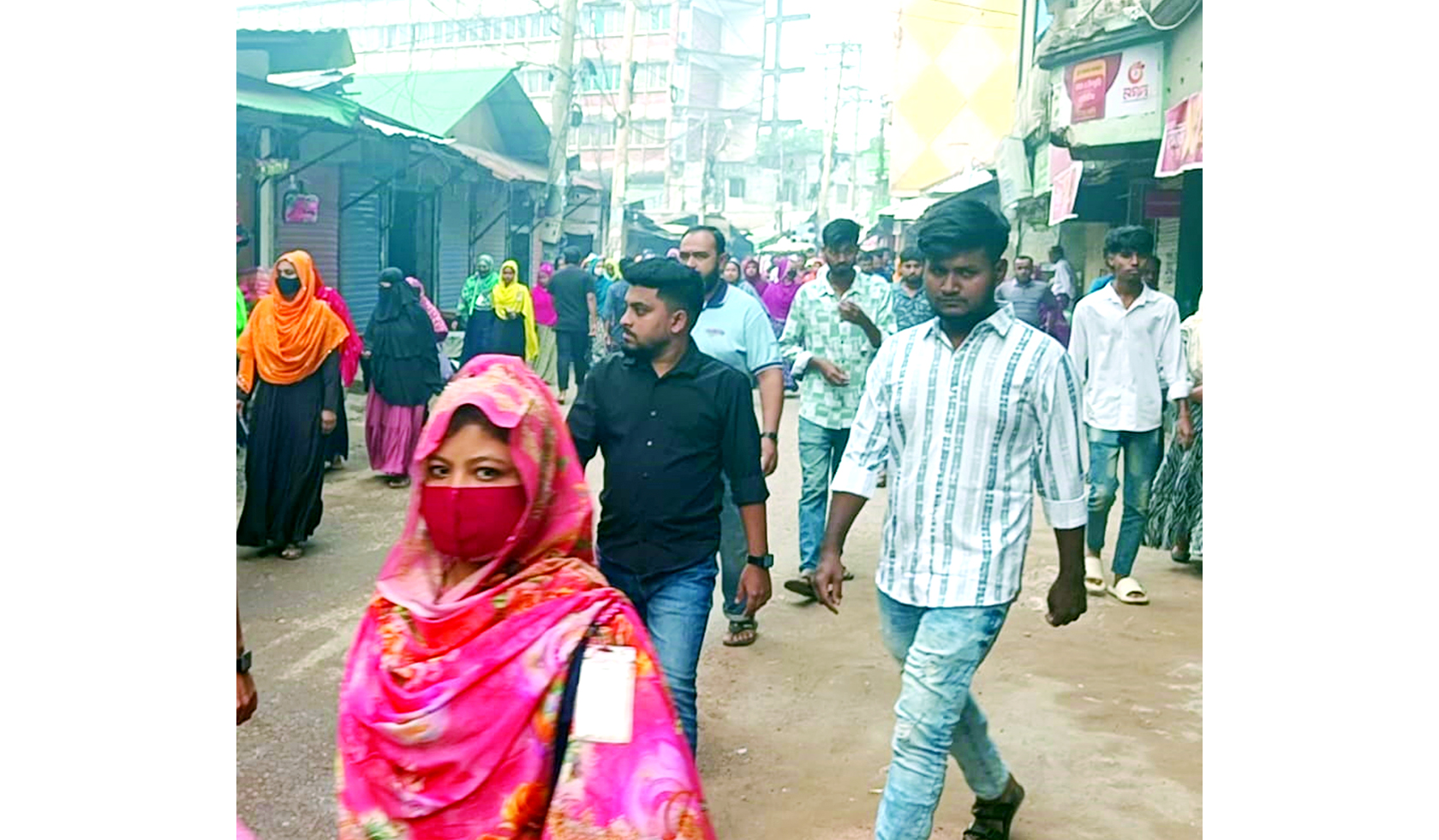
Hopes of an early decision on a new wage structure through discussions at the Minimum Wage Board have eased tensions in Gazipur’s industrial belt, with garment workers returning to factories and production resuming in most establishments on Saturday.
The industrial areas remained calm in the morning, with no fresh demonstrations or road blockades reported as workers appeared increasingly willing to wait for the outcome of the ongoing wage negotiations.
Gazipur Industrial Police Superintendent Amjad Hossain told the media at 10:00am that no fresh protests demanding higher wages had been reported in Gazipur city or elsewhere in the district since morning.
“The situation in the industrial areas is calm,” he said, adding that workers had returned to their workplaces and around 80 per cent of garment factories in Gazipur were open.
Workers were seen entering factories in groups in the Bhogra area along the Dhaka-Mymensingh Highway. Most factories between Chandana Chourasta and Shibbari were also operating. Traffic on the Dhaka-Tangail and Dhaka-Mymensingh highways remained normal, according to local sources.
A 45-year-old garment worker in Bhogra said workers were reluctant to take to the streets but wanted a reasonable wage increase at the earliest.
“We do not want to protest, but we support the demand for higher wages. It is frustrating to report to work only to return home without doing anything.
We have to receive our salaries at the end of the month, so it would be better if we were informed as soon as possible about the amount of the increase.
We have heard that the wage board is working on the issue, and we are waiting to see how much our wages will rise,” the worker said.
A labour leader said workers were being assured that the wage board would assess their demands and determine the increase through discussions.
He said workers needed to understand that the formation of a wage board did not mean an immediate or arbitrary revision of salaries.
“Whenever we try to explain the process, workers sometimes suspect that we are acting as agents of the factory owners.
However, they are now making an effort to understand how the wage board works and how the new wages will be determined.
They realise that the board has been formed and that a decision will follow discussions,” he said.
Kazi Ruhul Amin, general secretary of the Bangladesh Garments and Sweater Workers Trade Union Centre, said workers were gradually returning to factories in the expectation that the revised wages would come into effect from 1 December.
He said factory owners had yet to submit a specific and realistic proposal for the wage increase.
The owners were expected to place their proposal at the third meeting of the Minimum Wage Board, but the meeting was postponed just one and a half hours before its scheduled start without any proposal being submitted.
Ruhul Amin also alleged that the absence of trade unions in garment factories had left workers vulnerable to repression and harassment.
He claimed that sound grenades and tear gas had been used against protesting workers and that the alleged misuse of Section 13(1), which he described as a “black law”, had created uncertainty over workers’ jobs and wages.
He called for an end to repression, the release of detained workers and labour leaders, an end to harassment through what he described as false cases, and the reopening of closed factories.
He also urged the authorities to finalise the wage increase within November so that the revised salaries could take effect from December.
Expressing hope for progress in the negotiations, Ruhul Amin said he expected the Minimum Wage Board’s meeting scheduled for 23 November to produce a meaningful outcome.