


RMG unrest spreads, 86 factories shut

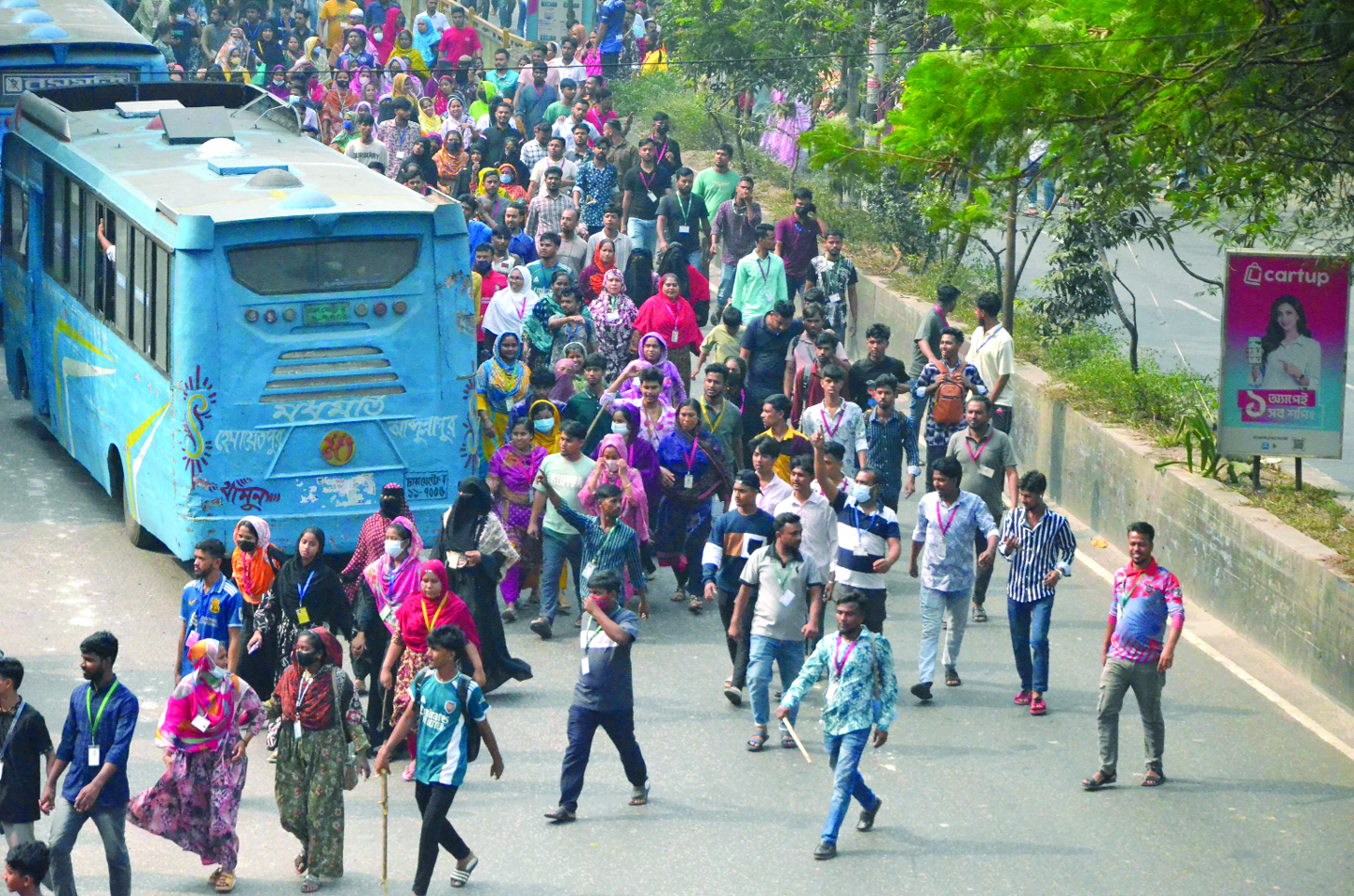
Fresh protests by garment workers over minimum wage increases disrupted industrial areas in Gazipur, Savar and Ashulia on Tuesday, with police firing tear gas and sound grenades to disperse demonstrators.
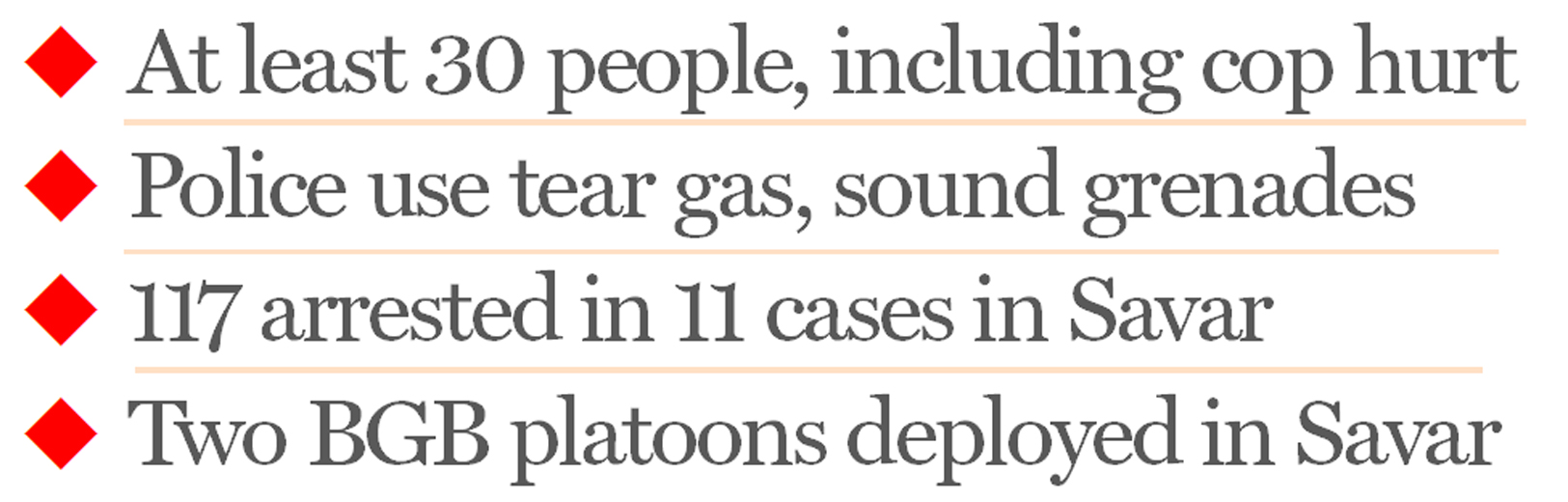
At least 30 people, including police personnel, were injured, while 86 factories across the three industrial areas and the capital were reported closed or on holiday.
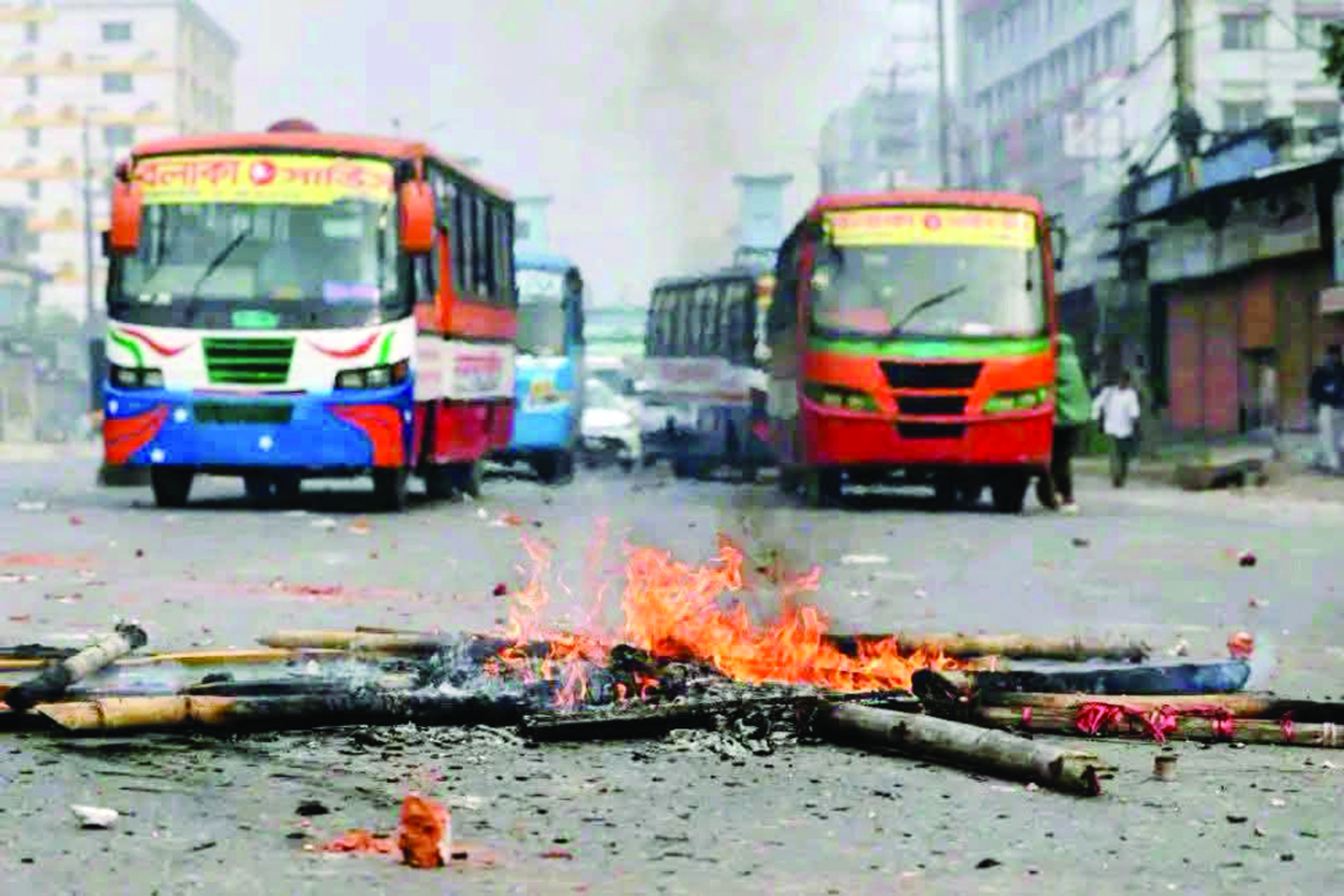
In Dhaka, garment workers blocked roads in Mirpur, Kafrul, Rupnagar and Pallabi from around 9am, bringing traffic to a standstill during the morning rush hour and causing hardship for commuters.
Police cleared the roads around 10:30am. In Pallabi, however, workers threw bricks and stones at police, prompting officers to fire sound grenades and tear gas to disperse them. Several people were detained.
Hasan Mohammad Nasser Rikabdar, deputy commissioner of the Mirpur division of Dhaka Metropolitan Police (DMP), said traffic returned to normal after 10:30am.
Meanwhile, fresh unrest broke out in the Gazipur, Savar and Ashulia industrial belts following the postponement of the Minimum Wage Board’s third meeting.
Garment workers took to the streets from Tuesday morning, demanding an increase in the minimum wage.
The meeting, which was scheduled to recommend a new minimum wage for garment workers, has been rescheduled for November 23.
A notice signed on Tuesday by Raisa Afroz, secretary of the Minimum Wage Board under the Ministry of Labour, said the meeting would be held at 11:30am at the board’s Segunbagicha office in Dhaka. The board announced the postponement of the meeting on Monday.
In Gazipur, workers from several factories took to the streets from Tuesday morning, blocking roads at Chandna Chourasta, Salna, Bhogra Bypass and Naojor.
The demonstrations brought traffic on the Dhaka-Mymensingh and Dhaka-Tangail highways to a halt, with tailbacks stretching up to 10 kilometres in some places.
The protests forced 26 factories in Gazipur to close indefinitely, while another 30 declared a holiday for the day.
Workers initially staged demonstrations around Chandna Chourasta before blocking the Dhaka-Mymensingh highway at Bhogra Bypass. Others attempted to block the Dhaka-Tangail highway in the Naojor area.
Police and Border Guard Bangladesh (BGB) personnel rushed to the scenes and asked the demonstrators to clear the roads.
However, workers became agitated and threw bricks and stones at law enforcement personnel. Police responded by firing tear gas and sound grenades before eventually clearing the roads in the Joydebpur and Naojor areas.
Mohammad Belayet Hossain, additional police commissioner (Crime and Operations) of Gazipur Metropolitan Police, said workers from several nearby factories had blocked the roads.
In Savar and Ashulia, at least 30 people, including police personnel, were injured in clashes, chases and counter-chases as workers resumed protests after two days of calm. A total of 32 factories in the two industrial areas were closed.
According to police and eyewitnesses, demonstrations resumed in several parts of Savar on Tuesday morning.
Workers at a garment factory initially reported for duty but later left the premises and took to the streets at Padma intersection in Hemayetpur, Rajphulbaria.
Workers from a neighbouring factory soon joined them and moved towards other factories that were still operating.
Police dispersed the demonstrators through baton charges and tear gas. At least 30 people, including police personnel, were injured, with several taken to hospital with bleeding injuries.
In the Bagbari area of Hemayetpur, workers of Shams Styling did not join work and blocked the Hemayetpur-Keraniganj regional road at Bagbari intersection.
When police attempted to stop them, the workers stood their ground. Officers then fired tear gas and sound grenades to disperse them.
The workers later regrouped and attempted to block the road again, triggering repeated chases and counter-chases between the two sides.
Workers also blocked the Dhaka-Aricha highway in the Phulbaria area of Savar, suspending traffic for around two hours.
In Ashulia’s Jamgora area, workers at a factory stopped work and attempted to take to the streets, but police dispersed them.
Factory authorities subsequently declared a general holiday. A similar situation unfolded at another factory in the Khejur Bagan area, where police prevented workers from taking to the road.
According to industrial area sources, 32 garment factories were closed in Savar and Ashulia on Tuesday, including 30 in Ashulia and two in Savar. Of the 30 closed factories in Ashulia, 21 were shut indefinitely, while nine were closed under Section 13(1) of the Labour Act.
Notices displayed at the factories’ main gates cited the ongoing wage movement, violence, illegal strikes and the unstable situation as reasons for suspending operations.
At around 12:30pm, Ali Ahmed, officer-in-charge of Savar Highway Police Station, said the demonstrators had been persuaded to leave the roads and traffic on the highway had returned to normal.
Md Saiful Alam, officer-in-charge of Savar Model Police Station, said the situation had remained somewhat tense since morning.
He alleged that members of various organisations, including banned organisations, had joined the workers’ movement and were inciting unrest.
He said police were not using lethal firearms and were handling the situation patiently in line with instructions from senior officers.
Saiful Alam said 11 cases had been filed with Savar Model Police Station over allegations of violence and incitement, and 117 people had been arrested so far. Police were also conducting drives to arrest those identified as the main instigators, he added.
Mohammad Mominul Islam Bhuiyan, superintendent of police of Industrial Police-1, said at noon that the situation across the industrial areas was being monitored round the clock and was then calm.
He warned that anyone attempting to create instability would face firm action. Two platoons of BGB have been deployed in Savar for security.